Metamerism in Biology: The Science of Body Segmentation
In the study of biological organization, metamerism is the phenomenon where a body is composed of a linear series of segments that are fundamentally similar in structure. While these segments may appear identical, many evolve to perform specialized functions to support the organism's survival. Depending on the kingdom, these repeating units are known as somites or metameres in animals, and phytomers (or metamers) in plants.
Key Facts
- Metamerism involves the repetition of body units along a linear axis.
- In animals, it is a mesodermal event involving the ectoderm and mesoderm, but not the endoderm.
- Homonomous metamery features segments that are largely similar, while heteronomous metamery involves specialized groupings.
- Tagmatization is the process of grouping metameres into functional units called tagmata.
- In plants, metamerism is found in the shoot system (phytons) but not in the root system.
Metamerism in the Animal Kingdom
For zoologists, metamery is defined as a mesodermal event that results in the serial repetition of unit subdivisions of ectoderm and mesoderm products. It is important to distinguish metamerism from general segmentation; for instance, Cestoda (tapeworms) exhibit segmentation limited to ectodermally derived tissue, which differs from true metamerism. True metamerism is biologically significant because it enables advanced locomotion.
Homonomous Metamerism
Homonomous metamery is a strict serial succession of metameres. This is further divided into two types:
- Pseudometamerism: Seen in Cestoda, where repeating segments act independently, primarily for nutrient exchange and reproduction.
- True Metamerism: Exemplified by the earthworm (phylum Annelida). Here, organs and muscle tissues repeat in each segment, but all segments work together for the organism's benefit. This allows for an inching movement where circular muscles elongate segments and longitudinal muscles shorten them.
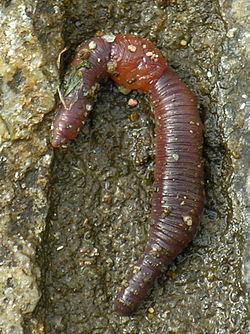
Heteronomous Metamerism and Tagmatization
Heteronomous metamery occurs when metameres group together to perform specific tasks. This process is known as tagmatization, and the resulting groups are called tagmata. A prime example is the insect body, which is divided into the head (5 metameres), thorax (3 metameres), and abdomen (11 metameres).
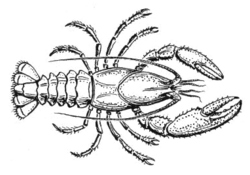
In highly derived organisms, such as insects or chordates (including humans), these tagmata are so fused that the original metamerism is not easily visible. In humans, evidence of this ancestral structure can be found in the cranial nerves and branchial arches. Some biological schemes list metamerism as one of the four primary construction principles of the human body, alongside stratification, pachymerism (tubulation), and general bilateral symmetry (zygomorphism).
Special Classifications
Some animals are classified as pseudometameric when they possess clear internal metamerism but lack corresponding external segmentation, as seen in Monoplacophora.
Metamerism in Plants
In botany, a metamer is a segment that contributes to the construction of a shoot. According to the metameristic model, a plant consists of a series of phytons (or phytomers), each comprising an internode and its upper node with an attached leaf.
While grasses show clear metameric construction, the theory is debated. Some botanists argue that the shoot is the basic unit and that anatomical units like phytomers are academic conceptions rather than physical realities. However, others maintain that studying the length of a metameric organism is fundamental to plant morphology.
Alternative Plant Models
- Pipe Model Theory: Views plants, especially trees, as a series of unit pipes (metamers) that support a specific amount of photosynthetic tissue.
- Vertical Metamers: Found in some desert shrubs, where the stem is modified into isolated strips of xylem. This allows the plant to shed parts of its shoot system during drought without damaging the rest of the organism.
Crucially, in vascular plants, metameric construction is present in the shoot system (stem, leaf, and inflorescence) but is absent in the root system. In seed plants (spermatophytes), the plant embryo serves as the first metamer of the shoot.
Summary of Metamerism
| Feature | Animals (Zoology) | Plants (Botany) |
|---|---|---|
| Unit Name | Somite / Metamere | Phytomer / Phyton |
| Primary Location | Body axis (Mesodermal) | Shoot system |
| Key Process | Tagmatization (grouping) | Modular construction |
| Example | Earthworms, Insects, Humans | Grasses, Trees |
| Non-Metameric Part | Endoderm | Root system |
Frequently Asked Questions
What is the difference between segmentation and metamerism in animals?
Segmentation can be limited to tissues derived from the ectoderm, such as in tapeworms. Metamerism is a more complex mesodermal event that involves both the ectoderm and mesoderm, creating units (somites) that are critical for advanced movement.
What is tagmatization?
Tagmatization is the biological process where similar metameres group together to form a specialized functional unit called a tagma, such as the thorax of an insect.
Do humans exhibit metamerism?
Yes, humans and other chordates are metameric, but their segments are fused into tagmata. This is not immediately visible externally, but evidence remains in structures like the cranial nerves and branchial arches.
Is the entire plant metameric?
No. In vascular plants, metamerism is found only in the shoot system. The root system does not exhibit this repeating structural construction.
How does metamerism help an earthworm move?
The segmentation of muscular tissue allows the earthworm to move in an inching pattern. Circular muscles elongate segments one by one, while longitudinal muscles shorten them, propelling the worm forward.