Annelida: The Biology and Evolution of Segmented Worms
The phylum Annelida comprises a diverse group of segmented worms that inhabit nearly every environment on Earth, from the deepest ocean trenches to rich garden soils. These organisms are defined by their metamerism—the repetition of similar body segments—which allows for sophisticated movement and specialized organ systems. With over 22,000 living species, annelids range from microscopic forms to the giant Gippsland earthworm and Amynthas mekongianus, both of which can reach 3 meters in length, and the massive Microchaetus rappi, which can grow up to 6.7 meters.
Key Facts
- Diversity: Over 22,000 known species across marine, freshwater, and terrestrial habitats.
- Defining Feature: External and internal segmentation (metamerism) with septa separating body cavities.
- Anatomy: Most possess a closed circulatory system and a true coelom (fluid-filled body cavity).
- Fossil Record: Confirmed fossils date back to approximately 518 million years ago (Cambrian period).
- Taxonomic Shifts: Molecular data has recently integrated formerly separate phyla, such as Sipuncula and Echiura, into Annelida.
Classification and Diversity
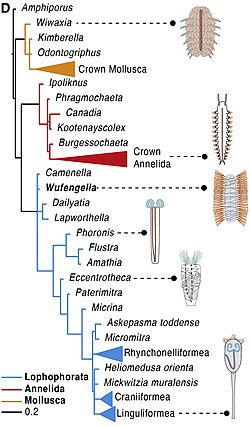
Historically, annelids were divided into two primary classes: the Polychaeta (bristle worms) and the Clitellata (which includes earthworms and leeches). However, modern molecular phylogenetics has radically reshaped this tree. Current cladistic views divide the phylum into Palaeoannelida and Pleistoannelida, the latter encompassing groups like Errantia and Sedentaria.
One of the most significant shifts in classification involves the Echiura and Sipuncula. Once considered separate phyla, molecular analysis conducted in 1997 and subsequent studies have confirmed that these organisms are actually derived annelids. Similarly, the Siboglinidae (formerly Pogonophora) are now recognized as part of the annelid lineage.
Distinguishing Biological Features
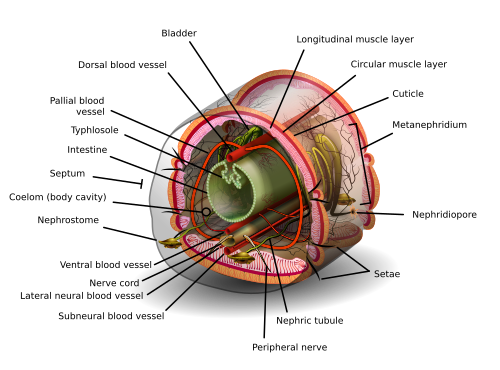
Annelids are distinguished from other worm-like phyla by several key anatomical markers. Unlike Nemertea or Sipuncula, most annelids exhibit clear external segmentation and the repetition of internal organs. They possess a coelom—a fluid-filled body cavity lined with mesoderm—which acts as a hydrostatic skeleton for locomotion.
The body wall is typically composed of collagen, and unlike arthropods, most annelids do not undergo molting, with the exception of certain polychaete jaws and the skin of leeches. Their circulatory system is closed in most species, ensuring efficient nutrient and oxygen transport.
| Feature | Annelida | Echiura | Sipuncula | Arthropoda |
|---|---|---|---|---|
| External Segmentation | Yes | No | No | Yes (mostly) |
| Internal Organ Repetition | Yes | No | No | Yes (primitive) |
| Septa Between Segments | Most species | No | No | No |
| Cuticle Material | Collagen | None | None | α-chitin |
| Circulatory System | Closed (mostly) | Open outflow | Open | Open |
Evolutionary History and the Fossil Record
Because annelids are soft-bodied, they rarely fossilize. Most evidence comes from mineralized tubes or hardened jaws. The oldest confidently identified annelid fossil, Phragmochaeta, dates to approximately 518 million years ago from the Sirius Passet. Other significant early finds include Canadia and Burgessochaeta from the Burgess Shale (approx. 505 million years ago).
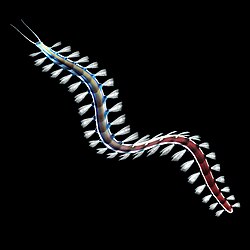
The discovery of Kootenayscolex (508 million years old) provided insight into head development, suggesting the annelid head evolved as a specialized version of a generic body segment. While polychaetes diversified in the early Ordovician (488–474 million years ago), the earliest indisputable fossils of oligochaetes (earthworms) appear much later, in the Paleogene period (66 million years ago), though some trace fossils suggest their presence as early as the Triassic.
Specialized Adaptations
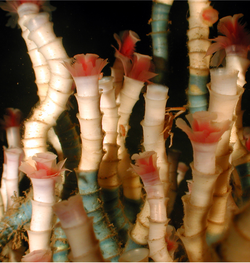
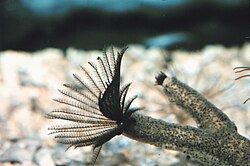
Annelids exhibit extraordinary biological adaptations. For instance, Lamellibrachian tube worms have completely lost their gut; instead, they survive through a symbiotic relationship with chemoautotrophic bacteria that live inside their bodies and provide nutrients.
Other species, such as certain sabellid tubeworms, are capable of asexual reproduction through budding, allowing them to colonize environments rapidly.
Frequently Asked Questions
What makes an annelid different from other worms?
The primary difference is metamerism, or true segmentation. Annelids have repeating body segments separated by internal walls called septa, and most possess a closed circulatory system and a true coelom.
Are leeches and earthworms the same type of annelid?
Both belong to the group Clitellata. However, molecular evidence suggests that leeches are actually a sub-group of oligochaetes rather than a separate sister-group.
How old are the earliest known annelids?
While some Ediacaran fossils are debated, the oldest widely accepted annelid fossil is Phragmochaeta, dating back to about 518 million years ago in the early Cambrian.
Why are annelid fossils so rare?
Annelids are soft-bodied organisms. Without hard shells or skeletons, their tissues decompose quickly. Paleontologists mostly rely on mineralized tubes or chitinous jaws to identify them in the fossil record.
What is the role of chemoautotrophic bacteria in some annelids?
In species like the Lamellibrachian tube worms, these bacteria replace the digestive system. The bacteria convert inorganic chemicals into organic nutrients, which the worm then absorbs.