Onychophora: The Fascinating Biology of Velvet Worms
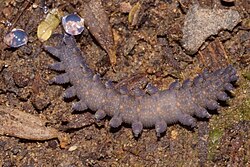
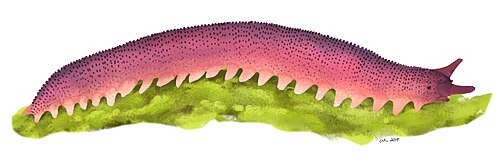
Velvet worms, scientifically known as Onychophora, are extraordinary invertebrates that bridge a conceptual gap between segmented worms and arthropods. With a temporal range extending from the Late Carboniferous to the present day, these animals are characterized by their soft, cylindrical bodies and a unique method of hunting that involves chemical warfare in the form of adhesive slime.
These creatures are classified within the superphylum Ecdysozoa and the clade Panarthropoda, making them distant relatives of insects, spiders, and crustaceans. Their physical appearance—a velvety skin and rows of stubby legs—belies a complex internal physiology and a deep evolutionary history.
Key Facts
- Size Range: From the tiny Ooperipatellus nanus to the giant Mongeperipatus solorzanoi (up to 22 cm).
- Leg Count: Varies significantly by species, ranging from 13 to 43 pairs of lobopods.
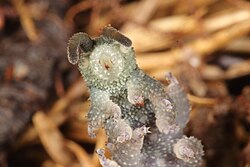
- Hunting Tool: Use specialized oral papillae to shoot high-speed adhesive slime.
- Genome: Exhibit genome gigantism, with some species possessing 5.60 giga-base pairs.
- Conservation: Several species are listed as Critically Endangered (CR) or Endangered (EN).
Anatomy and Physiology
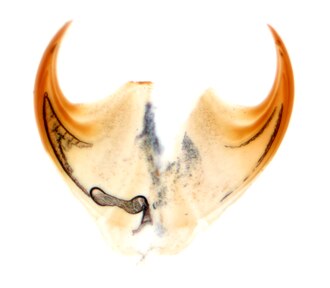
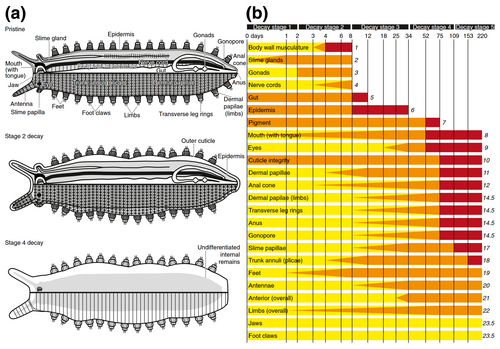
The body of a velvet worm is a flattened cylinder. Instead of jointed legs, they possess lobopods (or oncopods), which are unstructured, stub-like appendages used for locomotion.
The Slime Mechanism
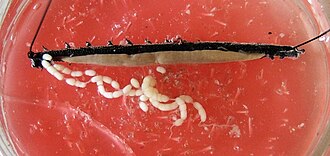
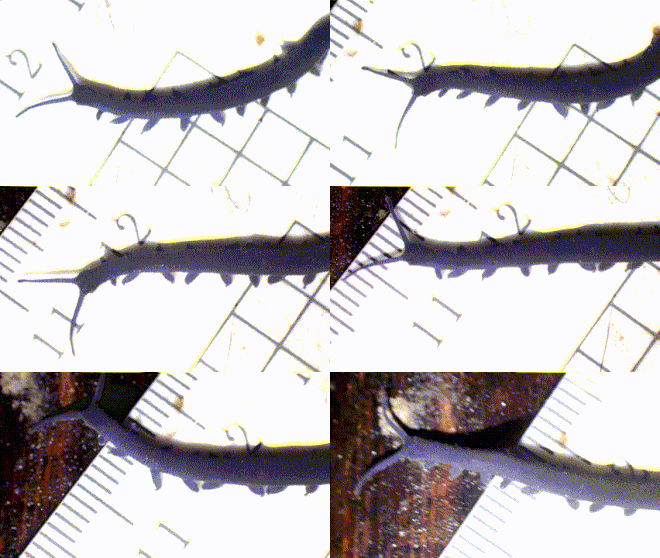
One of the most remarkable features of Onychophora is the use of slime papillae—highly modified limbs located on the sides of the head. These papillae house a syringe-like system that uses a geometric amplifier to convert slow muscular contractions into high-speed jets.
High-speed filming reveals that velvet worms expel two streams of adhesive liquid at speeds of 3 to 5 meters per second. Due to passive oscillatory motion (30–60 Hz), these streams cross in mid-air, weaving a disordered net that entangles prey or deters predators.
Internal Systems
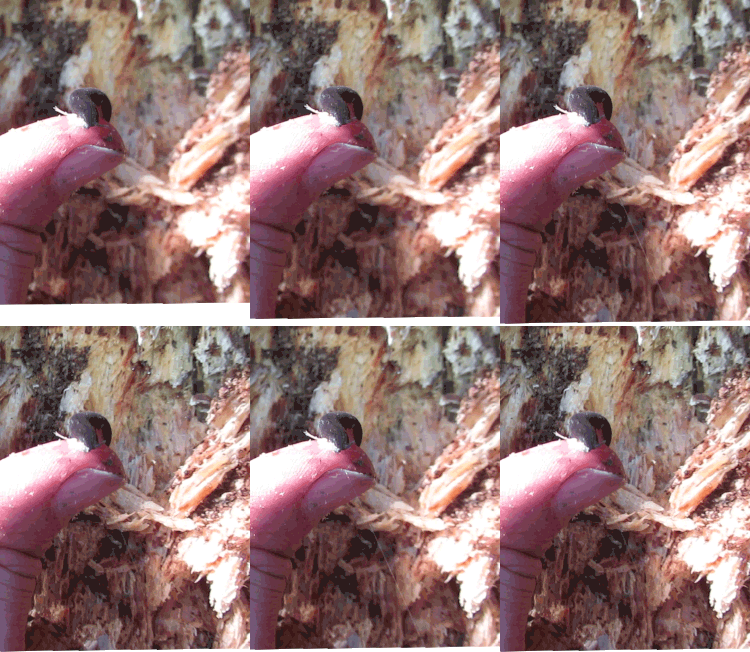
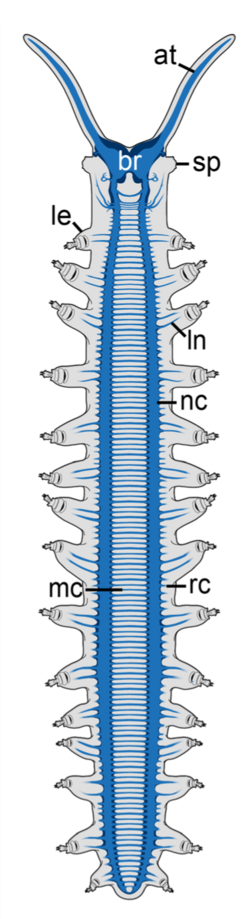
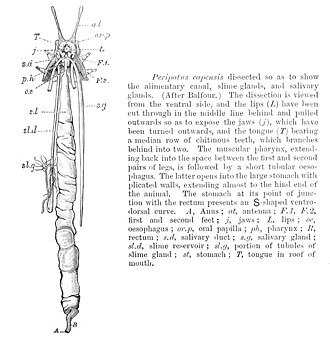
The internal anatomy of the velvet worm is equally specialized. Their nervous system is structured like a ladder, and their digestive system is designed for processing the soft tissues of their prey.
Reproduction and Development
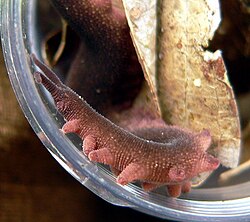
Reproductive strategies vary across the phylum. Some species exhibit ovoviviparity, where embryos develop within the parent. In dissected specimens, such as Euperipatoides kanangrensis, ovaries filled with stage II embryos can be observed.
Genetics and Evolution
Recent genomic research has highlighted a phenomenon known as genome gigantism. For example, the sequenced genome of Epiperipatus broadwayi is approximately 5.60 giga-base pairs. A significant portion of this size (around 70.92%) consists of repeat sequences and unusually large introns—non-coding sections of a gene.
Evolutionary Lineage
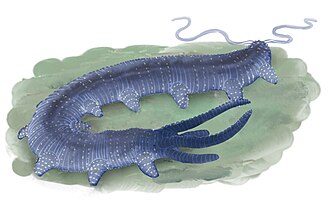
The evolutionary history of Onychophora is traced back to the Carboniferous period. Fossil evidence, including species like Antennipatus montceauensis and the possible onychophoran Helenodora, provides insight into how these animals transitioned to terrestrial life.
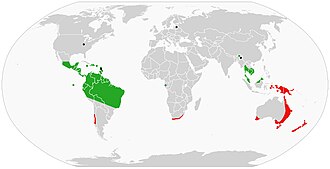
The distribution of modern velvet worms is split between two main families: Peripatidae and Peripatopsidae. Their current global distribution reflects ancient Gondwanan migration patterns.
Ecology and Conservation
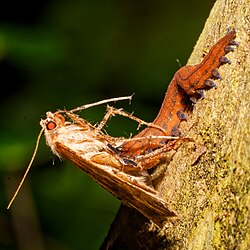
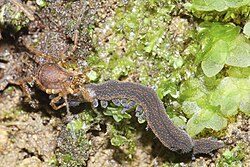
Velvet worms are opportunistic predators, feeding on a variety of invertebrates including cockroaches and moths. However, they are not without their own predators; some harvestmen, such as Nuncia conjuncta, are known to prey upon them.
Conservation Status
Many velvet worm species are currently threatened. The IUCN Red List identifies several species as vulnerable or critically endangered, often due to their limited geographic range and specific habitat requirements.
| Species | Status | Meaning |
|---|---|---|
| Opisthopatus roseus | CR | Critically Endangered |
| Peripatopsis leonina | CR | Critically Endangered |
| Leucopatus anophthalmus | EN | Endangered |
| Peripatoides indigo | VU | Vulnerable |
| Plicatoperipatus jamaicensis | NT | Near Threatened |
Frequently Asked Questions
How do velvet worms capture their prey?
They use specialized oral papillae to shoot two streams of adhesive slime at high speeds (3-5 m/s). These streams oscillate and cross, creating a sticky net that immobilizes the prey.
What is genome gigantism in velvet worms?
Genome gigantism refers to the unusually large size of their nuclear genome. In Epiperipatus broadwayi, the genome is 5.60 giga-base pairs, largely due to a high percentage of repeat sequences and large introns.
Are velvet worms related to insects?
Yes, they are part of the clade Panarthropoda, which includes both Onychophora and the Arthropoda (insects, arachnids, and crustaceans), sharing a common evolutionary ancestor.
Where are velvet worms found today?
They are distributed globally across various moist habitats, with the Peripatopsidae and Peripatidae families reflecting ancient migration patterns from the supercontinent Gondwana.
What is the size range of velvet worms?
They vary greatly in size, from the very small Ooperipatellus nanus to the larger Mongeperipatus solorzanoi, which can reach lengths of up to 22 cm.