Mardi Gras in New Orleans
Mardi Gras, the vibrant and storied celebration of Carnival, is more than just a party in New Orleans; it is a cultural cornerstone of Louisiana. Held annually on the day before Ash Wednesday, this festival transforms the French Quarter and surrounding neighborhoods into a kaleidoscope of color, music, and revelry. From its early Catholic roots to its modern-day status as a global attraction, Mardi Gras reflects the resilience and eclectic spirit of the city.
Key Facts
- First Record: Celebrated in Louisiana on March 2, 1699, by Iberville, Bienville, and their men.
- Official Colors: Purple, green, and gold.
- Key Figures: Rex, the monarch of Mardi Gras, and the Krewe of Zulu.
- Signature Throw: The Zulu Coconut (originally the Golden Nugget).
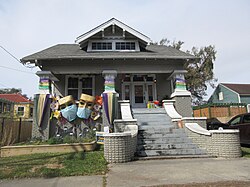
- Modern Adaptation: "Yardi Gras" emerged in 2021 as a way to celebrate via decorated home floats.
The History of Carnival in Louisiana
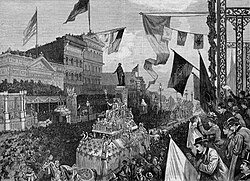
The origins of Mardi Gras in the region date back to the late 17th century. The first recorded observance took place at the mouth of the Mississippi River in 1699 as a Catholic practice. By 1730, accounts describe celebrations in New Orleans featuring music, dance, and the use of masks and costumes, including cross-dressing. By 1743, the tradition of Carnival balls was already firmly established.
Throughout its history, the festivities have occasionally faced legal prohibitions. However, the public's passion for masking and street processions ensured that the traditions were renewed whenever restrictions were lifted.
Evolution in the 20th and 21st Centuries
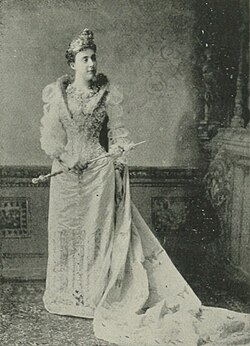
The modern era brought new challenges and shifts in tradition. In 1991, the New Orleans City Council required Krewes (the social organizations that organize parades) to certify they did not discriminate based on race, religion, gender, or sexual orientation to receive permits. This led to a conflict over the traditional secrecy of these private groups. In protest, historic krewes such as Comus and Momus ceased parading, while Proteus suspended its parade for several years before returning in 2000.
Overcoming Adversity: Katrina and COVID-19
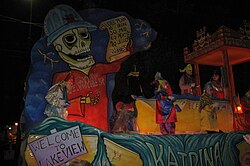
The devastation of Hurricane Katrina on August 29, 2005, led some to question if the city could continue its celebrations. However, the economic importance of Carnival to the city's revival ensured its return. In 2006, parades were restricted primarily to the Saint Charles Avenue and Canal Street routes, as these areas had escaped the most severe flooding.
More recently, the COVID-19 pandemic caused significant disruption. The 2020 season coincided with the early spread of the virus, with the first Louisiana case reported shortly after the festivities ended. In 2021, for the first time since the 1979 police strike, large-scale parades were prohibited to prevent "superspreading events." This led to the cancellation of major balls, and for the first time since World War II, Rex did not name a King and Queen.
To keep the spirit alive during the 2021 lockdown, residents created "home floats," decorating their houses in the style of parade floats. This grassroots movement, popularized by Megan Boudreaux and the "Krewe of House Floats," became known as Yardi Gras.
Traditions, Symbols, and Spectacles
Mardi Gras is defined by its sensory richness, from the specific color palette to the items thrown from floats.
The Colors of Carnival
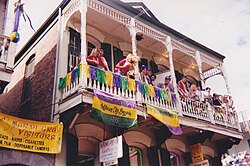
The traditional colors of Mardi Gras are purple, green, and gold. Historian Errol Laborde theorized that these were chosen by Rex because they could be arranged in a tricolor that follows the rule of tincture (a heraldic principle regarding the contrast of colors).

Throws and the Zulu Coconut
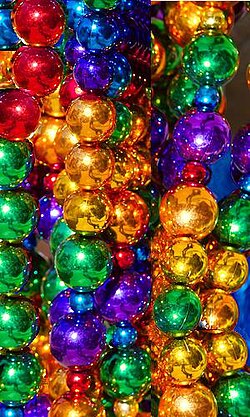
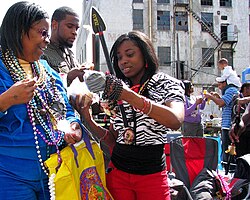
"Throws" are the trinkets tossed from floats to the crowds. While beads are the most common, the Zulu Coconut (or Golden Nugget) is one of the most coveted. Originating around 1910 as a cheaper alternative to glass beads, the coconut was first painted gold and later evolved to include designs resembling the black Zulu faces. Due to injury risks, the city banned throwing them in 1988; they are now handed to revelers.
Other Notable Traditions
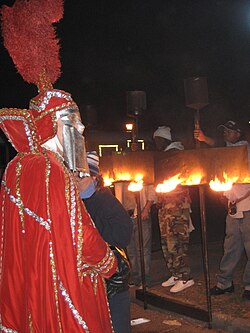
- Flambeaux Carriers: Torch-bearers who traditionally lit the way for nighttime parades.
- Rex: The symbolic monarch of Mardi Gras, whose pageant is a highlight of the day.
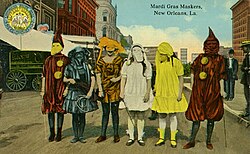
- Masking: A long-standing tradition of costuming and anonymity.
Safety and Modern Regulations
As the event has grown, safety has become a priority. In 2020, two fatalities occurred involving tandem floats (interconnected floats towed by a single vehicle). In response, city officials implemented an immediate ban on tandem floats, restricting vehicles to a single float only.
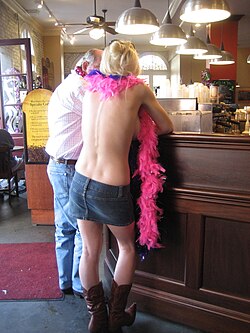
Additionally, the late 20th century saw the rise of "ritual disrobement," where women bared their breasts in exchange for beads, a trend influenced in part by the commercial video market of the era.
Mardi Gras Summary
| Feature | Details |
|---|---|
| Frequency | Annual (Day before Ash Wednesday) |
| Primary Locations | French Quarter, St. Charles Avenue, Canal Street |
| Traditional Colors | Purple, Green, Gold |
| Key Organizations | Krewes (e.g., Rex, Zulu, Endymion, Muses) |
| Notable Throws | Beads, Doubloons, Zulu Coconuts |
Frequently Asked Questions
What are the official colors of Mardi Gras and what do they mean?
The official colors are purple, green, and gold. Historian Errol Laborde suggests they were chosen by Rex to adhere to the heraldic rule of tincture, allowing for a visually striking tricolor arrangement.
What is a "Zulu Coconut"?
The Zulu Coconut, also known as the Golden Nugget, is a highly sought-after throw from the Krewe of Zulu. Originally painted gold walnuts, they transitioned to coconuts in the 1920s and are now handed out rather than thrown for safety reasons.
What is "Yardi Gras"?
Yardi Gras is a tradition that emerged in 2021 during the COVID-19 pandemic. Because official parades were canceled, residents decorated their homes and yards as if they were parade floats, creating a stationary celebration.
Why were tandem floats banned in New Orleans?
Tandem floats were banned in 2020 after two parade attendees were killed when they were struck and run over between interconnected floats towed by a single vehicle.
How did Hurricane Katrina affect Mardi Gras?
While some questioned the future of the event after the 2005 storm, the economic importance of Carnival ensured its return. The 2006 parades were modified to use routes in areas that had not suffered significant flooding, such as the Uptown to Canal Street corridor.