Mainland China: Geopolitical Definitions, History, and Legal Context
The term Mainland China refers to the territories under the direct administration of the People's Republic of China (PRC). This includes vast landmasses and various islands, such as Hainan and Zhoushan. While often used interchangeably with "China" in international media, the term carries specific geopolitical and legal nuances that distinguish it from other regions like Hong Kong, Macau, and Taiwan.
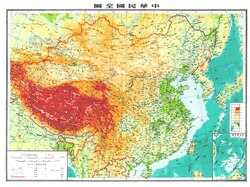
Key Facts
- Total Area: 9,596,961 km (3,705,407 sq mi)
- Population: Approximately 1.4 billion (2019 census)
- Official Language: Standard Chinese (de facto)
- Currency: Renminbi (RMB)
- Time Zone: UTC +8 (China Standard Time)
- Major Cities: Shanghai, Beijing, Chongqing, Tianjin, Guangzhou, and Shenzhen
Historical Background and the Civil War
The modern geopolitical landscape of the region was largely shaped by the Chinese Civil War. In 1949, the Chinese Communist Party (CCP) and the People's Liberation Army defeated the Kuomintang (KMT)'s National Revolutionary Army. This conflict forced the KMT to relocate the government and institutions of the Republic of China (ROC) to Taiwan, an island that had come under its control following the surrender of Japan in 1945.
With the establishment of the People's Republic of China on October 1, 1949, a complex situation emerged. Both the PRC and the ROC competed for international legitimacy and recognition as the sole legitimate government of China. Over time, particularly with the democratization of Taiwan in the 1990s, the terminology used to describe these different political entities has evolved significantly.
Legal and Political Distinctions
The term "Mainland China" is frequently used to exclude certain territories that, while part of the People's Republic of China, operate under different legal and political frameworks.
Hong Kong and Macau
Although Hong Kong (returned in 1997) and Macau (returned in 1999) are part of the PRC, they are generally excluded from the term "Mainland China." This is due to the One Country, Two Systems policy, which allows these Special Administrative Regions (SARs) to maintain distinct legal, political, and economic systems. In Chinese law, such as the "Exit and Entry Administration Law," Mainland China is explicitly distinguished from the Hong Kong and Macau SARs.
![Currently, the scope of the "mainland area" as interpreted by Taiwan's Executive Yuan (light green)[1]](/images/e6/c5/e6c5c594e58ae6245b2ab9ac9c2f9bc23e36b3e4d333d2e134e8964a2110325d.webp)
The Republic of China (Taiwan) Perspective
The Republic of China maintains its own legal definitions regarding the term. Under the 1991 Additional Articles of the ROC Constitution, the term "mainland area" is used to describe territories claimed by the ROC but not under its actual control. Conversely, areas under ROC control are referred to as the "free area of the Republic of China." This distinction is central to the legal and political discourse regarding Cross-Strait relations.
Summary of Regional Classifications
| Term | Primary Context | Included Territories |
|---|---|---|
| Mainland China | PRC Administration | Territories under direct PRC control (excluding HK/Macau) |
| Hong Kong / Macau | Special Administrative Regions | SARs under the "One Country, Two Systems" policy |
| Free Area of the ROC | Taiwanese Legal Context | Areas under the control of the Republic of China |
| Mainland Area (ROC) | Taiwanese Legal Context | Territories claimed by the ROC but not controlled by it |
Frequently Asked Questions
Why are Hong Kong and Macau excluded from "Mainland China"?
They are excluded because they operate under the One Country, Two Systems policy, which grants them a degree of autonomy and distinct legal and economic systems compared to the mainland.
What is the literal meaning of the Chinese terms for Mainland China?
The term Zhōngguó Dàlù (中国大陆) literally means "Continental China," while Zhōngguó Nèidì (中国内地) translates to "Inland China."
Does the term "Mainland China" include the Kinmen and Matsu islands?
No. While these islands were historically part of Fujian Province, they are not controlled by the PRC and are therefore not included in the definition of "Mainland China."
How is the term used in international economics?
The term is often used in economic indicators, such as the IMD Competitiveness Report, to specifically refer to the mainland territories of the People's Republic of China.
What is the difference between the PRC and the ROC?
The People's Republic of China (PRC) was established in 1949 and governs the mainland. The Republic of China (ROC) relocated its government to Taiwan following the Chinese Civil War.