China: A Comprehensive Overview of the People's Republic
The People's Republic of China (PRC) is a global powerhouse with a history spanning millennia, evolving from ancient dynastic rule to a modern unitary communist state. As one of the world's most populous and economically influential nations, China blends deep-rooted cultural traditions with rapid technological advancement and massive infrastructure development.
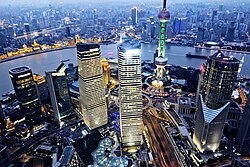
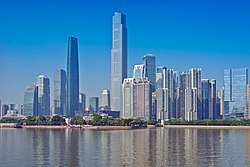
From the towering skyscrapers of Shanghai to the historic corridors of the Forbidden City, the nation represents a complex intersection of political control, economic ambition, and diverse ethnic heritage.
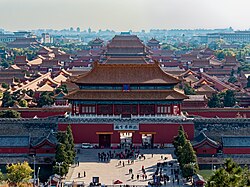
Key Facts
- Capital: Beijing
- Largest Cities: Shanghai (urban population) and Chongqing (municipal population)
- Official Language: Standard Chinese
- Government: Unitary communist state led by the Chinese Communist Party (CCP)
- Total Area: 9,596,961 km², making it the 3rd largest country by area
- Population: Estimated at 1,404,890,000 (2025 estimate)
- Economy: Ranked 1st in GDP (PPP) and 2nd in nominal GDP (2026 estimates)
- Currency: Renminbi (yuan, ¥)
Historical Evolution
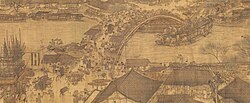
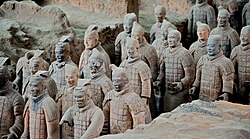
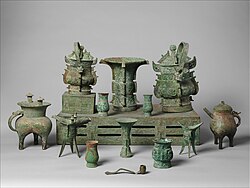
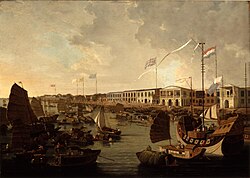
China's history is categorized by distinct eras of governance and social transformation. The first imperial dynasty was established in 221 BCE, marking the beginning of a long period of imperial rule characterized by the rise and fall of various dynasties.
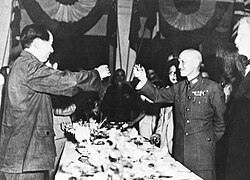
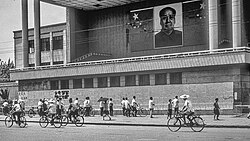
The transition to modernity began with the establishment of the Republic of China on January 1, 1912. However, following decades of conflict and social upheaval, the People's Republic of China was officially proclaimed on October 1, 1949, under the leadership of the Communist Party.
Geography and Administration
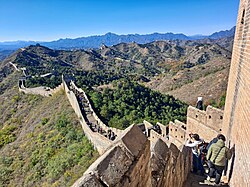
China's vast territory is characterized by diverse climates and terrains, as illustrated by the Köppen-Geiger climate classification. The country is organized into several administrative levels to manage its massive population and landmass.
![Köppen-Geiger climate classification map for mainland China[105]](/images/42/1f/421fa3d2e24a1a5e5cf87c790359653195a01eed3c74b43d06bba791fed3b6bc.webp)
Administrative Divisions
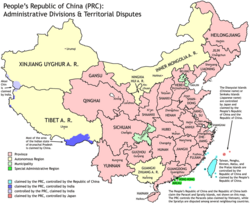
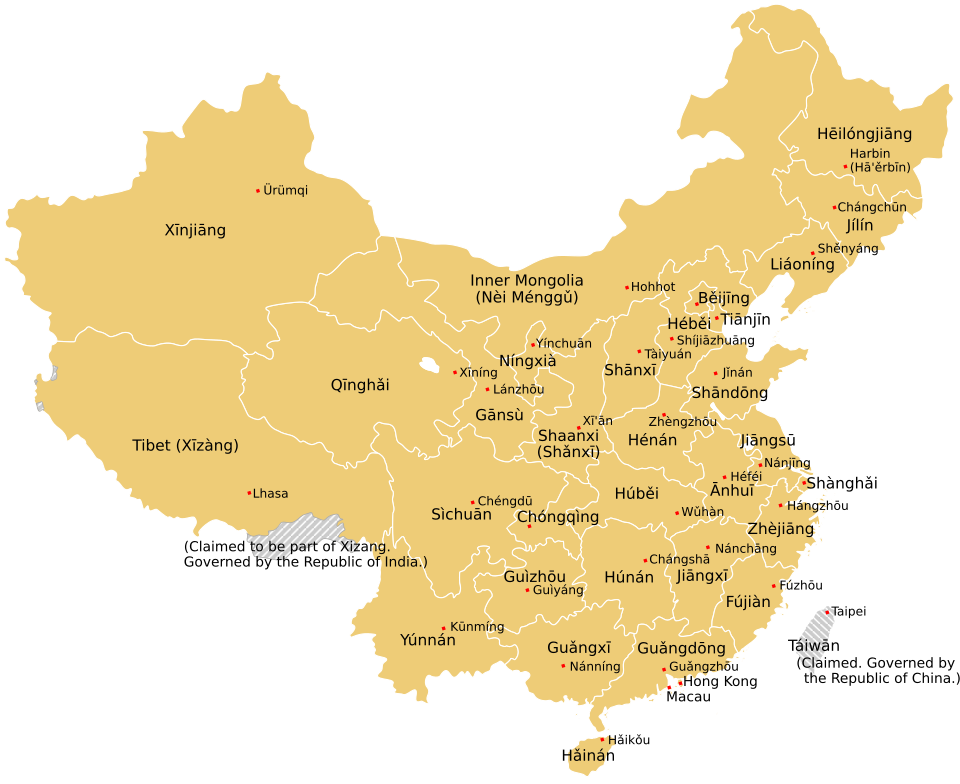
The PRC is divided into several types of administrative regions:
- Provinces: Including Anhui, Guangdong, Sichuan, and Zhejiang, among others.
- Autonomous Regions: Such as Tibet, Xinjiang, Inner Mongolia, Ningxia, and Guangxi, which are designated for specific ethnic groups.
- Direct-administered Municipalities: Beijing, Chongqing, Shanghai, and Tianjin.
- Special Administrative Regions (SARs): Hong Kong and Macau, which maintain a degree of autonomy.
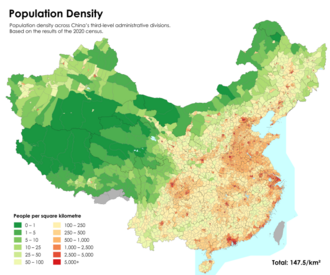
Demographics and Culture
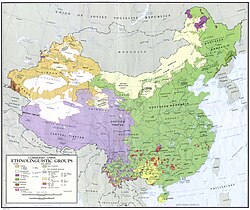
China is a multi-ethnic state, though the Han Chinese make up the vast majority of the population at 91.11%. Other significant ethnic groups include the Zhuang, Uyghur, Hui, Miao, Manchu, Yi, Tujia, and Tibetan.
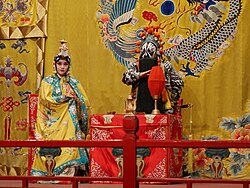
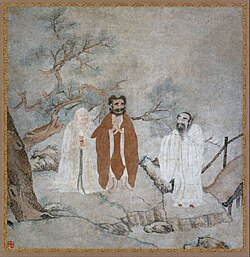
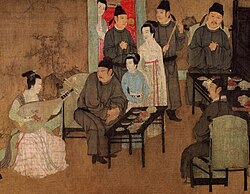
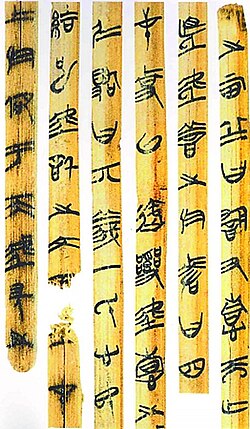
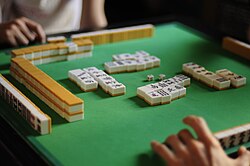
Culture in China is a synthesis of ancient philosophies—including Confucianism, Buddhism, and Taoism—and modern socialist values. This is evident in everything from traditional Peking opera to the widespread use of simplified Chinese characters in the mainland.
Economy, Science, and Infrastructure
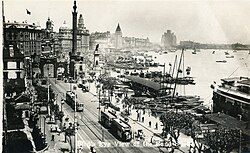
China has experienced unprecedented economic growth, becoming a global leader in manufacturing and technology. Its economy is characterized by a mix of state-led initiatives and market-driven growth.
Technological and Industrial Achievements
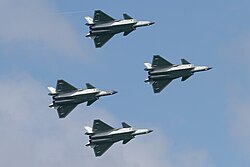
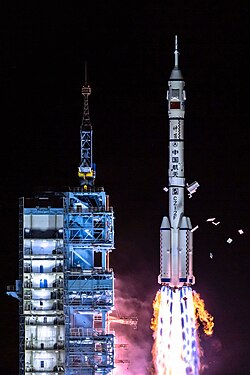
The nation has invested heavily in high-tech sectors and aerospace, producing 5th generation stealth fighters like the Chengdu J-20 and launching the Shenzhou missions into space.
Infrastructure Development
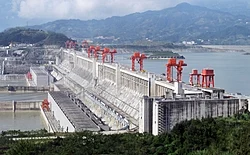
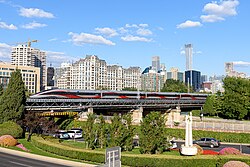
China's infrastructure is among the most advanced in the world, featuring the Fuxing high-speed rail network and the Three Gorges Dam, the world's largest hydroelectric power station.
Summary of National Statistics
| Category | Detail |
|---|---|
| Total Area | 9,596,961 km² |
| Population (2025 Est.) | 1.404 Billion |
| GDP (PPP, 2026 Est.) | $44.295 Trillion |
| HDI (2023) | 0.797 (High) |
| Official Script | Simplified Chinese (Mainland) |
Frequently Asked Questions


What is the official language and script of China?
The official language is Standard Chinese. In mainland China, Simplified Chinese is the official script, while Traditional Chinese is used in Hong Kong and Macau.
Which city is the largest in China?
The answer depends on the metric: Shanghai is the largest by urban population, while Chongqing is the largest by municipal population.
How is the Chinese government structured?
China is a unitary communist state. The primary leadership includes the CCP General Secretary and President (currently Xi Jinping), the Premier (Li Qiang), and the National People's Congress as the legislature.
What are the Special Administrative Regions (SARs)?
Hong Kong and Macau are Special Administrative Regions, which means they operate under a different administrative and legal system than the mainland provinces.
What is the dominant ethnic group in China?
The Han Chinese are the dominant ethnic group, comprising 91.11% of the population according to 2020 data.