Articles/Republic of China (Taiwan): A Comprehensive Overview of History, Culture, and Economy
Republic of ChinaTaiwan historyTaiwan economyTaiwanese cultureTaipei
Republic of China (Taiwan): A Comprehensive Overview of History, Culture, and Economy
Understanding the Republic of China (Taiwan): A Comprehensive Guide The Republic of China (ROC), commonly known as Taiwan, is a vibrant island nation located in East Asia. Characterized b...
Understanding the Republic of China (Taiwan): A Comprehensive Guide
The Republic of China (ROC), commonly known as Taiwan, is a vibrant island nation located in East Asia. Characterized by a complex history, a high-tech economy, and a diverse cultural landscape, Taiwan serves as a critical hub in the global geopolitical and economic arena. From its ancient indigenous roots to its status as a modern democratic powerhouse, the island offers a unique study in resilience and rapid development.
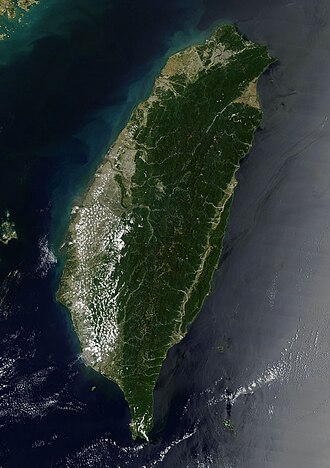
A satellite image of Taiwan, showing it is mostly mountainous in the east, with gently sloping plains in the west. The Penghu Islands are west of the main island.: A satellite image of Taiwan, showing it is mostly mountainous in the east, with gently sloping plains in the west. The Penghu Islands are west of the main island.
Key Facts
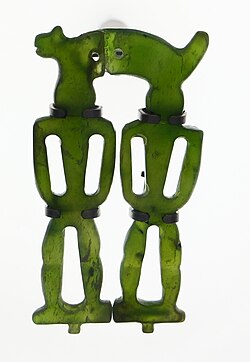
2,300-year-old jade, unearthed at Beinan Cultural Park
Capital: Taipei
Official Languages: Standard Chinese (Mandarin)
Population: Approximately 23.3 million (2025 estimate)
Government Type: Unitary semi-presidential republic
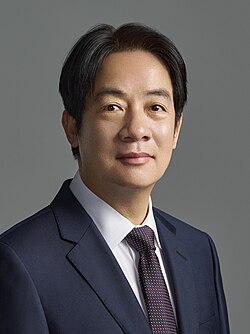
Current President: Lai Ching-te
Currency: New Taiwan dollar (NT$)
GDP (PPP): $2.275 trillion (2026 estimate)
Geography and Climate
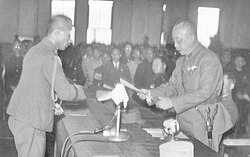
General Chen Yi (right) accepting the receipt of General Order No. 1 from Rikichi Andō (left), the last Japanese governor-general of Taiwan, in Taipei City Hall
Taiwan is a mountainous island with a distinct geographical split. The eastern part of the island is dominated by rugged mountain ranges, while the western side features gently sloping plains where much of the population resides. The archipelago also includes several outlying islands, such as the Penghu Islands, Kinmen, and Matsu.
: A satellite image of Taiwan, showing it is mostly mountainous in the east, with gently sloping plains in the west. The Penghu Islands are west of the main island.
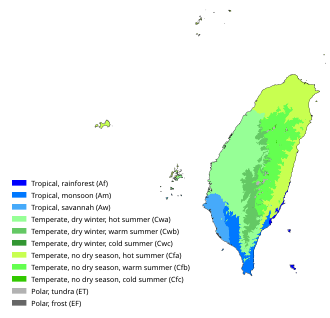
The island's climate is diverse, categorized by the Köppen climate classification—a system used to identify different climate zones based on temperature and precipitation. The terrain is varied enough to support everything from high-altitude peaks to coastal plains.
Köppen climate classification of Taiwan: Köppen climate classification of Taiwan
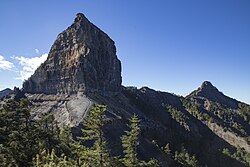
Mount Dabajian was selected as one of the 100 Peaks of Taiwan.: Mount Dabajian was selected as one of the 100 Peaks of Taiwan.
A Journey Through History
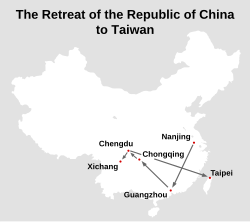
The Nationalists' retreat to Taipei
Taiwan's history is a tapestry of different eras and colonial influences. Long before modern administration, the island was home to various indigenous peoples, whose cultures and traditions continue to influence the nation today.
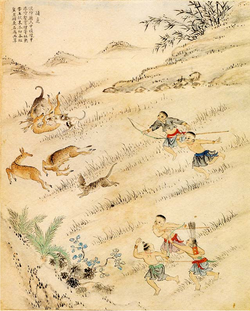
Taiwanese indigenous peoples hunting deer, 1746: Taiwanese indigenous peoples hunting deer, 1746
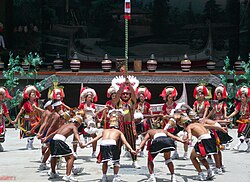
Amis people of Taiwan performing a traditional dance: Amis people of Taiwan performing a traditional dance
The colonial period began in earnest with Dutch Formosa in 1624, followed by the Kingdom of Tungning in 1662. The island then came under Qing rule in 1683. A significant shift occurred in 1895 when Taiwan fell under Japanese rule, a period that lasted until 1945. Following World War II, the Republic of China assumed control, eventually retreating to Taiwan in 1949.
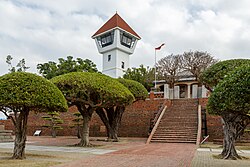
Fort Zeelandia, built in 1634, was the governor's residence in Dutch Formosa.: Fort Zeelandia, built in 1634, was the governor's residence in Dutch Formosa.
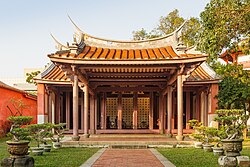
Tainan Confucian Temple built in 1665 during the Kingdom of Tungning period: Tainan Confucian Temple built in 1665 during the Kingdom of Tungning period
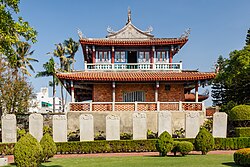
Chihkan Tower, originally built as Fort Provintia by the Dutch, was rebuilt under Qing rule.: Chihkan Tower, originally built as Fort Provintia by the Dutch, was rebuilt under Qing rule.
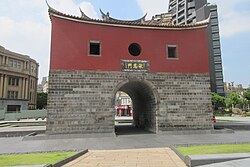
Taipei North Gate, constructed in 1884, was part of the Walls of Taipei.: Taipei North Gate, constructed in 1884, was part of the Walls of Taipei.
The Transition to Democracy
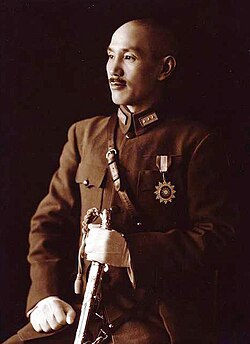
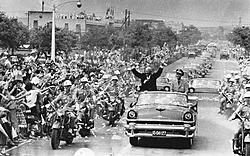
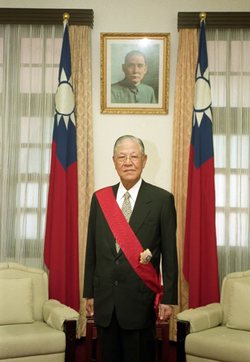
The latter half of the 20th century saw Taiwan move from a period of martial law to a flourishing democracy. Key figures like Chiang Kai-shek led the government during the early years of the ROC retreat, but the nation eventually transitioned toward direct elections. In 1996, Lee Teng-hui became the first president directly elected by the people.
Chiang Kai-shek, leader of the Kuomintang from 1925 until his death in 1975: Chiang Kai-shek, leader of the Kuomintang from 1925 until his death in 1975
With Chiang Kai-shek, US president Dwight D. Eisenhower waved to crowds during his visit to Taipei in June 1960.: With Chiang Kai-shek, US president Dwight D. Eisenhower waved to crowds during his visit to Taipei in June 1960.
In 1988, Lee Teng-hui became the first president of the Republic of China born in Taiwan and was the first to be directly elected in 1996.: In 1988, Lee Teng-hui became the first president of the Republic of China born in Taiwan and was the first to be directly elected in 1996.
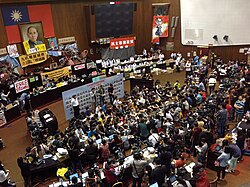
Students occupied the Legislative Yuan in protest against a controversial trade agreement with China in March 2014.: Students occupied the Legislative Yuan in protest against a controversial trade agreement with China in March 2014.
Government and Politics
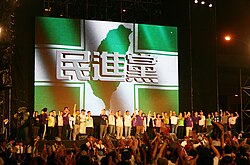
A Democratic Progressive Party event in Taipei, 2012
Taiwan operates as a unitary semi-presidential republic. The government is divided into several branches, including the Executive Yuan, the Legislative Yuan, and the Judicial Yuan. The President serves as the head of state, while the Premier leads the Executive Yuan.
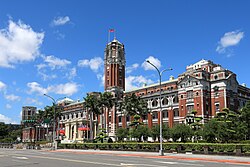
Taiwan's popularly elected president resides in the Presidential Office Building, Taipei, originally built in the Japanese era for colonial governors.: Taiwan's popularly elected president resides in the Presidential Office Building, Taipei, originally built in the Japanese era for colonial governors.
Lai Ching-te, President of the Republic of China: Lai Ching-te, President of the Republic of China
Cho Jung-tai, Premier of the Republic of China: Cho Jung-tai, Premier of the Republic of China
The political landscape is characterized by active civic engagement and a strong emphasis on democratic processes. However, the island's international status remains a complex issue, particularly regarding its relations with the People's Republic of China (PRC).
Results from an identity survey conducted each year from 1992 to 2020 by the Election Study Center, National Chengchi University.[325] Responses are Taiwanese (green), Chinese (red) or Both Taiwanese and Chinese (hatched). No response is shown as gray.: Results from an identity survey conducted each year from 1992 to 2020 by the Election Study Center, National Chengchi University. Responses are Taiwanese (green), Chinese (red) or Both Taiwanese and Chinese (hatched).
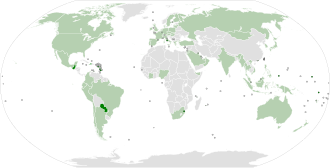
Republic of China (Taiwan) Countries that have formal relations with Taiwan Countries that have formal relations with the PRC and informal relations with Taiwan: Republic of China (Taiwan) Countries that have formal relations with Taiwan Countries that have formal relations with the PRC and informal relations with Taiwan
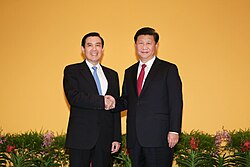
The 2015 Ma–Xi meeting was the only meeting between the leaders of both sides of the Taiwan Strait since 1949.: The 2015 Ma–Xi meeting was the only meeting between the leaders of both sides of the Taiwan Strait since 1949.
Economy and Technology
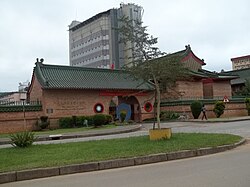
ROC embassy in Eswatini
Taiwan boasts a highly developed economy with a significant focus on technology and manufacturing. It is a global leader in the semiconductor industry, home to giants like TSMC (Taiwan Semiconductor Manufacturing Company). This technological prowess contributes to its high Human Development Index (HDI) and strong GDP per capita.
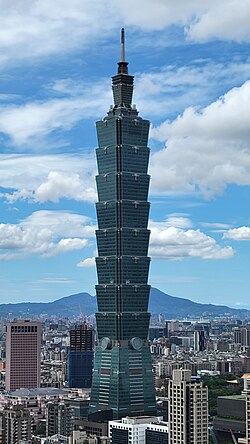
Taipei 101 held the record for the world's tallest skyscraper from 2004 to 2009.: Taipei 101 held the record for the world's tallest skyscraper from 2004 to 2009.
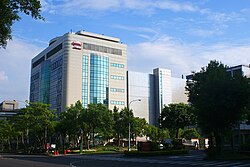
TSMC fab 5 located in Hsinchu Science Park: TSMC fab 5 located in Hsinchu Science Park
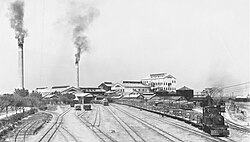
A sugarcane mill and its railways in Tainan in the 1930s: A sugarcane mill and its railways in Tainan in the 1930s
Demographics and Culture
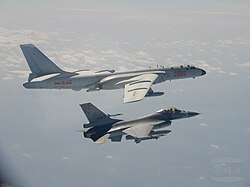
A Taiwanese F-16 fighter jet flies next to a Chinese H-6 bomber (top) in Taiwan's ADIZ.
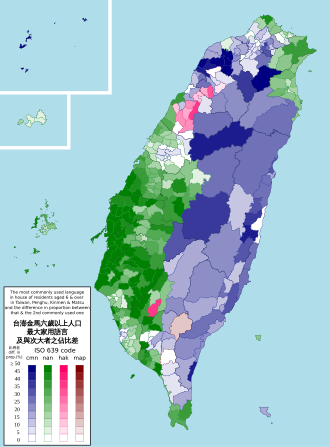
The population of Taiwan is predominantly Han (95%), with significant indigenous (2.5%) and other ethnic groups. This diversity is reflected in the languages spoken, including Mandarin, Hokkien, Hakka, and various Formosan languages.
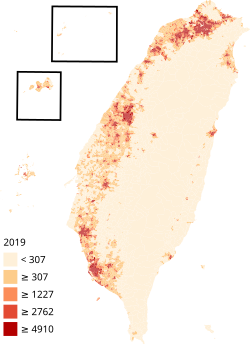
Population density map of Taiwan (residents per square kilometer): Population density map of Taiwan (residents per square kilometer)
Most commonly used home language in each area, darker in proportion to the lead over the next most common:: Most commonly used home language in each area.
Religion plays a vital role in Taiwanese life, with Buddhism, Taoism, and Christianity being the most prominent. The culture is a rich blend of traditional Chinese influences, indigenous customs, and modern global trends.
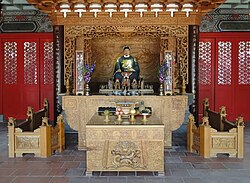
Main altar of the Shrine of Koxinga in Tainan.: Main altar of the Shrine of Koxinga in Tainan.
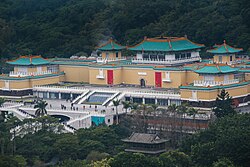
The National Palace Museum is an institute dedicated to the organization, care, and display of ancient Chinese artifacts and works of art.: The National Palace Museum is an institute dedicated to the organization, care, and display of ancient Chinese artifacts and works of art.
Education and Lifestyle
Taiwan places a high value on education, with institutions like National Taiwan University being highly prestigious. Beyond academics, the island has a vibrant lifestyle, including a passion for professional baseball and a world-renowned culinary scene.
The gate of National Taiwan University, which is widely considered to be the most prestigious university in Taiwan[478]: The gate of National Taiwan University, which is widely considered to be the most prestigious university in Taiwan.
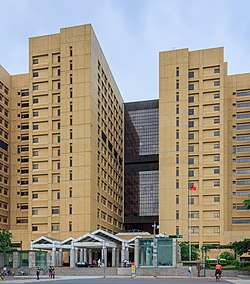
National Taiwan University Hospital: National Taiwan University Hospital
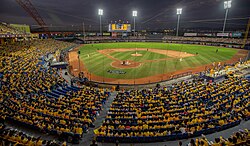
The Chinese Professional Baseball League (CPBL) is the top-tier professional baseball league in Taiwan.: The Chinese Professional Baseball League (CPBL) is the top-tier professional baseball league in Taiwan.
Summary of Key Statistics
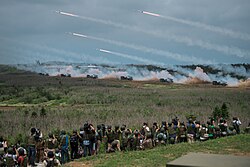
The Han Kuang Exercise is an annual military exercise by the ROC Armed Forces in preparation for a possible attack from the PRC.
Taiwan Economic and Demographic Overview
Category
Value/Detail
Total Population (2025 Est.)
23,299,132
GDP (PPP) 2026 Est.
$2.275 Trillion
GDP Per Capita (Nominal) 2026 Est.
$42,103
HDI (2023)
0.934 (Very High)
Population Density
644/km²
Frequently Asked Questions
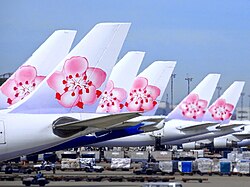
China Airlines aircraft lineup at Taoyuan International Airport
What is the official language of Taiwan?
The official language is Standard Chinese, written in Traditional Chinese script. However, many people also speak Hokkien, Hakka, and various indigenous languages.
How is Taiwan's economy characterized?
Taiwan has a highly advanced economy, particularly in the technology sector. It is a global leader in semiconductor manufacturing and maintains a very high Human Development Index (HDI).
What is the political system in Taiwan?
Taiwan is a unitary semi-presidential republic. This means it has both a president and a premier, with power distributed among several branches of government including the Legislative and Judicial Yuans.
What are the main ethnic groups in Taiwan?
As of 2024, the population is approximately 95% Han, 2.5% Indigenous, and 2.5% other ethnic groups.
What is the significance of the "Chinese Taipei" designation?
Due to its complex international status, Taiwan competes in many international sporting events, such as the Olympics, under the name "Chinese Taipei".
The flag used by Taiwan at the Olympic Games, where it competes as "Chinese Taipei" (中華台北): The flag used by Taiwan at the Olympic Games, where it competes as "Chinese Taipei" (中華台北)

![Results from an identity survey conducted each year from 1992 to 2020 by the Election Study Center, National Chengchi University.[325] Responses are Taiwanese (green), Chinese (red) or Both Taiwanese and Chinese (hatched). No response is shown as gray.](/images/cd/47/cd47f8f9d8f212d6f60e265836af3eb2b200655e823804241852738a534d05aa.webp)
![The gate of National Taiwan University, which is widely considered to be the most prestigious university in Taiwan[478]](/images/3a/e0/3ae066320065804a83e10c59e941b006c179779e9c25d65bd5ee14b7aa118217.jpg)