Lynching in the United States: A History of Racial Terror
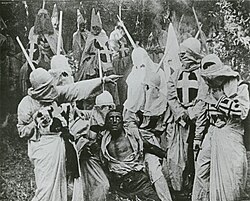
Lynching refers to extrajudicial killings—murders carried out by a mob without legal trial or judicial process. In the United States, this practice emerged in the pre-Civil War South during the 1830s and persisted as a tool of racial control until the mid-20th century. While victims came from various ethnic backgrounds, the emancipation of roughly 4 million enslaved African Americans led to a surge in lynchings perpetrated by white Southerners to enforce white supremacy.
The peak of this violence occurred between the 1890s and the 1920s. Although most incidents took place in the American South, racially motivated killings also occurred in the Midwest and the Southwest, where people of Mexican descent were frequently targeted.
![A graph of lynchings in the U.S. by victim race and year[1]](/images/f7/35/f7351f93f28681e08a6dff7f64b9f6ff6122e9d3aa4f9b4c8c9fc62354045f45.png)
Key Facts
![Lynching of John Willie Clark in Cartersville, Georgia, September 1930, after killing Police Chief J. B. Jenkins[2]](/images/37/2e/372eca0ff7e98e65fc9ecab2e8af5a41660bf5c06d8a13d9f6c30ec7b81feae3.jpg)
- Primary Victims: While various ethnicities were targeted, African Americans were the primary victims, particularly after the Civil War.
- Peak Period: The most intense era of lynching spanned from the 1890s to the 1920s.
- Geographic Reach: Concentrated in the South, but extended to the Midwest and Southwest.
- Common Pretexts: Accusations of murder or sexual assault (rape) were frequently used to justify killings.
- Nature of Violence: Included hanging, burning alive, shooting, and mutilation.
The Mechanics of Racial Terror
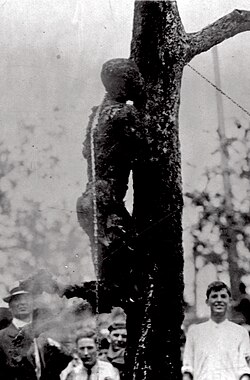
Lynchings were often used as a means of intimidation to maintain social hierarchies and enforce Jim Crow etiquette—a system of legal and social segregation. As African Americans moved north and west during the Great Migration (c. 1916–1970), the violence followed them, serving as a reminder of white supremacist control.
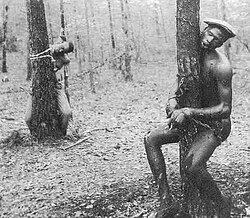
While many associate lynching exclusively with hanging, the methods were diverse and brutal. Victims were shot, thrown from bridges, or dragged behind vehicles. In some cases, "mock" lynchings were used to torture individuals into making confessions.
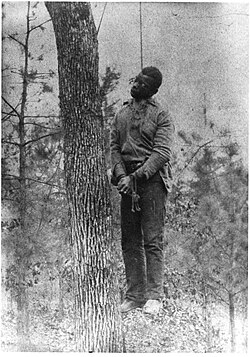
Spectacle and Memorabilia
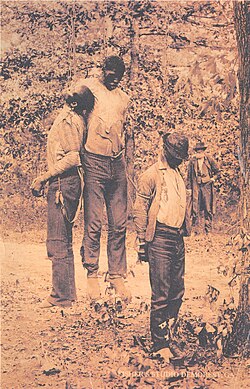
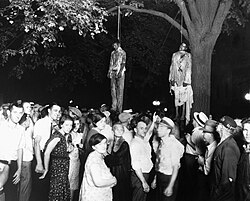
Many lynchings were conducted as public spectacles. Because hangings were highly visible, they were often professionally photographed. These images were subsequently sold as postcards and souvenirs, turning acts of murder into macabre collectibles.
![Postcard of the 1920 Duluth, Minnesota lynchings. Two of the Black victims are still hanging while the third is on the ground. Postcards of lynchings were popular souvenirs in the U.S.[101]](/images/dc/bb/dcbbe6e82d4dd671ce08951bcffa0c0b3670bcfe95c592ab1c2fee1c4d8cb469.jpg)
Statistical Overview of Lynching
Data from the Tuskegee Institute provides a glimpse into the scale of this violence. Between 1883 and 1941, there were 4,467 recorded victims. The vast majority were men, though women and individuals of unidentified gender were also targeted. The racial breakdown included 3,265 Black victims, 1,082 white victims, 71 Mexican or Mexican-descent victims, 38 American Indians, 10 Chinese, and one Japanese individual.
| State | Victims per 100,000 | Common Cause | Percentage of Victims |
|---|---|---|---|
| Florida | 79.8 | Murder | 38% |
| Mississippi | 52.8 | Rape | 16% |
| Kentucky | 45.7 | Attempted Rape | 7% |
| Louisiana | 43.7 | Theft | 7% |
| Arkansas | 42.6 | Felonious Assault | 6% |
| Georgia | 41.8 | Miscellaneous/No Offense | 24% |
Major Incidents and Massacres
Some of the most devastating events in U.S. history were mass lynchings. The 1919 Elaine massacre in Arkansas resulted in between 100 and 237 deaths. In 1871, the Los Angeles Chinese massacre claimed 19 lives, and the 1891 New Orleans lynchings targeted 11 Italian immigrants.
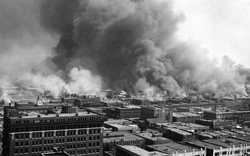
The year 1919 was particularly violent, with at least 76 people killed in mob violence, including more than 11 African American veterans. This era of terror culminated in the 1921 Tulsa race massacre, where the prosperous Greenwood District was destroyed and up to 300 Black residents were killed.
Resistance and Legal Battles
![Mississippi Ku-Klux in the Disguises in Which They Were Captured, 1872. They were arrested in Tishomingo County, Mississippi, for attempted murder. (Wood engraving from photograph, Harper's Weekly, January 27, 1872, Prints and Photographs Division, Library of Congress)[37]](/images/e1/9f/e19f9072b0ff6703825155bfc56aa67b02a194604486a66e639f9331ae6503dd.jpg)
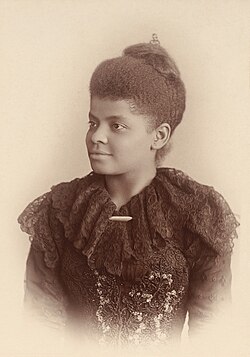
Resistance to lynching came from various fronts. Ida B. Wells became a pivotal figure in the 1890s, exposing the truth about lynchings to an international audience. The NAACP also led aggressive campaigns, including the use of a dedicated anti-lynching flag displayed after each murder.
Legislative efforts to stop the violence faced immense opposition. The Dyer Anti-Lynching Bill, passed by the House, was repeatedly blocked in the Senate by Southern legislators. It was not until much later that federal action gained traction, eventually leading to lynching being recognized as a federal hate crime.
![NAACP flag against lynching, displayed in front of their offices from 1920 to 1938 after each lynching[110]](/images/c4/c2/c4c291e6a7a97b7059b07e73b21f0f38a4b068b859cb4f2898663889d931940a.webp)
Regional Variations
The West and Southwest
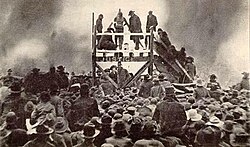
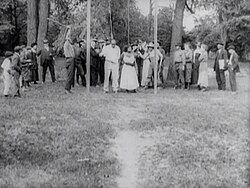
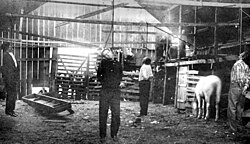
Lynching was not confined to the South. In Texas, a database from Sam Houston State University records over 600 lynchings between 1882 and 1942, many of which targeted people of Mexican heritage. Other instances occurred in California, Minnesota, Arizona, Wyoming, and Oregon.
Frequently Asked Questions
![The lynching of Laura Nelson in Okemah, Oklahoma, on May 25, 1911[49][50]](/images/82/79/8279aa1963aaed79d0d5e7dcf8633bfd2cae7a8890de09616fded2fabbba73e2.jpg)
![The lynching of African American William "Froggie" James in Cairo, Illinois, on November 11, 1909. A crowd of thousands watched the lynching.[77]](/images/e5/07/e5072ef4b375f51d9d36380522ec97695a9d290259a31c88f49572275ee20759.jpg)
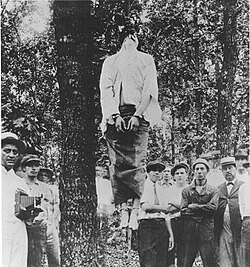
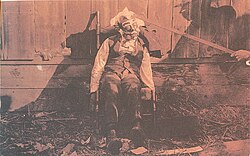
![The front and back of a postcard showing the charred corpse of Will Stanley in Temple, Texas, in 1915. Joe Meyers marked the back of the postcard to show his parents he was in the crowd: "This is the Barbecue we had last night.. my picture is to the left with a cross over it.. your son Joe".[96]](/images/d6/43/d64312087bfe1cc7b922310063d57f476dbabfb818474f3dd69c39ce38c7ce3c.jpg)
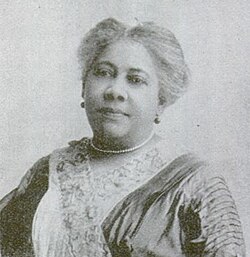
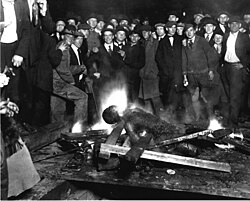
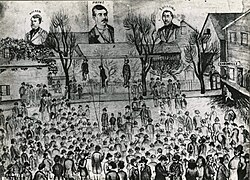
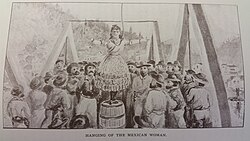
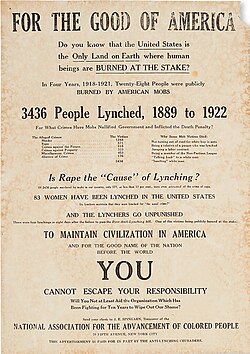
Were lynchings only carried out by hanging?
No. While hanging was common due to its visibility for photographers, victims were also shot, burned alive, thrown off bridges, or dragged behind cars.
Who were the primary victims of lynching in the U.S.?
African Americans were the primary victims, particularly in the South. However, white immigrants, Latinos (especially in the Southwest), American Indians, and Chinese individuals were also targeted.
What were the most common justifications used for lynching?
The most common accusations were murder (38%) and sexual assault, including rape (16%) and attempted rape (7%). These were often pretexts to punish those who violated Jim Crow etiquette or competed economically with white citizens.
When did lynching mostly end in the United States?
Lynchings declined significantly during the civil rights movement of the 1950s and 1960s, although isolated instances occurred as late as 1981.
What was the purpose of the Dyer Anti-Lynching Bill?
The bill sought to make lynching a federal crime, allowing the federal government to intervene when state authorities failed to protect citizens or prosecute mob violence.