Luis Agote and the Revolution of Non-Direct Blood Transfusion
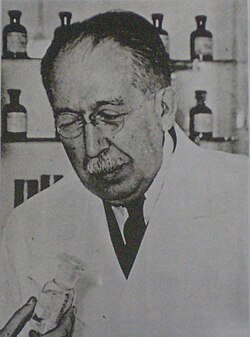
The ability to store and transfer blood safely is one of the most critical advancements in modern medicine. For centuries, physicians struggled with the immediate coagulation of blood once it left the human body, making transfusions a dangerous and time-sensitive ordeal. This challenge was fundamentally solved by Luis Agote, an Argentine physician whose pioneering research in the early 20th century transformed the practice of hematology.
Key Facts
- Luis Agote was the first person in the Americas to perform a non-direct blood transfusion.
- He utilized sodium citrate as an anticoagulant to prevent blood from clotting.
- The first successful human procedure took place on November 9, 1914, at Rawson Hospital in Buenos Aires.
- Agote developed his method independently of Belgian surgeon Albert Hustin.
- His work solved the critical problem of blood solidification, allowing blood to be kept outside the body for later use.
The Evolution of Blood Transfusion
Before Agote's breakthrough, the history of blood transfusion was marked by trial, error, and significant risk. The first recorded transfusion occurred around 1666, conducted between dogs by English doctor Richard Lower. By 1667, French scientist Juan Bautista Denys attempted to transfuse a human with animal blood. It wasn't until 1900 that Karl Landsteiner identified blood groups and the substances responsible for the agglutination (clumping) of red blood cells, revealing why some blood types are incompatible.
Despite these discoveries, the early 20th century relied on direct transfusions. This was because blood begins to coagulate—a natural defense mechanism to stop bleeding and minimize hemorrhages—within 6 to 12 minutes of leaving the body. This process involves platelets and a network of fibrin filaments. Fibrin is created from protein plasma by the enzyme thrombin, which is itself triggered by a precursor called substabrin and the presence of calcium.
Agote's Scientific Breakthrough
Driven by a desire to help hemophilic patients who suffer from impaired blood clotting, Luis Agote partnered with laboratory technician Lucio Imaz to find a way to preserve blood. Their early attempts to use specialized containers and constant temperature controls failed. Agote shifted his focus to finding a chemical substance that could prevent coagulation.
Through extensive in vitro (laboratory) tests and animal trials, Agote discovered that sodium citrate effectively prevented the formation of clots by eliminating calcium ions from the blood. Crucially, he found that the human body could tolerate and expel this substance without major complications.
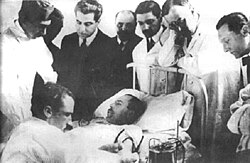
On November 9, 1914, Agote performed the first human trials at the Instituto Modelo de Clínica Médica in Argentina. The event was witnessed by prominent figures, including the Rector of the University of Buenos Aires, Eufemio Uballes, and the municipal mayor, Enrique Palacio.
Life and Legacy of Luis Agote
Born on September 22, 1868, Agote was the son of a politician and a dedicated academic. He studied at the Colegio Nacional de Buenos Aires and the University of Buenos Aires Faculty of Medicine, where he later served as a teacher. After graduating in 1893 with a thesis on suppurative hepatitis, he held several prestigious roles, including Secretary of the National Department of Hygiene and head of the leper hospital on Martin Garcia island.
Beyond medicine, Agote was active in Argentine governance, serving as a Congressman in 1910 and a Senator in 1916. His scientific contributions earned him honorary professorships and membership in the National Academy of Medicine of Argentina, as well as the Order of Merit from Chile in 1916.
| Category | Details |
|---|---|
| Major Achievement | First non-direct blood transfusion in the Americas |
| Key Substance | Sodium Citrate (Anticoagulant) |
| Date of First Human Trial | November 9, 1914 |
| Location | Buenos Aires, Argentina |
| Academic Background | University of Buenos Aires Faculty of Medicine |
Frequently Asked Questions
What is a non-direct blood transfusion?
A non-direct transfusion is a procedure where blood is collected from a donor, preserved using an anticoagulant to prevent clotting, and then transferred to a recipient, rather than flowing directly from one person to another.
How does sodium citrate prevent blood from clotting?
Sodium citrate works by eliminating calcium ions from the blood. Since calcium is a necessary element in the process that creates thrombin and fibrin, its removal prevents the blood from solidifying.
Did Luis Agote work with Albert Hustin?
No. While Albert Hustin also discovered the anticoagulant properties of sodium citrate in March 1914, Luis Agote worked independently and separately from him.
Why was blood coagulation a problem for early doctors?
Blood naturally begins to coagulate within 6 to 12 minutes after leaving the body to prevent hemorrhage. This made it impossible to store blood or transport it, limiting doctors to immediate, direct transfusions.
What other roles did Luis Agote hold besides being a doctor?
Agote was a teacher at the University of Buenos Aires, the head of a leper hospital, and a political leader who served as both a Congressman and a Senator in Argentina.