Low German: The History, Dialects, and Global Reach of Plattdüütsch
Known by many names—including Plattdüütsch, Low Saxon, and Neddersassisch—Low German is a family of West Germanic languages spoken across Northern Europe and in various diaspora communities worldwide. Often mistaken for a mere dialect of Standard German, it is a distinct linguistic branch with deep roots in the North Sea Germanic tradition, sharing a closer ancestral relationship with English and Dutch than with the High German spoken in southern Germany.
From the bustling ports of the Hanseatic League to the rural colonies of South America, Low German has served as a bridge between cultures and a marker of regional identity for centuries.
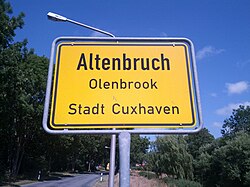
Key Facts
- Native Regions: Northern and western Germany, eastern Netherlands, and southern Denmark.
- Speaker Population: Estimated between 4.35 and 7.15 million native speakers, with up to 10 million second-language speakers.
- Language Family: Indo-European > Germanic > West Germanic > North Sea Germanic.
- Official Status: Recognized as a minority language in Germany (including states like Lower Saxony and Schleswig-Holstein) and the Netherlands.
- Global Presence: Significant speaker populations in Bolivia, Paraguay, Brazil, Canada, and the United States.
The Linguistic Landscape of Low German
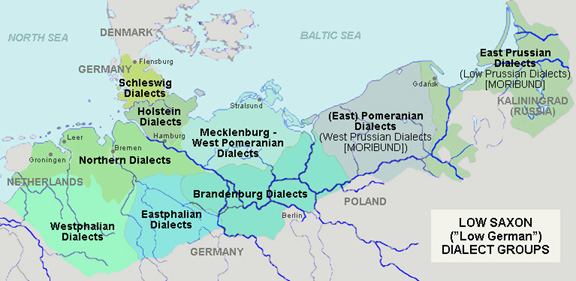
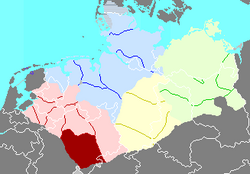
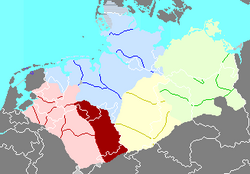
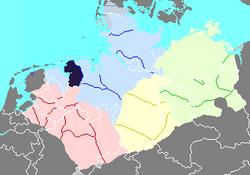
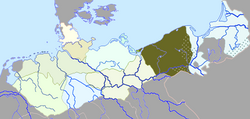
Low German is not a single monolithic tongue but a collection of varieties. The primary division lies between Low Saxon (West Low German) and East Low German. Within these, numerous regional dialects exist, such as Holsteinian, Westphalian, and the various Dutch Low Saxon varieties spoken in provinces like Groningen and Drenthe.
One of the most distinct branches is Plautdietsch (Mennonite Low German). This variety was carried across the globe by Russian Mennonites, creating linguistic enclaves far from the European mainland.
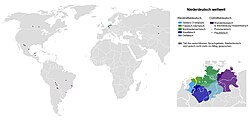
Geographical Distribution in Europe
In Germany, the language is most prevalent in the northern states. For example, in Schleswig-Holstein, approximately 24.5% of the population identifies with the language. In the Netherlands, Low Saxon is spoken by roughly 1.6 to 1.7 million people, though UNESCO classifies its status there as vulnerable due to a decline in parent and child speakers between 1995 and 2011.
Global Diaspora and Plautdietsch
Beyond Europe, Low German persists through migration. Plautdietsch is particularly prominent in the Americas. In Brazil, for instance, some public schools in the Witmarsum Colony teach in both Portuguese and Plautdietsch.
![A public school in Witmarsum Colony (Paraná, Southern Brazil) teaches in the Portuguese language and in Plautdietsch.[20]](/images/99/cc/99ccbbe5a19fc359d3d6e9a87f2aa28847e41c57ab985df6863916da0d1c3913.jpg)
| Country | Standard German | Low German & Plautdietsch | Pennsylvania Dutch |
|---|---|---|---|
| Brazil | 1,500,000 | 8,000 | N/A |
| Bolivia | 160,000 | 60,000 | N/A |
| Paraguay | 166,000 | 40,000 | N/A |
| Canada | 430,000 | 80,000 | 15,000 |
| United States | 1,104,354 | 12,000 | 118,000 |
Historical Evolution and Linguistic Features
The history of Low German is divided into three primary stages: Old Saxon, Middle Low German (the lingua franca of the Hanseatic League), and Modern Low German.
The High German Consonant Shift
The most defining difference between Low German and Standard (High) German is the High German consonant shift. Low German did not undergo this phonetic change, which is why it often sounds more similar to English. For example, the word for "make" remains maken in Low German and English, whereas it shifted to machen in High German.
Other examples include:
- Day: Dag (Low German/English) vs. Tag (High German)
- Ship: Schipp (Low German/English) vs. Schiff (High German)
- Water/Pipe: Peper (Low German/English) vs. Pfeffer (High German)
Ingvaeonic Developments
Low German shares "Ingvaeonisms" (North Sea Germanic traits) with English and Frisian. These include the Nasal-Spirant Law (e.g., goos instead of gans for goose) and the loss of person distinctions in plural verb forms.
Grammar and Phonology
Low German grammar simplifies several aspects of its cousins. It has merged the dative and accusative cases into a single objective case. In terms of pronouns, it uses ik for "I" and wy for "we," mirroring the structures found in Dutch and English.
The phonology is characterized by a rich array of vowels and a consonant system that avoids the complex shifts found in the south. The writing system primarily utilizes the Latin alphabet, though orthography can vary between standardized and regional forms.
Cultural Legacy
Low German has a storied literary tradition, from the early Heliand fragment of Old Saxon to the works of modern writers like Fritz Reuter and the musical contributions of groups like Normaal. It is also preserved in folklore, such as the tale of Von den Fischer und siine Fru (The Fisherman and his Wife).
Frequently Asked Questions
Is Low German a dialect of Standard German?
No. While often called a dialect, linguistically it is a separate branch of West Germanic. It did not undergo the High German consonant shift, making it more closely related to English and Dutch than to Standard German.
What is Plautdietsch?
Plautdietsch is a variety of Low German spoken primarily by Mennonite communities. Due to historical migrations, it is spoken in various parts of the world, including Russia, Canada, and South America.
Where is Low German spoken today?
It is primarily spoken in Northern Germany and the Eastern Netherlands. However, diaspora communities maintain the language in countries such as Bolivia, Paraguay, and Brazil.
Why does Low German sound like English?
Both languages belong to the North Sea Germanic group and avoided the phonetic shifts that created High German. This results in similar-sounding words for basic concepts, such as "water," "day," and "make."
Is the language endangered?
In some regions, yes. UNESCO has labeled the Low Saxon varieties in the Netherlands as vulnerable, noting a significant drop in the number of children learning the language as a native tongue.