Limburgish: The Tonal Language of the Meuse-Rhine Region
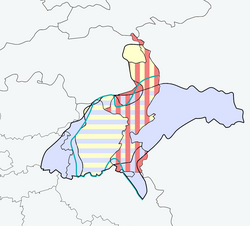
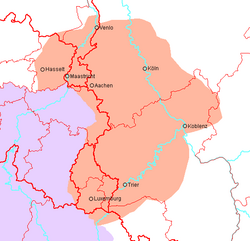
Limburgish (also known as East Low Franconian) is a distinctive group of West Germanic dialects spoken across the border regions of the Netherlands, Belgium, and Germany. Unlike most other Germanic languages, Limburgish is renowned among linguists for its use of tonality—where the pitch of a word can change its meaning. Spoken by approximately 800,000 people as of 2025, it serves as a vital marker of regional identity in the provinces of Limburg in both the Netherlands and Belgium, as well as parts of North Rhine-Westphalia in Germany.
The language exists as a continuum of dialects rather than a single unified tongue. While it is closely related to Standard Dutch, its unique phonology and historical development have led to its recognition as a statutory provincial language in the Dutch province of Limburg since 1997.
Key Facts
- Speaker Population: Approximately 800,000 native speakers (2025 estimate).
- Geographic Reach: Spoken in the Netherlands (Limburg), Belgium (Limburg and Liège), and Germany (North Rhine-Westphalia).
- Unique Feature: One of the few Germanic languages featuring a pitch accent (tonality).
- Official Status: Recognized as a statutory provincial language in the Dutch province of Limburg.
- Classification: Part of the Low Franconian branch of the West Germanic language family.
Linguistic Classification and Subdivisions
Limburgish is categorized under the Low Franconian group. Because it is a collection of dialects, it is divided into several regional clusters. These subdivisions reflect the geographic spread and the subtle shifts in vocabulary and pronunciation across the region.
Regional Dialect Groups
- West Limburgish: Includes dialects such as Lommels, Noorderkempens, Zuiderkempens, and Getelands.
- Central Limburgish: Encompasses Weertlands, Horns, Maaskempens, and the Maastrichtian dialect.
- East Limburgish: Divided into Northern and Southern East Limburgish, including the Kleverlands and Zuid-Gelders varieties.
The Science of Sound: Phonology and Tone
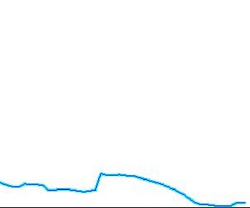
The most striking characteristic of Limburgish is its bitonality. In many dialects, the meaning of a word is determined by the tone contour—the way the pitch rises or falls during pronunciation. This is known as a pitch accent.
Tonal Distinctions
Tones can distinguish between singular and plural forms or entirely different lexical meanings. For example, in some dialects, the word for "stone" (singular) and "stones" (plural) are distinguished solely by their tone. Tones are also used to distinguish grammatical mood in verbs, such as the difference between a statement of fact ("We conquer!") and a wish ("May we conquer!").
Vowels and Consonants
Limburgish possesses a rich array of monophthongs (single vowel sounds) and diphthongs (vowels that glide from one sound to another). The Maastrichtian dialect, for instance, provides a clear example of the complex vowel system used in Central Limburgish.


Sociolinguistics and Modern Usage
The status of Limburgish varies significantly by age and location. A 2021 study by the dialect society Veldeke Limburg revealed that while 67% of inhabitants in Dutch Limburg report fluency, this drops to 52% among those aged 18–34. Many speakers believe the use of the dialect will decrease over time, often due to the perceived higher socio-economic status of Standard Dutch.
Interestingly, while spoken use has declined in some urban centers—such as Heerlen, where migration influenced the local tongue—written use has increased. This resurgence is largely attributed to the internet and a general decrease in illiteracy, allowing more people to engage with the language in digital spaces.
The Challenge of Orthography
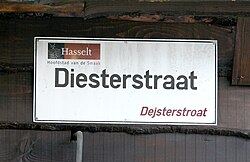
Because Limburgish is not a single unified language, there is no single "correct" way to spell it. Most people write in their specific local dialect. To address this, the Veldeke association developed the Veldeke spelling, a system designed to represent the same sound consistently across different dialects. While not official, it is widely promoted and used on bilingual place-name signs.
Summary of Limburgish Characteristics
| Feature | Description |
|---|---|
| Language Family | Indo-European → Germanic → West Germanic → Low Franconian |
| Primary Regions | Netherlands, Belgium, Germany |
| Defining Trait | Pitch accent (tonality) |
| Writing System | Latin script (Veldeke spelling is the most promoted) |
| Legal Status | Statutory provincial language in Dutch Limburg |
Frequently Asked Questions
Is Limburgish a separate language or a dialect of Dutch?
Linguistically, it is a group of East Low Franconian dialects. While closely related to Dutch, its unique tonal system and regional recognition lead many to treat it as a distinct regional language.
What is a pitch accent in Limburgish?
A pitch accent is a tonal feature where the rise or fall of the voice on a syllable changes the meaning of a word, similar to how tones work in languages like Mandarin Chinese, though used differently.
Can speakers from the Netherlands and Germany understand each other?
Historically, they could. However, since the late 19th century, the dialects have diverged due to the influence of Standard Dutch in the Netherlands and Standard German in Germany. Today, they often require knowledge of the standard languages to communicate fully.
What is the Veldeke spelling?
The Veldeke spelling is an unofficial but widely promoted orthographic system created by the Veldeke dialect association to provide a consistent way of writing sounds across the various Limburgish dialects.
Why is the language declining among young people?
The decline is often attributed to the dominance of Standard Dutch in education and professional environments, as well as the historical perception that the standard language carries higher socio-economic status.