Pitch-Accent Languages: How Musicality Shapes Meaning
In the study of linguistics, the way we use our voices to convey meaning goes far beyond simple volume or length. While many languages rely on stress—the emphasis placed on certain syllables—others utilize pitch to distinguish words. These are known as pitch-accent languages. In these systems, specific syllables or morphemes (the smallest units of meaning) are made prominent through a distinct, contrasting pitch, often referred to as a linguistic tone.
It is important to distinguish pitch-accent languages from fully tonal languages, such as Vietnamese, Central Thai, or Standard Chinese. In a fully tonal language, almost every syllable can carry an independent tone. In contrast, pitch-accent languages use pitch more selectively. While some scholars debate whether pitch-accent languages should be considered a sub-category of tonal languages, the distinction remains a vital concept in phonology.
![Possible relationshipsbetween Baltic tones[45]: Fig.1](/images/70/de/70dec6471db35b28e767db7b9fc8b221643c9f4ab82adcd92b3f14c9d63059cf.webp)
Key Facts
- Definition: Pitch-accent languages use contrasting pitch rather than volume or length to mark prominent syllables.
- Classification: They can feature a single pitch-contour (e.g., Tokyo Japanese) or multiple possible contours (e.g., Swedish).
- Global Presence: Examples include Japanese, Serbo-Croatian, Swedish, Turkish, and various Baltic languages.
- Distinction: They differ from tonal languages where nearly every syllable has an independent tone.
The Mechanics of Pitch Accent
Pitch-accent systems are generally categorized into two main types based on the complexity of the accented syllable:
- Single Pitch-Contour: These languages feature one specific pattern on the accented syllable, such as a high tone or a high-low sequence. Examples include Tokyo Japanese, Western Basque, and Persian.
- Multiple Pitch-Contours: These languages allow more than one pitch pattern on the accented syllable. In these cases, the accented syllable is often accompanied by other forms of stress. Examples include Punjabi, Swedish, and Serbo-Croatian.
![Extent (orange) of pitch usage in Benelux, Germany and France at the beginning of the 20th century[51]](/images/ec/cd/eccd2020072ac43d306a32eb359264dd535c508ce634920180347c85d6dd7577.png)
Variations in Realization
The way an accent is actually heard can vary significantly between dialects. For instance, in the Rhinelandic dialects of Germany, the realization of accents differs between locations. In Cologne, one accent type may feature a sharp fall at the start of a syllable, while in Arzbach, the patterns are nearly reversed. Similarly, in Belgian Limburg, different rules (often referred to as Rule A, Rule B, or Rule 0) dictate whether a pitch rises, falls, or remains level.
Diverse Linguistic Examples
The application of pitch accent varies wildly across the world's language families. Below is a summary of how different languages utilize these patterns.
| Language Group | Example Language | Key Characteristic |
|---|---|---|
| Japanese | Japanese | Accent can occur on the first or second mora (unit of sound). |
| Slavic | Serbo-Croatian | Features rising and falling pitch patterns. |
| Basque | Western Basque | Often uses a single pitch-contour. |
| Bantu | Luganda | Some words feature a "plateau" where two accents join. |
| Persian | Persian | Accent can shift when prefixes are added to a word. |
Japanese and Korean Patterns
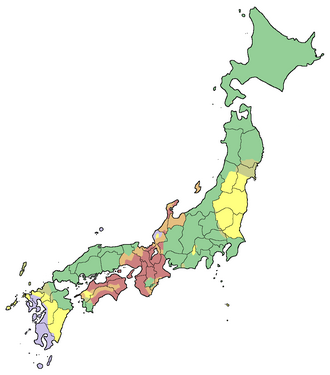
In Japanese, the placement of the accent is crucial for meaning. For example, the word kaki can mean "oyster," "fence," or "persimmon" depending on whether the accent falls on the first mora, the second mora, or is absent entirely.
Korean also demonstrates this through specific pitch patterns in words like eomeoni (mother) or orabi (elder brother), where the pitch height distinguishes the lexical meaning.
The Complexity of Persian and Turkish
Persian demonstrates dynamic accent shifts. While the accent remains on the root in many cases, adding certain prefixes can cause the accent to move to the first syllable. In compound nouns, the accent typically lands on the second element. Turkish presents a unique scholarly debate: some linguists argue that the final raised pitch heard in certain words is a phrasal tone, while others maintain it is a form of stress.
Frequently Asked Questions
How does pitch accent differ from stress?
Stress typically refers to the prominence of a syllable through increased volume or length. Pitch accent, however, relies on the musicality of the voice—specifically the rising or falling of pitch—to signal prominence.
Is Japanese a tonal language?
No, Japanese is classified as a pitch-accent language. While it uses pitch to distinguish meaning, it does not have the syllable-by-syllable tonal system found in languages like Mandarin Chinese.
Can a single word have more than one accent?
Yes. In some languages, such as Luganda, certain words can have two accents that merge into a single "plateau" of pitch.
What is a "mora" in the context of pitch accent?
A mora is a unit of rhythmic weight in phonology. In languages like Japanese, the pitch accent is often described by whether it falls on the first or second mora of a word.
Do all pitch-accent languages behave the same way?
Not at all. They range from simple systems with a single possible pitch pattern to highly complex systems where multiple contours can occur on a single syllable, often interacting with other forms of stress.