Louis Prima: The King of Swing and the Spirit of New Orleans
Louis Leo Prima was more than just a musician; he was a whirlwind of energy who bridged the gap between traditional jazz and the high-octane entertainment of Las Vegas. Known as The King of Swing, Prima was a versatile trumpeter, singer, and bandleader whose career spanned nearly five decades. From the streets of New Orleans to the glitz of the Sahara Hotel, he blended his Sicilian heritage with American rhythms to create a sound that was uniquely his own.
Throughout his journey, Prima navigated various musical landscapes, including jump blues (a high-tempo precursor to rock and roll) and big band swing. At a time when many ethnic performers felt pressured to assimilate, Prima leaned into his Italian and Sicilian roots, using his language and culture to open doors for future generations of ethnic American musicians.
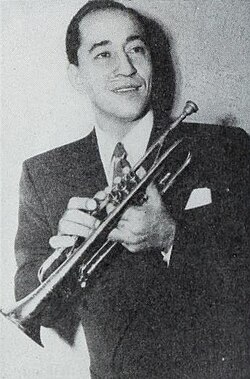
Key Facts
- Full Name: Louis Leo Prima
- Born/Died: December 7, 1910 – August 24, 1978 (New Orleans, Louisiana)
- Primary Instruments: Trumpet and Vocals
- Notable Collaborations: Keely Smith and Sam Butera & The Witnesses
- Famous Role: The voice of King Louie in Disney's The Jungle Book (1967)
- Key Genres: Jazz, Swing, Jump Blues, Traditional Pop, and Big Band
Early Life and Musical Foundations
Born into a musical Italian American family in New Orleans, Louis was the son of Anthony Prima and Angelina Caravella. His heritage was deeply rooted in Sicily, with his father's family hailing from Salaparuta and his mother from the island of Ustica. This cultural duality became the cornerstone of his artistic identity.
Prima's formal education took him through Jesuit High School and later Warren Easton High, where he played in the school band, the "Eastonites." By 1927, he was already performing in the French Quarter at a nightclub called "The Whip." By the spring of 1928, Prima committed himself to a professional career in music.
The Rise of a Versatile Entertainer
Prima's early professional years were marked by persistence. After some unsuccessful early gigs, he found work with Joseph Cherniavsky's Orchestra and performed on the steamship Capital. His first major break came when Lou Forbes hired him for shows at The Saenger.
The New York and California Years
In 1934, Prima moved to New York City, where he began recording for the Brunswick label. He formed Prima and his New Orleans Gang, featuring musicians like Pee Wee Russell. Their 1935 recording, "The Lady in Red," became a national jukebox hit, blending Dixieland and swing styles.
As his fame grew, Prima experimented with the big band format. While initially met with resistance from mentors in New York and Los Angeles, he continued to refine his act. By the 1940s, he achieved massive commercial success, earning significant sums at venues like the Strand Theatre in New York and the Panther Room in Chicago.
The Las Vegas Era and Keely Smith
In the early 1950s, Prima transitioned his sound to keep pace with the emerging rock and roll movement. Unlike some of his contemporaries, Prima embraced the energy of the new era, noting that younger audiences had an instinct for music that was fun to dance to.
The most iconic chapter of his career began in 1954 when he opened a new act at The Sahara in Las Vegas. Partnering with his fourth wife, Keely Smith, and backed by saxophonist Sam Butera and The Witnesses, Prima became a staple of the Vegas lounge scene. This partnership led to a successful tenure with Capitol Records, producing the hit album The Wildest! in 1956.
Disney and Later Career
Beyond the stage, Prima's raucous personality found a perfect match in animation. In 1967, he provided the voice for the orangutan King Louie in Walt Disney's The Jungle Book, performing the enduring hit "I Wan'na Be like You." He also contributed to the Winnie the Pooh and The Man Called Flintstone soundtracks.
Personal Life and Final Years
Prima's personal life was as tumultuous as his music was energetic. He was married five times and had six children. His final marriage was to Gia Maione in 1963, with whom he had a daughter, Lena, and a son, Louis Prima Jr.
In the 1970s, Prima's health declined. After suffering a heart attack in 1973 and later being diagnosed with a brain stem tumor, he suffered a cerebral hemorrhage following surgery. He passed away in 1978 in his hometown of New Orleans and was buried in Metairie Cemetery.
Career Summary
| Period | Focus/Group | Key Achievement/Genre |
|---|---|---|
| Late 1920s | New Orleans Jazz Band | Professional debut in New Orleans |
| 1930s | New Orleans Gang | Brunswick recordings; "The Lady in Red" hit |
| 1940s | Big Band | Major success at Strand Theatre and Panther Room |
| 1950s-60s | Keely Smith & The Witnesses | Las Vegas residency; Capitol Records hits |
| 1967 | Disney's The Jungle Book | Voice of King Louie; "I Wan'na Be like You" |
Frequently Asked Questions
What was Louis Prima's nickname?
Louis Prima was widely known as "The King of Swing" due to his mastery of the swing genre and his high-energy performances.
Which Disney character did Louis Prima voice?
He provided the voice for King Louie, the orangutan, in the 1967 animated film The Jungle Book.
How did Louis Prima influence other musicians?
By openly embracing his Sicilian and Italian heritage in his music and language, Prima paved the way for other Italian-American and ethnic American musicians to express their roots openly.
Who was Keely Smith?
Keely Smith was a singer and Prima's fourth wife. Together, they formed one of the most successful and popular lounge acts in Las Vegas during the 1950s.
What happened to Louis Prima at the end of his life?
After a heart attack and a subsequent brain stem tumor, Prima suffered a cerebral hemorrhage and entered a coma. He died in 1978 in New Orleans.