Benny Goodman: The Life and Legacy of the King of Swing
Benjamin David Goodman, known to the world as Benny Goodman, was a transformative figure in American music. A virtuoso clarinetist and bandleader, he bridged the gap between the raw energy of early jazz and the polished sophistication of the concert hall. His influence was so profound that he earned the enduring title of the "King of Swing," a moniker that reflected his dominance over the big band era from the mid-1930s through the 1940s.
Key Facts
- Primary Instrument: Clarinet (also played alto and baritone saxophone).
- Famous Moniker: The "King of Swing."
- Historic Milestone: Led the first jazz concert at Carnegie Hall on January 16, 1938.
- Genre Versatility: Mastered both swing jazz and classical repertoire.
- Key Collaborators: Charlie Christian, Glenn Miller, and Gene Krupa.
Early Life and Musical Foundations
Born on May 30, 1909, Goodman's musical journey began in Chicago. As a teenager, he was heavily influenced by New Orleans jazz clarinetists such as Jimmie Noone, Johnny Dodds, and Leon Roppolo. His professional ascent was rapid; he made his debut at the Central Park Theater in 1921 and joined the musicians' union at just fourteen years old.
During his formative years, Goodman worked with the cornetist Bix Beiderbecke and later joined the Ben Pollack Orchestra in 1926, where he made his first recordings. A personal tragedy struck when he was 17, following the accidental death of his father, an event he described as the saddest moment in his family's history.
The Rise to Stardom and the Swing Era
After moving to New York City, Goodman established himself as a versatile session musician for Broadway and radio. He collaborated with future legends like Glenn Miller and Tommy Dorsey, recording under various ensembles including "Benny Goodman's Boys."
By 1935, Goodman's radio broadcasts from Chicago earned him the nickname "Rajah of Rhythm." However, it was his move to Hollywood in 1936 and the subsequent media coverage that cemented his status as the "King of Swing." This era was characterized by the big band sound—large ensembles that played synchronized, danceable arrangements, many of which were written for him by Fletcher Henderson.
![Goodman's swing fans in Oakland, California, in 1940[24]](/images/89/b4/89b4ab4d99f4a1712ce082ab70cdb6dff5362cc4679278e91ded65ef6e7953a4.jpg)
The Carnegie Hall Breakthrough
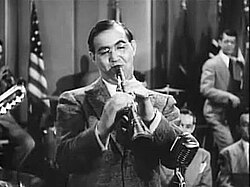
One of the most pivotal moments in music history occurred on January 16, 1938, when Goodman led a sold-out concert at New York City's Carnegie Hall. This event is widely regarded as jazz's "coming out party," signaling the transition of jazz from simple dance music to a respected art form on par with classical music.
Innovations with Charlie Christian
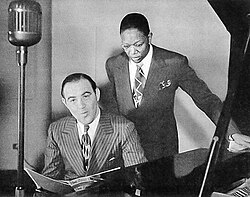
Goodman was also instrumental in integrating new sounds into jazz. In 1939, through the persistence of producer John Hammond, Goodman began working with guitarist Charlie Christian. Despite initial hesitation toward the electric guitar, Goodman was stunned by Christian's performance of "Rose Room," which led to a legendary collaboration that expanded the harmonic language of the swing era.
Transition and Classical Pursuits
The dominance of big bands began to wane in the mid-1940s due to several factors, including the rise of solo vocalists and musicians' union strikes between 1942 and 1948. During the latter, the War Department produced V-Discs (special recordings for soldiers), which helped launch new artists but shifted the industry away from the big band model.
As swing declined, Goodman turned his attention to the classical repertoire. He commissioned several works that are now staples of the clarinet world, including pieces by Béla Bartók, Aaron Copland, and Francis Poulenc. He also premiered Leonard Bernstein's "Prelude, Fugue, and Riffs" and recorded Igor Stravinsky's "Ebony Concerto."
Later Years and Personal Life
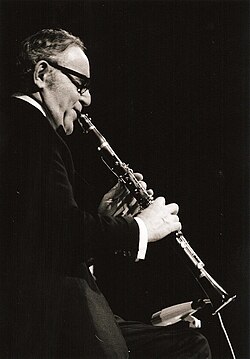
In his later years, Goodman continued to perform and record, collaborating with George Benson in the 1970s to recreate his early duets with Charlie Christian. He remained active in the classical scene, performing Mozart's Clarinet Concerto in 1960.
Personally, Goodman had a complex relationship with his long-time friend and producer John Hammond. Though they suffered a period of estrangement, they reconciled in the 1980s. Goodman married Alice Frances Hammond Duckworth in 1942, with whom he raised five daughters.
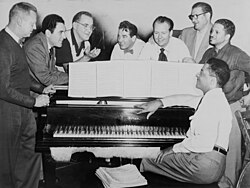
Benny Goodman passed away from a heart attack on June 13, 1986, in Manhattan, just six days after his final concert performance.
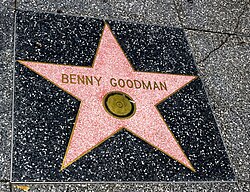
Summary of Career Highlights
| Category | Details |
|---|---|
| Active Years | 1926–1986 |
| Key Labels | Columbia, RCA Victor, V-Disc |
| Notable Hits | "Sing, Sing, Sing," "Jersey Bounce" |
| Major Contribution | Legitimized jazz as a concert art form |
| Classical Works | Commissioned pieces from Bartók, Copland, and Poulenc |
Frequently Asked Questions
Why was Benny Goodman called the "King of Swing"?
While the term was initially used by the Slingerland Drum Company for drummer Gene Krupa, the media applied the title to Goodman following his massive success in Chicago and Hollywood in 1936, reflecting his leadership of the most popular swing bands of the time.
What was the significance of the 1938 Carnegie Hall concert?
The concert is viewed as a turning point where jazz evolved from being strictly dance music to a sophisticated art form worthy of a listening audience, gaining acceptance in a venue typically reserved for "respectable" classical music.
How did Charlie Christian influence Benny Goodman's music?
Charlie Christian introduced the electric guitar to Goodman's ensemble. His improvisational skill and modern sound impressed Goodman and the public, adding a new dimension to the band's arrangements.
Did Benny Goodman play music other than jazz?
Yes, Goodman was deeply committed to classical music. He performed Mozart and commissioned original works for the clarinet from renowned composers like Béla Bartók and Aaron Copland.
What caused the decline of the big band era?
The decline was caused by a combination of factors, including musicians' union strikes against record labels, a licensing war between ASCAP and publishers, and a shift in public preference toward solo singers over large orchestras.