Louis Antoine de Bougainville: The Mathematician, Soldier, and First French Circumnavigator
Louis Antoine de Bougainville was a true polymath of the Enlightenment—a man who transitioned seamlessly from the abstract world of mathematics to the brutal realities of 18th-century warfare and the uncharted waters of the Pacific Ocean. As a military officer, diplomat, and explorer, Bougainville not only expanded the geographical knowledge of his era but also left a lasting mark on botany and global history.
From his early academic pursuits in Paris to his eventual burial in the Panthéon, Bougainville's life was defined by a relentless pursuit of knowledge and service to France. He is perhaps best remembered as the first Frenchman to circumnavigate the globe, a feat that restored French prestige following a series of costly military defeats.
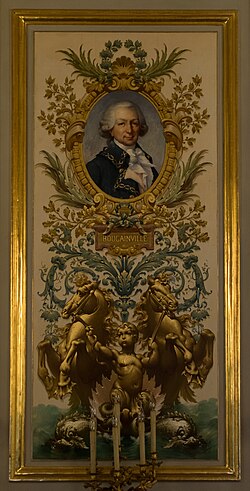
Key Facts
- First French Circumnavigator: Led the first official French expedition to sail around the world (1766–1769).
- Mathematical Pioneer: Published a significant two-volume work on integral calculus (the study of accumulation and areas under curves).
- Military Versatility: Served as both a Maréchal de camp in the Army and a Vice Admiral in the Navy.
- Botanical Legacy: The colorful Bougainvillea plant is named in his honor.
- Historical Firsts: His expedition included Jeanne Barret, the first woman known to have circumnavigated the globe.
Early Life and Academic Foundations
Born in Paris on November 12, 1729, Bougainville was the youngest of three children. Despite his father's desire for him to pursue a legal career, Louis Antoine developed a profound passion for philosophy and mathematics. He studied under the renowned mathematician Jean le Rond d'Alembert at the University of Paris.
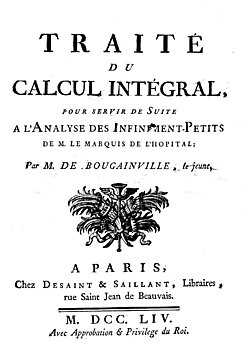
His intellectual capabilities were recognized early. At age 25, he published the first volume of Traité de calcul intégral, followed by a second volume in 1756. This work earned him membership in the Royal Society of London and the patronage of the Comte d’Argenson, the French War Minister.
Military Service in the Seven Years' War
Choosing the sword over the law, Bougainville entered the French Army in 1750. His early career was marked by diplomatic missions to London and service as an aide-de-camp. However, it was during the Seven Years' War (known in North America as the French and Indian War) that he proved his courage in the field.
Stationed in Canada under the Marquis de Montcalm, Bougainville participated in several key engagements, including the capture of Fort Oswego and the Battle of Fort William Henry. He played a critical role in the defense of Quebec in 1759, patrolling the north shore of the St. Lawrence River to protect communications with Montreal. Despite his efforts, the fall of Quebec and the subsequent capitulation of Montreal in 1760 marked the end of French dominance in North America.
Following the war, Bougainville transitioned into diplomacy, assisting in the negotiations for the Treaty of Paris (1763), which saw France cede much of its North American territory to Great Britain.
The Settlement of the Falkland Islands
In 1763, Bougainville undertook a mission to colonize the "Îles Malouines" (Falkland Islands). At his own expense, he sought to resettle Acadians who had been deported by the British. Sailing with the frigate L'Aigle and the sloop Le Sphinx, he established Port Louis in January 1764.
While the colony was small, it served as a strategic foothold. However, due to financial pressures and diplomatic concerns from Spain, the French government eventually ordered the colony to be dismantled. In 1767, Bougainville transferred possession of the settlement to the Spanish to prevent British claims to the islands.
The First French Circumnavigation
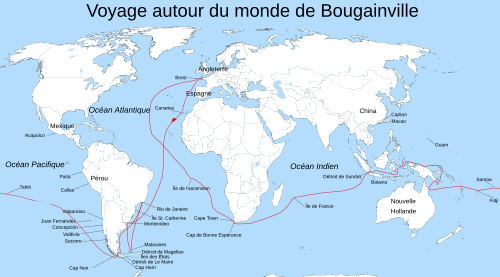
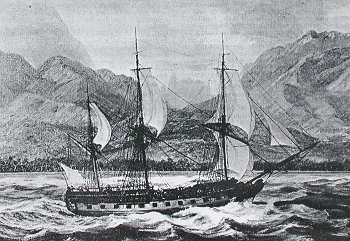
In 1766, King Louis XV granted Bougainville permission to sail around the world. This was a scientific mission as much as a navigational one, carrying professional naturalists and geographers. He departed Nantes with two ships: the Boudeuse and the Étoile.
The Discovery of "New Cythera"
One of the most famous stops of the voyage was Tahiti. Although British explorer Samuel Wallis had arrived shortly before him, Bougainville claimed the island for France, naming it "New Cythera." He described the island as an earthly paradise, a depiction that would later captivate European audiences.
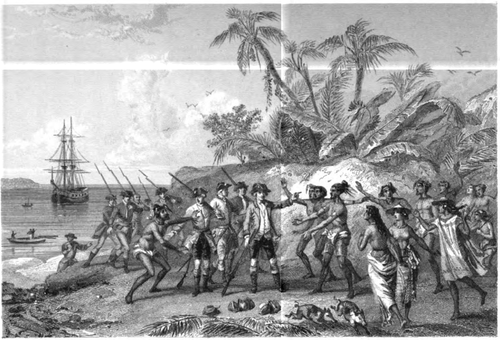
Scientific and Human Discoveries
The expedition was notable for its crew. Botanist Philibert Commerçon collected numerous specimens, including the plant that would become the Bougainvillea. Additionally, the voyage revealed that Commerçon's valet was actually a woman, Jeanne Barret, making her the first woman to sail around the world.
The expedition continued through the Solomon Islands—where Bougainville named Bougainville Island—and the Moluccas, before returning to Saint-Malo on March 16, 1769. Remarkably, only seven of the 340 crew members were lost, a testament to Bougainville's leadership.
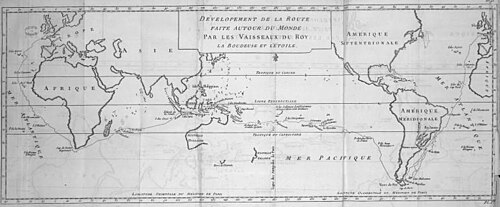
Later Career and Legacy
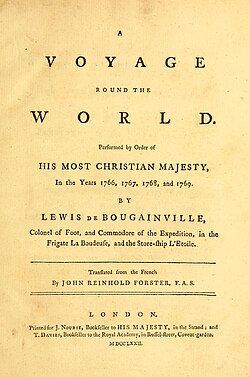
Upon his return, Bougainville published Voyage autour du monde in 1771. The book became a sensation, fueling European fantasies about the South Pacific. He later returned to naval command during the American Revolutionary War, contributing to the French victory at the Battle of the Chesapeake.
In his final years, Bougainville survived the Reign of Terror, served as a senator under Napoleon Bonaparte, and helped found the Bureau des Longitudes. He died in Paris on August 31, 1811.
| Period/Phase | Key Role/Achievement | Notable Outcome |
|---|---|---|
| Early Life (1750s) | Mathematician & Soldier | Published Traité de calcul intégral |
| Seven Years' War | Captain of Dragoons | Defended Quebec; awarded Cross of St Louis |
| Falklands (1764) | Colonial Founder | Established Port Louis |
| Circumnavigation (1766-69) | Expedition Leader | First French circumnavigation; visited Tahiti |
| American Revolution | Naval Commander | Victory at Battle of the Chesapeake |
Frequently Asked Questions
Who was the first woman to circumnavigate the globe on Bougainville's voyage?
Jeanne Barret, who disguised herself as a valet to the botanist Philibert Commerçon, is recognized as the first woman to sail around the world during this expedition.
What is the significance of the Bougainvillea plant?
The Bougainvillea is a genus of South American climbing shrubs named in honor of Louis Antoine de Bougainville, as it was collected during his scientific expedition.
How did Bougainville contribute to mathematics?
Before his naval fame, he was a skilled mathematician who published a two-volume treatise on integral calculus, which earned him membership in the Royal Society of London.
What was Bougainville's view of Tahiti?
In his travelogue, Voyage autour du monde, he described Tahiti as an earthly paradise where people lived in blissful innocence, free from the corruption of Western civilization.
Where is Louis Antoine de Bougainville buried?
His body is buried in the Panthéon in Paris, while his heart is interred at the Cimetière du Calvaire in Paris.