Étienne Perier: Naval Officer and Governor of French Louisiana
Étienne Perier (1686–1766), often referred to as Perier the Elder, was a distinguished French naval officer and the eighth Governor of French Louisiana. His career spanned over six decades of service to the Kingdom of France, transitioning from the high seas of the Atlantic to the complex political landscape of the North American colonies. While his tenure as governor is marked by significant infrastructure achievements, it is equally remembered for the brutal conflicts with indigenous populations.
Key Facts
- Role: 8th Governor of French Louisiana (1726–1733).
- Major Achievement: Constructed the first levee along the Mississippi River in 1727.
- Military Rank: Attained the rank of Lieutenant général des Armées navales.
- Notable Conflict: Led the French response to the Natchez Revolt.
- Naval Success: Commanded the Mars during the capture of HMS Northumberland in 1744.
- Highest Honor: Awarded the Grand-Croix of the Order of Saint Louis in 1765.
Early Life and Naval Beginnings
Born on February 27, 1686, in Brest, France, Étienne Perier was the son of a non-noble merchant and shipowner. His introduction to maritime life began exceptionally early; at the age of eight, he joined a privateer crew alongside the son of Jean Bart. By the time he was nine, Perier had already seen his first action at sea, setting the stage for a lifelong career in the French Navy.
Governance of French Louisiana (1726–1733)
In August 1726, Perier was appointed commandant general of French Louisiana, succeeding Pierre Dugué de Boisbriand. He arrived in New Orleans in October 1726, establishing his residence at 613 Royal Street. Shortly after his arrival, King Louis XV ennobled Perier and his immediate family in recognition of their service to the crown.
Perier was appointed by the Company of the Indies, which sought a pliant administrator who would prioritize the Company's commercial goals over colonial autonomy. To secure his loyalty, the Company provided him with a substantial annual salary of 10,000 French livres, riverfront land, and a yearly allotment of eight enslaved people.
During his administration, Perier oversaw the construction of the first levee along the Mississippi River in 1727, a critical piece of infrastructure for the colony's development.

The Natchez Revolt and Retaliation
Perier's governorship was defined by a deteriorating relationship with the Natchez people. On November 28, 1729, the Natchez Chief, known as the Great Sun, led an attack on Fort Rosalie, resulting in the deaths of between 229 and 285 colonists and enslaved people, and the capture of approximately 450 others. This was followed by a similar attack on Fort St. Pierre by the Yazoo, allies of the Natchez.
Perier's response was characterized by extreme brutality. After recovering some captives in January 1730, he sought to make examples of the Natchez through public executions, including torture and burning people alive. His inability to secure the colony's safety and his failure to quell the hostility led to his recall as governor in March 1733.
Return to Naval Command
Following his departure from Louisiana, Perier returned to the French Navy. He served as second officer on the Neptune off the coast of Senegal by 1734 and later settled in Brest. His military career continued to ascend during the War of the Austrian Succession.
One of his most notable naval achievements occurred on May 8, 1744, when he commanded the Mars during the capture of the British ship HMS Northumberland.
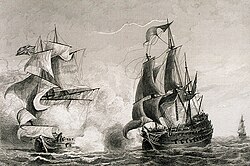
Perier continued to serve through the Seven Years' War, commanding a squadron in the Caribbean. In 1757, he reached the rank of Lieutenant général des Armées navales. His career culminated on August 23, 1765, when he was awarded the Grand-Croix of the Order of Saint Louis, one of the highest honors available to the Ministry of the Navy.
Summary of Career and Life
| Category | Details |
|---|---|
| Lifespan | February 27, 1686 – April 1, 1766 |
| Governor Term | 1726–1733 |
| Key Military Rank | Lieutenant général des Armées navales |
| Major Wars | War of the Spanish Succession, War of the Austrian Succession, Seven Years' War |
| Spouse | Catherine le Chibelier (m. 1719) |
Frequently Asked Questions
Why was Étienne Perier recalled as Governor of Louisiana?
Perier was recalled in March 1733 because he failed to secure the safety of the colony, largely due to the instability and violence following the Natchez Revolt.
What was Perier's most significant infrastructure contribution to New Orleans?
He is credited with the construction of the first levee along the Mississippi River in 1727, which helped manage the river's flooding.
How did Perier respond to the Natchez Revolt?
Perier responded with extreme violence, employing public executions, torture, and burning captured Natchez people alive in an attempt to intimidate the population.
What naval victory is Perier most known for?
He is well-known for commanding the Mars during the action on May 8, 1744, which resulted in the capture of the British vessel HMS Northumberland.
What was the highest honor Perier received?
In 1765, he was awarded the Grand-Croix of the Order of Saint Louis, a prestigious honor with very few allocations within the Ministry of the Navy.