Philibert Commerson: The French Naturalist of the Great Circumnavigation
Philibert Commerson (1727–1773) was a distinguished French naturalist whose contributions to botany (the study of plants) and zoology (the study of animals) left a lasting mark on scientific classification. Best known for his role as the official naturalist on Louis Antoine de Bougainville's voyage of circumnavigation from 1766 to 1769, Commerson spent his career documenting the biodiversity of the globe, from the shores of Tahiti to the unique ecosystems of Madagascar.
Key Facts
- Born: November 18, 1727, in Châtillon-les-Dombes, France.
- Died: March 14, 1773, in Mauritius.
- Major Expedition: Accompanied Louis Antoine de Bougainville on a world voyage (1766–1769).
- Key Discovery: Described the genus Bougainvillea.
- Legacy: Numerous species of fish, mammals, and plants are named in his honor.
- Botanical Abbreviation: Cited as "Comm." in botanical nomenclature.
Early Life and Scientific Foundations
Born in Châtillon-les-Dombes, Commerson pursued his education in Montpellier, where he trained as a physician. During this period, he established a connection with the legendary Carl Linnaeus, who encouraged him to focus his research on the fish of the Mediterranean. This early mentorship helped shape Commerson's rigorous approach to natural history.
In 1758, Commerson returned to his hometown to establish a botanical garden. However, following the death of his wife in 1762, he relocated to Paris, where his expertise caught the attention of the Paris Academy of Sciences.
The Voyage of Circumnavigation
In 1766, the Paris Academy of Sciences recommended Commerson to join Louis Antoine de Bougainville's expedition. Commerson did not enter the voyage blindly; he had previously developed a comprehensive study program for the Marine Ministry, outlining the "three natural kingdoms" that a naturalist should investigate during a global tour.
During the expedition, Commerson observed a unique species of dolphin in the Strait of Magellan, which is now recognized as Commerson's dolphin (Cephalorhynchus commersonii).
Commerson was accompanied by his partner and assistant, Jeanne Baré. To bypass restrictions on women aboard naval ships, Baré disguised herself as a man. She served as Commerson's nurse and scientific assistant, providing critical support during his frequent bouts of illness. Her true identity was eventually revealed while the expedition was in Tahiti, yet she remained by his side until his death.
Cultural Observations and Botanical Discoveries
While visiting Tahiti, Commerson distinguished himself through his objective observations of the local people and culture. He exhibited a notable lack of the European prejudices common among his contemporaries. Together with Bougainville, he helped propagate the concept of the "noble savage," portraying Tahitians as an embodiment of natural innocence.
Commerson's botanical work was equally prolific. He collected plant specimens at every stop, most notably describing the genus Bougainvillea. In 1768, during the return journey to France, Commerson chose to remain in Mauritius (then known as the Isle de France) to conduct deeper research there and in Madagascar.
Commerson viewed Madagascar as a "promised land" for naturalists, describing it as a private sanctuary where nature worked with models unlike any found elsewhere in the world.
Scientific Contributions and Taxa
Although many of Commerson's findings were published posthumously by other scientists, his drawings and manuscripts were foundational. Bernard Germain de Lacépède, in particular, relied heavily on Commerson's work to formally describe numerous species.
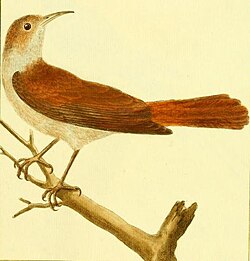
Notable species associated with Commerson's collections include the Pastel ringwrasse (Hologymnosus doliatus), the Ring-tailed cardinalfish (Ostorhinchus aureus), and the Rufous hornero (Furnarius rufus). The latter was first noted by Commerson in 1767 and later published by Georges Buffon.
Summary of Species and Taxa
| Category | Species/Genus Name | Relationship to Commerson |
|---|---|---|
| Plants | Bougainvillea | Described by Commerson |
| Plants | Commersonia | Named in his honor by Lamarck |
| Mammals | Cephalorhynchus commersonii | First described by Commerson; named in his honor |
| Mammals | Macronycteris commersoni | Named in his honor (Madagascar bat) |
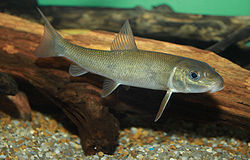
| Fish | Catostomus commersonii | Named in his honor (White Sucker) |
| Fish | Scomberomorus commerson | Named in his honor (Spanish mackerel) |
Death and Legacy
Philibert Commerson died in Mauritius in 1773 at the age of 45. His passing was not immediately known in France; in a poignant irony, the Paris Academy of Sciences elected him as a fellow botanist just a few months after his death.
While his vast collections of manuscripts and herbaria were eventually returned to Paris, they were never systematically organized, meaning his contributions were not fully recognized during his own era. Today, his legacy lives on through the numerous species that bear his name and the Commerson Crater, a caldera in the mountains of Réunion.
Frequently Asked Questions
Who was Jeanne Baré?
Jeanne Baré was Commerson's partner and assistant who accompanied him on Bougainville's circumnavigation. She disguised herself as a man to join the voyage, serving as a nurse and scientific aide.
What is the significance of the abbreviation "Comm."?
In botanical nomenclature, "Comm." is the standard author abbreviation used to identify Philibert Commerson as the person who first described a particular plant species.
Which famous plant genus did Commerson describe?
Commerson described the genus Bougainvillea, naming it after the expedition leader, Louis Antoine de Bougainville.
Why was Madagascar important to Commerson?
Commerson considered Madagascar a "promised land" for naturalists due to its extraordinary biodiversity and unique biological forms, which he believed were unlike anything else on Earth.
How did Commerson contribute to zoology?
Commerson provided the first descriptions of several animals, including Commerson's dolphin, and his detailed drawings and notes allowed later scientists, such as Lacépède, to formally classify numerous fish and mammal species.