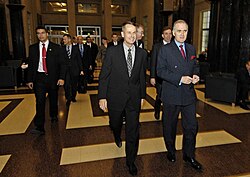
Lord Stirrup: A Legacy of Leadership in the Royal Air Force
Marshal of the Royal Air Force Graham Eric Stirrup, widely known as Jock Stirrup, stands as one of the most distinguished military figures in recent British history. From his early days as a jet pilot to his tenure as the Chief of the Defence Staff, Lord Stirrup's career spanned over four decades of geopolitical volatility, including the Cold War and the conflicts in Iraq and Afghanistan.
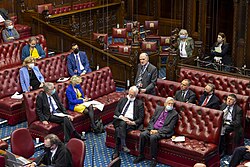
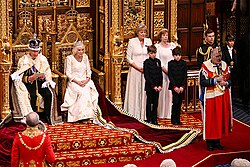
Today, he continues to serve the United Kingdom as a Crossbench member of the House of Lords, bringing his extensive operational and strategic experience to the legislative process.
Key Facts
- Highest Rank: Marshal of the Royal Air Force.
- Top Command: Chief of the Defence Staff (2006–2010).
- Key Conflicts: Dhofar War, Cold War, Operation Telic (Iraq), and the War in Afghanistan.
- Major Honors: Knight Companion of the Order of the Garter and Knight Grand Cross of the Order of the Bath.
- Political Role: Life peer and Crossbencher in the House of Lords since 2011.
Early Career and Operational Bravery
Lord Stirrup began his military journey at the RAF College Cranwell in 1968, receiving his commission in 1970. His early years were marked by diverse experiences, including a loan service with the Sultan of Oman's Air Force between 1973 and 1975, during which he saw action in the Dhofar War.
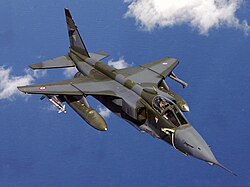
One of the most defining moments of his early career occurred on March 7, 1983. While serving as a flight commander at No. 226 Operational Conversion Unit, Stirrup was conducting a student progress check in a SEPECAT Jaguar (a multi-role strike aircraft). The aircraft suffered a severe bird strike, causing an engine fire and obscuring the canopy. Despite the danger, Stirrup refused to eject because he could not confirm if his student was conscious. His skill in landing the damaged aircraft earned him the Air Force Cross.
Rise Through the Ranks
Throughout the 1980s and 90s, Stirrup held several pivotal commands. He led No. 2 Squadron in West Germany during the Cold War, focusing on low-level tactical reconnaissance against Soviet threats. He later served as the Station Commander of RAF Marham from 1990 to 1992, overseeing strike aircraft deployed during the Gulf War air campaign.
By the turn of the millennium, he had ascended to the role of Deputy Commander-in-Chief of RAF Strike Command. In this capacity, he became the first commander of British forces fighting the Taliban during Operation Veritas in Afghanistan (2001–2002), serving as the Senior British Military Advisor to US General Tommy Franks.
Strategic Leadership as Chief of the Air Staff
Promoted to Air Chief Marshal in 2003, Stirrup became the Chief of the Air Staff. His strategic vision for the RAF focused on three primary goals: modernizing the aircraft fleet to be more multi-role, consolidating RAF stations into fewer but better-equipped bases, and optimizing personnel numbers through enhanced training.
Chief of the Defence Staff: Iraq and Afghanistan
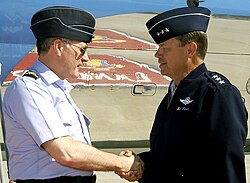
In 2006, Lord Stirrup reached the pinnacle of the British military as the Chief of the Defence Staff. His tenure was dominated by the dual pressures of Operation Telic in Iraq and Operation Herrick in Afghanistan.
Challenges in Iraq
In Iraq, Stirrup navigated a complex political landscape. In July 2006, he overturned previous advice to maintain higher force levels in South East Iraq, citing a lack of strong Iraqi political leadership. He later supported security plans to disarm the Mahdi Army, though these were often complicated by the decisions of Iraqi Prime Minister Nouri al-Maliki.
The Afghan Conflict
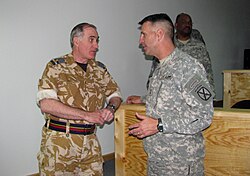
Simultaneously, Stirrup managed the British commitment to Afghanistan. He was candid about the difficulties of the conflict, noting at various points that there was no simple military solution and that the loss of local support could be more damaging than the Taliban themselves.
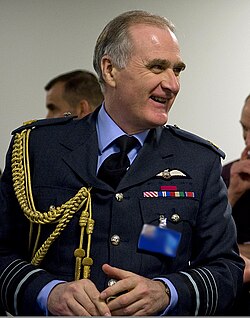
Transition to the House of Lords and Public Service
Lord Stirrup retired from the RAF on April 4, 2011, having been created a life peer as Baron Stirrup of Marylebone in January of that year. As a Crossbencher, he has remained active in national security and human rights debates.
He notably advocated for the government to derogate from the European Convention on Human Rights during deployed operations to prevent military leaders from becoming overly risk-averse. Additionally, he led a successful fundraising campaign to raise one million pounds for the Iraq and Afghanistan Memorial in London, which was unveiled in March 2017.
Summary of Career Milestones
| Period | Role/Appointment | Key Focus/Achievement |
|---|---|---|
| 1983 | Flight Commander | Awarded Air Force Cross for emergency Jaguar landing |
| 1990–1992 | Station Commander, RAF Marham | Gulf War air campaign operations |
| 2001–2002 | UK National Contingent Commander | Operation Veritas (Afghanistan) |
| 2003–2006 | Chief of the Air Staff | RAF modernization and base consolidation |
| 2006–2010 | Chief of the Defence Staff | Overseeing operations in Iraq and Afghanistan |
| 2011–Present | Member of the House of Lords | Crossbench peer and public advocate |
Frequently Asked Questions
Why was Lord Stirrup awarded the Air Force Cross?
He received the award for his exceptional skill in landing a SEPECAT Jaguar aircraft after a serious bird strike caused an engine fire and obscured his vision, specifically because he stayed with the aircraft to ensure the safety of his student pilot.
What was Lord Stirrup's role in the invasion of Iraq?
Before becoming Chief of the Air Staff, he served as the Deputy Chief of the Defence Staff responsible for equipment and capability, where he was heavily involved in procuring the necessary equipment for the invasion.
What is a "Crossbencher" in the House of Lords?
A Crossbencher is a member of the House of Lords who is not affiliated with any specific political party, allowing them to provide independent expertise and voting.
What was the purpose of the Iraq and Afghanistan Memorial?
The memorial, located in Victoria Embankment Gardens and unveiled in 2017, serves as a national tribute to the British service personnel who fought in the conflicts in Iraq and Afghanistan.
Which aircraft did Lord Stirrup fly during his career?
Lord Stirrup was a jet pilot and is notably associated with the SEPECAT Jaguar, which he flew during his time as an instructor and while commanding No. 2 Squadron.