Levant: History, Geography, and Cultural Identity of the Eastern Mediterranean
The Levant is a region of profound historical and cultural significance, serving as a bridge between Africa, Asia, and Europe. Located along the eastern shores of the Mediterranean Sea, the term has evolved over centuries—from a maritime trade designation used by Italian merchants to a modern geopolitical and archaeological descriptor. Today, it encompasses a diverse tapestry of nations, languages, and ethnicities that share a deep-rooted connection to the land.
Historically, the term is closely related to the Arabic concept of the Mashriq, meaning "eastern place, where the Sun rises." This linguistic root mirrors the Italian word levante, meaning "rising," referring to the sun rising in the east from the perspective of those in Venice.
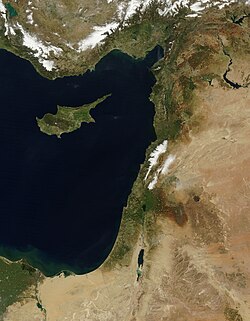
Key Facts
- Etymology: Derived from the Italian levante ("rising"), referring to the east.
- Core Region: Modern usage typically includes Syria, Lebanon, Israel, Palestine, Jordan, and Cyprus.
- Population: The narrow definition of the region encompasses approximately 57.6 million people.
- Archaeological Scope: Often equated with Bilad al-Sham (Greater Syria), stretching from the Taurus Mountains to Wadi al-Arish.
- Linguistic Diversity: While Arabic is dominant, the region is home to Aramaic, Hebrew, Kurdish, Turkish, Greek, Armenian, Circassian, and Domari.
The Evolution of the Term
The use of "Levant" has shifted significantly across different eras. In the 13th and 14th centuries, it was primarily a commercial term used by Italian maritime traders to describe the Eastern Mediterranean, including Egypt, Anatolia, and Greece. By the 15th century, the term entered the English language via French.
Trade with the Ottoman Empire further solidified the term's usage. In 1581, England established the Levant Company to facilitate trade, followed by the French Compagnie du Levant in 1670. During this period, the "Upper Levant" was a term used to describe the Far East.
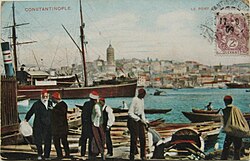
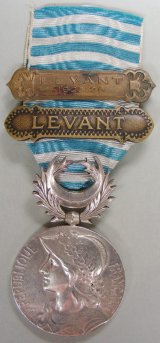
In the 20th century, the term took on a more political meaning. Following World War I, the French mandate over Syria and Lebanon was referred to as the "Levant States." This transition helped narrow the definition of the Levant to the modern countries of the eastern Mediterranean coast.
Geography and Archaeological Definitions
Defining the exact borders of the Levant depends on whether one is speaking geographically, politically, or archaeologically. In modern usage, a "narrow definition" includes Cyprus, Israel, Jordan, Lebanon, Palestine, Syria, and the Hatay Province, as well as the British Sovereign Base Areas of Akrotiri and Dhekelia.
Archaeologists often use a more specific definition. According to The Oxford Handbook of the Archaeology of the Levant, the region is synonymous with Bilad al-Sham (Greater Syria). Its boundaries are defined as:
- North: The Taurus Mountains or the Plain of 'Amuq.
- South: Wadi al-Arish in the Sinai Peninsula.
- West: The Mediterranean Sea.
- East: The Euphrates River, Jebel el-Bishrī, and the Syrian Desert.
This archaeological region is typically divided into the northern Levant, the southern Levant, and the island of Cyprus as a third subregion.
Demographics and Cultural Identity
The Levant is characterized by a complex demographic profile. The population is a blend of various ethnic and religious groups, reflecting millennia of migration and empire-building.
| State | Population (2023) | Density (per km², 2018) | Life Expectancy (2018) |
|---|---|---|---|
| Israel | 10,094,000 | 458 | 82.5 years |
| Jordan | 11,484,805 | 114 | 74.8 years |
| Lebanon | 5,364,482 | 513 | 78.7 years |
| Palestine | 5,483,450 | 731 | 73.4 years |
| Syria | 25,255,139 | 118.3 | 74.8 years |
| Total | 57,681,876 | 184.2 | 76.4 |
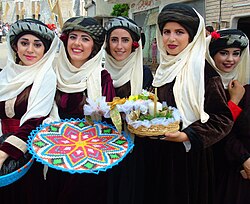
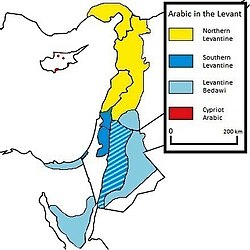
Culturally, the region is defined by its linguistic diversity. While Arabic is the primary language, Aramaic persists in specific pockets, such as the village of Ma'lula in Syria. Genetic studies have also highlighted a distinct "Levantine ancestral component," which underscores a shared biological heritage across the region's diverse populations.
![Levantine ancestral component highlighted in blue[54]](/images/4e/47/4e476d0e549731eebe8c2d9ef202745ed5a1acec5fd6980ca0407b7a39f056d6.png)
Frequently Asked Questions
What does the word "Levant" actually mean?
The word comes from the Italian levante, which means "rising," referring to the rising of the sun in the east. It is essentially the Western equivalent of the Arabic term Mashriq.
Which countries are included in the Levant today?
In modern usage, the Levant typically includes Syria, Lebanon, Jordan, Israel, Palestine, and Cyprus.
Why do archaeologists prefer the term "Levant" over "Syria-Palestine"?
Scholars often prefer "Levant" because it is viewed as a more culturally and politically neutral term. It avoids the political overtones associated with modern statehood efforts and provides a broader framework for studying overlapping prehistoric cultures.
What are the primary languages spoken in the Levant?
Arabic is the most widely spoken language, but the region is home to several others, including Hebrew, Aramaic, Kurdish, Turkish, Greek, Armenian, Circassian, and Domari.
What is the difference between the narrow and broad definitions of the Levant?
The narrow definition focuses on the eastern Mediterranean coast (Syria, Lebanon, Jordan, Israel, Palestine, Cyprus). The broad, historical definition used in early maritime commerce included Greece, Turkey (Anatolia), Egypt, and sometimes Libya and Iraq.