Levant Company: The Engine of English Trade with the Ottoman Empire
The Levant Company was a powerhouse of English commerce and diplomacy, serving as the primary vehicle for trade between England and the Eastern Mediterranean for over two centuries. Established in 1592, this public chartered company bridged the gap between the British Isles and the Ottoman Empire, facilitating the exchange of luxury goods, textiles, and strategic alliances during a period of intense global competition.
Founded by Sir Edward Osborne and other prominent merchants, the company emerged from the merger of the Venice Company (1583) and the Turkey Company (1581). Queen Elizabeth I approved the initial charter on September 11, 1592, driven by a desire to secure political alliances and maintain a steady flow of trade with the East.
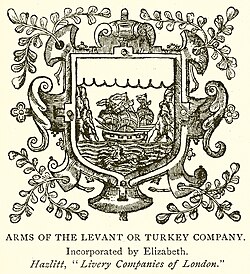
Key Facts
- Founded: September 11, 1592, by Sir Edward Osborne.
- Purpose: Regulating English trade with the Ottoman Empire and the Levant.
- Key Products: Spices, rum, cottons, woollens, indigo, tin, and soda ash.
- Headquarters: London, England, and Aleppo, Ottoman Syria.
- Dissolution: May 19, 1825, via the Dissolution of Levant Company Act.
- Workforce: Employed approximately 6,000 people at its peak.
The Rise of the Turkey Merchants
The origins of the company were rooted in the decline of the Venetian empire and the expulsion of the Genoese from Chios, which created a commercial vacuum in the Eastern Mediterranean. English adventurers began utilizing cog vessels (sturdy, single-masted ships) to reopen trade routes on their own accounts.
In 1580, a pivotal treaty between England and the Ottoman Empire granted English merchants trading rights similar to those of the French. This diplomatic breakthrough led to the appointment of William Harborne as the permanent envoy and later as Her Majesty's ambassador. Notably, the Levant Company was responsible for funding the ambassador's expenses, including the lavish gifts required by the Sultan's court.
Naval Conflict and Expansion
The company's early years were marked by danger from Barbary pirates and conflict with Spain (1585–1604). The company's heavily armed merchant ships fought several pitched naval battles in 1586, 1590, 1591, and 1600 to protect their cargo. Some of these vessels were eventually surrendered to the English Crown for use in the Spanish Armada campaign.
Growth Under the Stuarts
Under King James I, trade expanded significantly despite the King's public anti-Ottoman rhetoric. The arms trade became especially profitable as the Ottoman Porte modernized its military. Textile exports also surged; between 1609 and 1619, cloth exports to the Turks grew from 46% to 79% of total English cloth exports.
Organizational Structure and Governance
By 1661, a charter from King Charles II established the company as a body politic—a legal entity capable of making its own laws. The company operated as a joint-stock capital company with an average of 300 members.
To become a member, candidates had to be wholesale merchants, either by family connection or by completing a seven-year apprenticeship. Admission fees varied by age: 25 pounds for those under 25, and 50 pounds for those older. Members were strictly forbidden from sending merchandise to the Levant except on their own account and were required to use the company's official agents, known as factors.
Trade Summary Table
| Category | Details |
|---|---|
| Primary Regions | Eastern Mediterranean (Turkish, Levantine, Venetian littoral) |
| Export Goods | Woollens, cottons, kerseys, tin, pewter |
| Import Goods | Spices, rum, indigo, gall, camlet, maroquin, soda ash |
| Key Hubs | London, Aleppo, Smyrna |
| Ownership | English/British Crown |
The Path to Dissolution
Membership began to decline in the early 18th century, and the company was increasingly viewed as a drain on British resources. The Levant Trade Act 1753 opened the company's purview to free trade in 1754, stripping away its exclusivity.
Interestingly, the company's reach extended to American merchants before 1811. Members of the Astor family were among those who purchased Turkish opium to sell to the Chinese, starting around 1806.
The company finally ceased operations on May 19, 1825, under the Dissolution of Levant Company Act. Its consular establishments were subsequently taken over by the Board of Trade.
Frequently Asked Questions
What was a "Turkey Merchant"?
A Turkey Merchant was a member of the Levant Company who held the right to trade with the Ottoman Empire.
How did the company support British diplomacy?
The company funded the salaries and expenses of the British ambassador to the Ottoman Empire, including the necessary gifts for the Sultan and his court.
What were the primary goods traded by the company?
The company exported English textiles (woollens and cottons) and metals (tin and pewter) while importing luxury items like spices, rum, indigo, and soda ash.
Why was the company dissolved in 1825?
The company had seen a decline in membership and was viewed as an inefficient monopoly. It was dissolved by an Act of Parliament, and its diplomatic functions were transferred to the Board of Trade.
Did the Levant Company engage in military activity?
Yes, the company utilized heavily armed ships to repel Spanish galleys and Barbary pirates, and some of its ships were used by the English Crown during the Spanish Armada campaign.