Leo von Caprivi: The General Who Succeeded Bismarck
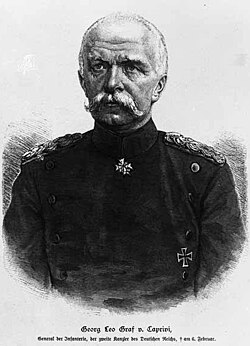
Following the era of the "Iron Chancellor," the German Empire faced a pivotal transition in leadership. Leo von Caprivi, a distinguished general and statesman, stepped into the formidable role of Imperial Chancellor from March 1890 to October 1894. Tasked with navigating the ambitions of Kaiser Wilhelm II and the legacy of Otto von Bismarck, Caprivi's tenure was marked by a shift toward social reform and a controversial realignment of European diplomacy.
Key Facts
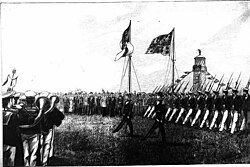
- Role: Imperial Chancellor of the German Empire (1890–1894).
- Predecessor: Otto von Bismarck.
- Military Rank: General der Infanterie and Vize Admiral.
- Major Policy: Ended the Reinsurance Treaty with Russia.
- Social Legacy: Introduced child labor restrictions and minimum wage protections.
- Education: Graduated from Friedrichswerdersches Gymnasium in Berlin.
Early Life and Military Ascent
Born Georg Leo von Caprivi on February 24, 1831, in Charlottenburg, he came from a family of Italian origin that had been ennobled during the Ottoman–Habsburg wars. His father, Julius Leopold von Caprivi, was a prominent judge and member of the Prussian House of Lords. Interestingly, Caprivi's mother was the daughter of the headmaster who had once taught Otto von Bismarck.
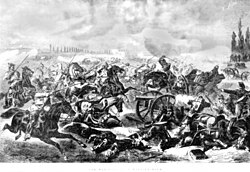
Caprivi's professional life began in the Prussian Army in 1849. He quickly rose through the ranks, attending the Prussian Staff College and serving in the topographic division of the General Staff. His military experience included active service in the Second Schleswig War (1864) and the Austro-Prussian War (1866).
By the 1880s, Caprivi had transitioned into high-level administration. He served as a department head in the Prussian War Ministry, where he contributed to the introduction of the Mauser rifle. His versatility was further demonstrated when he served as the Chief of the Imperial Admiralty from 1883 to 1888.
The Chancellorship: A New Direction
When Kaiser Wilhelm II appointed Caprivi as Chancellor in 1890, the new leader faced the daunting task of following Bismarck. Unlike his predecessor, Caprivi was an independent who sought a policy of compromise.
Foreign Policy and the Russian Rift
One of Caprivi's most consequential decisions was the termination of the Reinsurance Treaty, a secret agreement between Germany and Russia. While some historians argue this led to the "encirclement" of Germany—forcing it to fight on two fronts in World War I—others note that relations with Russia were already strained due to trade disputes over agricultural exports.
The collapse of this treaty pushed Russia toward an alliance with France by 1894, tightening Germany's reliance on Austria-Hungary and contributing to the formation of opposing power blocks in Europe.
The "Social Empire" and Domestic Reform
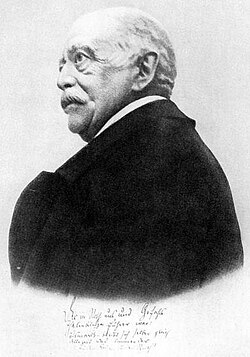
Domestically, Caprivi aimed to neutralize the threat of social democracy through progressive legislation, aligning with Wilhelm II's vision of a "social empire." These reforms were heavily influenced by the Prussian minister of trade, Hans Hermann von Berlepsch.
Key social achievements included:
- Banning the employment of children under 13 who had not finished compulsory schooling.
- Restricting 13- to 18-year-olds to a 10-hour workday.
- Forbidding Sunday work in 1891.
- Introducing a guaranteed minimum wage.
- Reducing women's working hours to a maximum of 11.
- Establishing industrial tribunals to arbitrate disputes, which included social-democratic trade union representatives.
Opposition and Political Fall
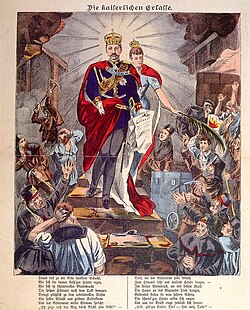
Caprivi's moderate approach eventually alienated the right wing. The German Conservative Party grew hostile, citing disagreements over rural district reforms and the 1891 commercial treaty with Austria. By 1893, the conservative press described the gap between the Chancellor and the conservatives as "unbridgeable."
His downfall was precipitated by clashes over an education bill in Prussia and a subsequent dispute over a military bill. He resigned from the chancellorship on October 26, 1894, succeeded by Chlodwig von Hohenlohe-Schillingsfürst.
Historical Evaluation
Historians remain divided on Caprivi's legacy. Early 20th-century views often cast him as a "chancellor in uniform" with limited political ability. However, later scholars like Golo Mann described him as unbiased and incorruptible, perhaps the best of the chancellors between 1890 and 1918.
Modern research, such as that by Klaus Rüdiger Metze, suggests Caprivi successfully recognized Germany's transition from an agrarian to an industrial economy and facilitated this shift through his trade and social policies, even if he struggled to manage internal political opponents.
Summary of Leo von Caprivi's Career
| Period | Position | Key Focus/Achievement |
|---|---|---|
| 1849–1888 | Prussian Army | Staff officer; served in 1864 and 1866 wars. |
| 1883–1888 | Chief of Imperial Admiralty | Naval administration. |
| 1890–1894 | Imperial Chancellor | Social reforms; ended Reinsurance Treaty. |
| 1890–1892 | Minister President of Prussia | Regional administration and education bills. |
Frequently Asked Questions
Who did Leo von Caprivi succeed as Chancellor?
Leo von Caprivi succeeded Otto von Bismarck, the long-serving and influential first chancellor of the German Empire.
What was the Reinsurance Treaty and why was it significant?
The Reinsurance Treaty was a secret agreement between Germany and Russia. Caprivi's decision not to renew it is often cited as a turning point that allowed Russia to form an alliance with France, increasing Germany's strategic vulnerability.
What social reforms did Caprivi implement?
Caprivi introduced several labor protections, including the prohibition of child labor for those under 13, the introduction of a minimum wage, and the restriction of working hours for women and teenagers.
Why did Caprivi eventually resign?
His resignation was the result of mounting opposition from the conservative right wing, specifically regarding rural reforms, trade treaties, and disputes over military and education legislation.
How is Caprivi viewed by modern historians?
While once seen as a politically naive soldier, modern historians often credit him for understanding Germany's industrialization and for his efforts to implement a compassionate social policy.