Leo Szilard: The Visionary Behind the Nuclear Chain Reaction
Leo Szilard was a polymath of the highest order—a Hungarian-born American physicist, biologist, and inventor whose intellectual curiosity spanned the smallest particles of the atom to the complex mechanisms of biological life. While history often remembers him as a pivotal figure in the creation of the atomic bomb, Szilard was equally defined by his deep ethical convictions and his later contributions to medicine and biology.
Known as one of "The Martians"—a group of exceptionally gifted Hungarian scientists—Szilard possessed a rare ability to foresee scientific breakthroughs and their geopolitical consequences long before they became reality.
![Szilard, c. 1915[8]](/images/95/d9/95d9729eb94c4f2bc49dff35bd19cb4c599d6c2e93c9b43bb36cae4a3d947351.jpg)
Key Facts
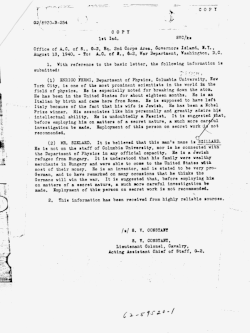
- Nuclear Innovation: Conceived the idea of the nuclear chain reaction in 1933 and patented it in 1936.
- Manhattan Project: Authored the Einstein–Szilard letter that prompted the U.S. government to begin atomic research.
- Ethical Leadership: Drafted the Szilard petition to prevent the use of the atomic bomb on civilian populations.
- Biological Breakthroughs: Co-invented the chemostat and discovered feedback inhibition in microorganisms.
- Medical Contribution: Designed the cobalt-60 treatment regimen used to treat his own bladder cancer.
Early Life and Academic Foundations
Born Leó Spitz in Budapest, Hungary, Szilard's early life was marked by the turbulence of World War I. Despite being drafted into the 5th Fortress Regiment in 1916, he continued his engineering studies at the Palatine Joseph Technical University. A bout of Spanish Influenza in 1918 likely saved his life, as it prevented him from being sent to a front where his regiment was nearly annihilated.
Szilard's academic journey took him to Berlin, where he studied at the Technische Universität Berlin and the University of Berlin. Under the guidance of Max von Laue and Albert Einstein, he developed a profound interest in thermodynamics and physics, eventually completing his thesis on thermodynamic fluctuation phenomena in 1923.
The Dawn of the Atomic Age
In 1933, Szilard had a moment of inspiration that would change the course of human history: the concept of a nuclear chain reaction—a process where the splitting of an atom releases neutrons that trigger further splits in a self-sustaining loop. He filed for a patent in 1934, which was granted in 1936. To maintain secrecy, he assigned the patent to the British Admiralty.
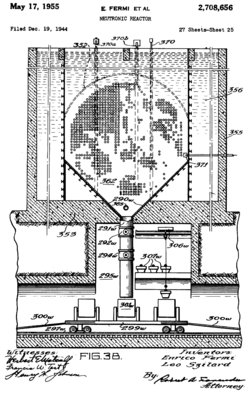
As tensions rose in Europe, Szilard moved to the United States in 1938. He collaborated with Enrico Fermi and Walter Zinn to realize the chain reaction. This effort culminated on December 2, 1942, with the successful operation of the Chicago Pile-1 (CP-1), the world's first artificial nuclear reactor.
The Manhattan Project and Ethical Dilemmas
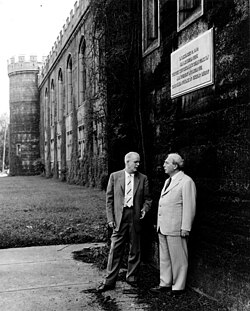
Szilard's influence extended beyond the laboratory. In 1939, he drafted the Einstein–Szilard letter, which Albert Einstein signed and sent to President Franklin D. Roosevelt, warning of German nuclear efforts and urging the U.S. to accelerate its own research. This letter served as a catalyst for the Manhattan Project.
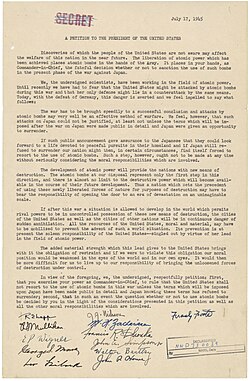
Working as the chief physicist at the Metallurgical Laboratory at the University of Chicago, Szilard contributed heavily to reactor design and coined the term breeder reactor (a reactor that produces more fissile material than it consumes). However, as the project neared completion, Szilard became deeply concerned about the weapon's use. In 1945, he authored the Szilard petition, urging President Harry S. Truman to demonstrate the bomb's power in an uninhabited area rather than dropping it on civilians.
Transition to Biological Sciences
Following the war, Szilard shifted his focus toward biology, believing the field was ripe for the same kind of scientific revolution physics had just experienced. In 1946, he secured a research professorship at the University of Chicago, where he partnered with chemist Aaron Novick.
Together, they invented the chemostat, a device used to regulate the growth rate of microorganisms in a bioreactor. They also discovered feedback inhibition, a critical biological process where the product of a reaction inhibits the very process that created it, thereby regulating metabolism and growth.
Final Years and Legacy
In 1960, Szilard was diagnosed with bladder cancer. He applied his scientific mind to his own illness, designing a cobalt-60 treatment regimen that successfully eliminated the cancer. In his final years, he helped found the Salk Institute for Biological Studies in San Diego, where he served as a resident fellow.

Driven by a desire to prevent nuclear catastrophe, he founded the Council for a Livable World in 1962 to advocate for reason and diplomacy regarding nuclear weapons. Leo Szilard passed away in his sleep from a heart attack on May 30, 1964.
| Field | Key Contribution | Impact |
|---|---|---|
| Nuclear Physics | Nuclear Chain Reaction | Foundation for nuclear power and atomic weapons |
| Public Policy | Einstein-Szilard Letter | Initiated the Manhattan Project |
| Ethics | Szilard Petition | Advocated against civilian targets for atomic bombs |
| Biology | Chemostat | Revolutionized microorganism growth regulation |
| Medicine | Cobalt-60 Therapy | Advanced targeted cancer treatment |
Frequently Asked Questions
What was the significance of the Einstein-Szilard letter?
The letter, signed by Albert Einstein and sent to President Roosevelt in 1939, warned that Nazi Germany might be developing atomic weapons. This prompted the United States to begin its own large-scale nuclear research, eventually leading to the Manhattan Project.
What is a chemostat and why is it important?
The chemostat is a bioreactor device invented by Szilard and Aaron Novick that allows for the continuous culture of microorganisms by keeping the growth rate constant. This was a major advancement in studying bacterial growth and metabolism.
Did Leo Szilard support the use of the atomic bomb on Japan?
No. While he helped make the bomb possible, he later became a strong opponent of its use on civilian populations. He drafted the Szilard petition in 1945, requesting a non-lethal demonstration of the weapon instead of a military strike on cities.
What is the Szilard-Chalmers effect?
The Szilard-Chalmers effect is a method of inducing radioactivity in a target nucleus by using a neutron to create a compound nucleus, which then undergoes a chemical reaction to separate the radioactive product from the target.
How did Szilard contribute to cancer treatment?
After being diagnosed with bladder cancer in 1960, Szilard designed a specific cobalt-60 radiation treatment regimen for himself. The high-dose treatment was successful, and his cancer did not return.