Manhattan Project: The Secret Race to Build the First Atomic Bomb
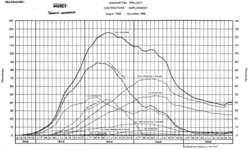
The Manhattan Project was a massive, top-secret research and development program undertaken during World War II. Led by the United States in collaboration with the United Kingdom and Canada, its singular goal was to produce the world's first nuclear weapons. At its peak, the project employed nearly 130,000 people and cost approximately US$2 billion—roughly $28 billion in 2024 currency.
The project transformed theoretical physics into a weapon of unprecedented power, culminating in the development of two distinct bomb designs and the first-ever nuclear detonation. This effort not only altered the course of World War II but fundamentally changed global geopolitics and science.

Key Facts
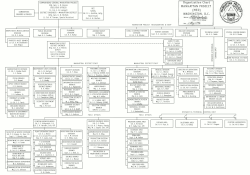
- Timeline: Active from 1942 to 1946; officially disbanded on August 15, 1947.
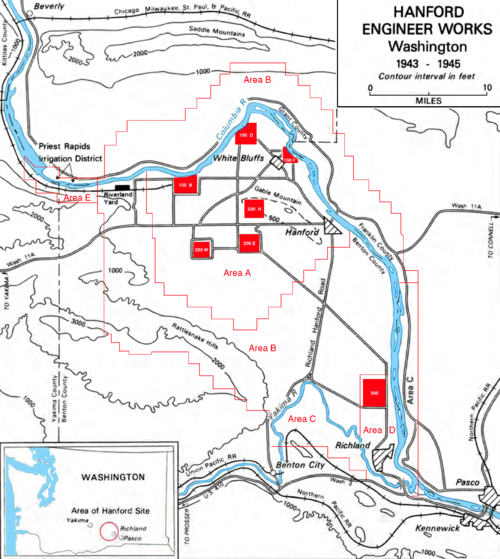
- Primary Sites: Los Alamos (design), Oak Ridge (uranium), and Hanford (plutonium).
- Weapon Types: Little Boy (uranium gun-type) and Fat Man (plutonium implosion).
- First Test: The Trinity test on July 16, 1945, in New Mexico.
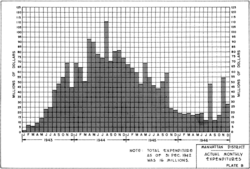
- Total Cost: Nearly US$2 billion (1945 USD).
Origins and International Collaboration
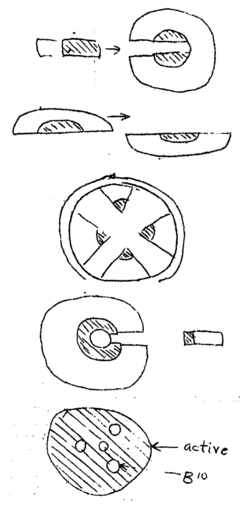
The path to the atomic bomb began with breakthroughs in nuclear fission (the splitting of an atomic nucleus). In June 1939, Otto Robert Frisch and Rudolf Peierls at the University of Birmingham calculated that the critical mass of uranium-235 was small enough—roughly 10 kilograms—to be carried by aircraft. This finding led to the British MAUD Committee's recommendation to pursue an atomic weapon.
By July 1940, Britain shared its research with the United States. The Tizard Mission, featuring John Cockcroft, revealed that the American effort was then smaller and less advanced than the British one. This sparked a surge in U.S. activity, eventually leading to the formation of the S-1 Committee and the subsequent establishment of the Manhattan District under the U.S. Army Corps of Engineers.
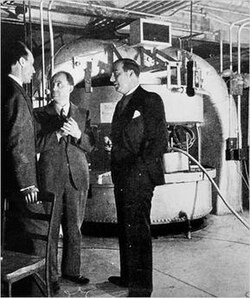
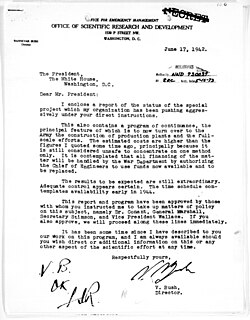
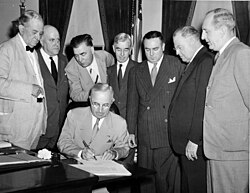
The project's momentum accelerated in 1942 when Vannevar Bush forwarded a report on "Atomic Fission Bombs" to President Franklin Roosevelt. Roosevelt approved the "crash program" with a simple handwritten note: "V.B. OK. FDR."
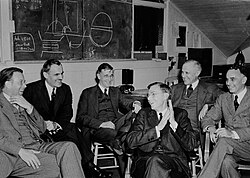
The Industrial Engine: Production Sites
Creating a nuclear weapon required massive industrial infrastructure to produce fissile materials. The project was divided into several specialized hubs:
Oak Ridge, Tennessee
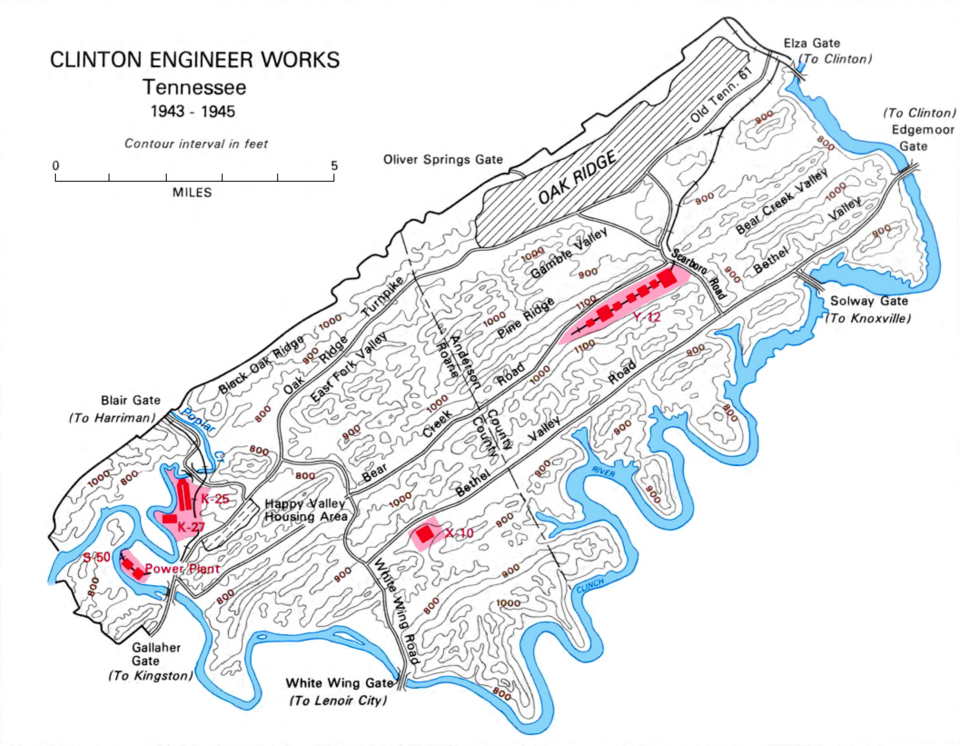
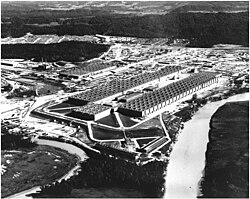
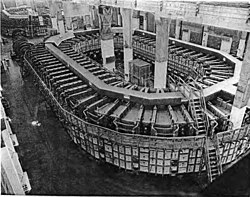
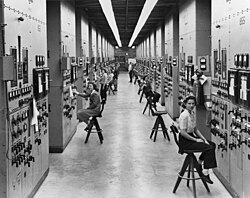
Oak Ridge focused on uranium enrichment. Natural uranium consists of 99.3% uranium-238 and only 0.7% uranium-235; only the latter is fissile. To separate them, the project utilized three successful technologies: electromagnetic separation (Y-12), gaseous diffusion (K-25), and thermal diffusion (S-50). By March 1945, these processes were run in series to boost uranium-235 levels to approximately 89%.
Hanford, Washington
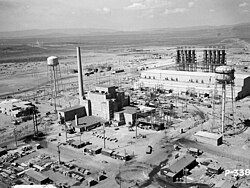
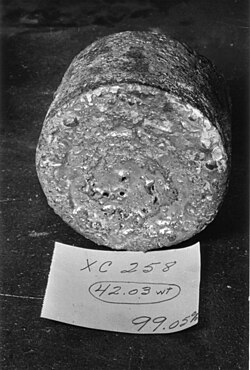
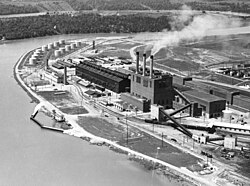
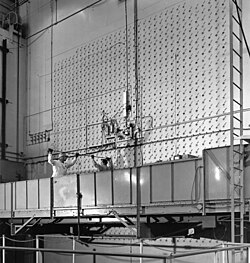
While Oak Ridge handled uranium, Hanford was dedicated to plutonium production. Using the B-Reactor, scientists created plutonium, a synthetic element. This process was highly dangerous; by the end of the war, half of the chemists and metallurgists had to be removed from work due to high levels of plutonium detected in their urine.
Los Alamos, New Mexico (Project Y)
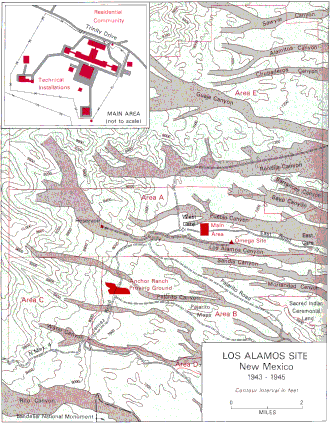
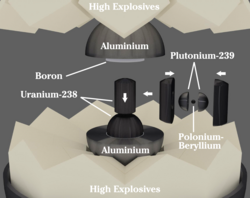
Los Alamos served as the primary design laboratory. Here, scientists worked on the complex physics of the bomb. While the uranium gun-type design was relatively straightforward, the plutonium bomb required a complex implosion method using explosive lenses because plutonium-240 contamination made it unsuitable for a gun-type device.
The Path to Detonation
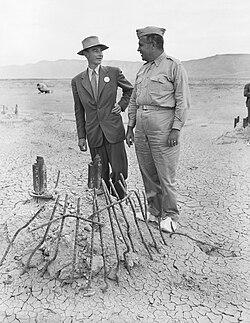
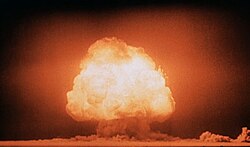
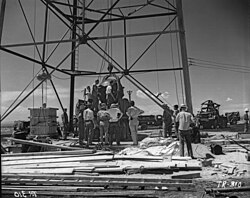
The culmination of these efforts was "The Gadget," an implosion-type device. On July 16, 1945, the Trinity test at the White Sands Proving Ground became the first nuclear explosion in history.
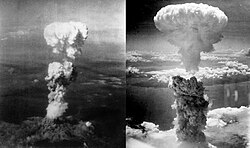
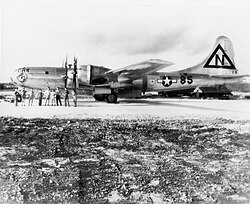
Following the successful test, the United States deployed two bombs on Japan in August 1945: Little Boy (enriched uranium) on Hiroshima on August 6, and Fat Man (plutonium) on Nagasaki on August 9. These remain the only uses of nuclear weapons in conflict.
Project Costs and Logistics
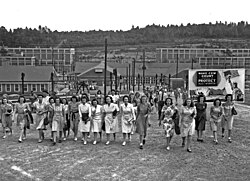
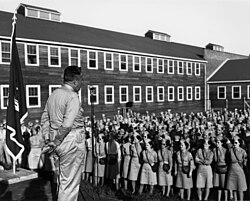
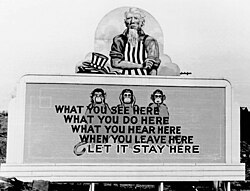
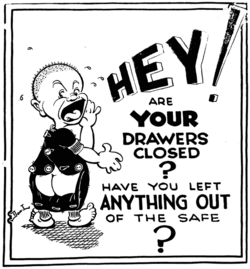
The scale of the Manhattan Project was unprecedented, requiring a vast network of contractors and strict security measures to prevent espionage from foreign intelligence, including Soviet spies.
| Site/Category | Cost (Millions USD) | 2024 Adjusted Cost (Millions) | % of Total |
|---|---|---|---|
| Oak Ridge | $1,188 | $16,368 | 62.9% |
| Hanford | $390 | $5,374 | 20.6% |
| Special Operating Materials | $103 | $1,424 | 5.5% |
| Los Alamos | $74 | $1,020 | 3.9% |
| Research and Development | $70 | $960 | 3.7% |
| Government Overhead | $37 | $513 | 2.0% |
| Heavy Water Plants | $27 | $369 | 1.4% |
| Total | $1,890 | $26,027 | 100% |
Frequently Asked Questions
![The Lake Ontario Ordnance Works (LOOW) near Niagara Falls became a principal repository for Manhattan Project waste for the Eastern United States.[362] All of the radioactive materials stored at the LOOW site—including thorium, uranium, and the world's largest concentration of radium-226—were buried in an "Interim Waste Containment Structure" (in the foreground) in 1991.[363][364][365]](/images/05/78/05789425ffaf618ecb35d1fe41b0dc1140316af75771cc3fe7b799c99921652a.jpg)
Why were two different bomb designs created?
The project developed both a uranium gun-type design (Little Boy) and a plutonium implosion design (Fat Man). The implosion design became necessary because plutonium produced at Hanford contained too much plutonium-240, which would cause a premature detonation in a gun-type weapon.
What was the purpose of the Trinity test?
The Trinity test was the first detonation of a nuclear weapon. It was conducted to prove that the complex implosion-type design worked before the weapon was used in combat.
How was uranium enriched for the bombs?
Uranium was enriched at Oak Ridge using a series of processes: thermal diffusion (S-50) first raised the concentration of uranium-235, followed by gaseous diffusion (K-25), and finally electromagnetic separation (Y-12) to reach the necessary 89% purity.
Who led the Manhattan Project?
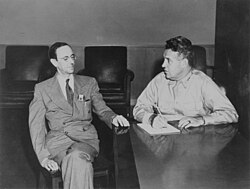
The project was a joint effort between military and scientific leadership. Key figures included Major General Leslie R. Groves Jr., who oversaw the military and construction aspects, and J. Robert Oppenheimer, who led the scientific research at Los Alamos.
What happened to the project after the war?
The project was gradually wound down, with many facilities like the Y-12 Alpha tracks closing by late 1945. The Manhattan District was officially disbanded on August 15, 1947, and the Atomic Energy Act of 1946 established the U.S. Atomic Energy Commission to manage nuclear materials.