Edward Teller: The Architect of the Hydrogen Bomb
Edward Teller (1908–2003) was a Hungarian-American theoretical physicist and chemical engineer whose name remains inextricably linked to the most powerful weapons ever created. Known colloquially as the "father of the hydrogen bomb," Teller's career spanned the most volatile decades of the 20th century, moving from the academic halls of Europe to the secret laboratories of the Manhattan Project and eventually into the highest circles of U.S. political advocacy.
Teller's legacy is one of immense scientific achievement coupled with profound controversy. While his contributions to physics are vast, his unwavering advocacy for nuclear superiority and his role in the downfall of his colleague, J. Robert Oppenheimer, make him one of the most polarizing figures in the history of science.
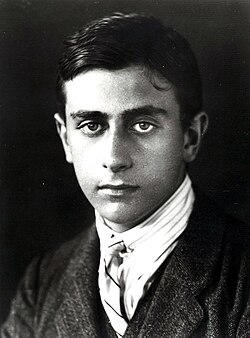
Early Life and Academic Foundation
Born as Teller Ede in Budapest, Austria-Hungary, Teller pursued an elite education across Europe. He earned his B.Sc. from the University of Karlsruhe and later completed his Ph.D. at Leipzig University under the supervision of the renowned physicist Werner Heisenberg. His early work focused on the molecular ion of hydrogen, a foundation that would later inform his work on thermonuclear fusion.
In 1935, Teller emigrated to the United States, bringing with him a deep understanding of theoretical physics that would soon become a critical asset for the American war effort.
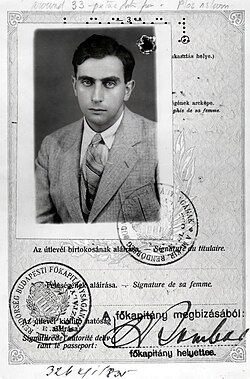
The Manhattan Project and Los Alamos
During World War II, Teller joined the Manhattan Project, the secret U.S. effort to develop the first atomic bombs. He worked at the Los Alamos Laboratory, where he contributed to the theoretical framework of nuclear fission. However, while most of his colleagues were focused on the fission bomb, Teller became obsessed with the possibility of a thermonuclear weapon—a device that used fusion (the combining of light elements) rather than fission (the splitting of heavy elements) to release energy.
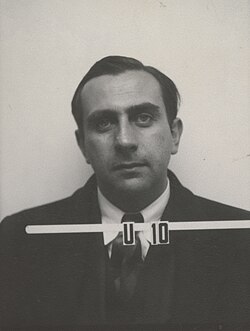
Teller's insistence on pursuing the "Super" (the hydrogen bomb) often put him at odds with the laboratory's director, J. Robert Oppenheimer. Despite these tensions, Teller remained a key figure in the scientific community, collaborating with other giants of physics such as Enrico Fermi and Richard Feynman.
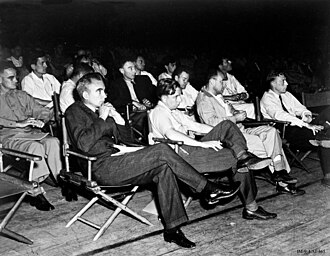
The Teller–Ulam Design and the H-Bomb
After leaving Los Alamos in 1946 to return to the University of Chicago, Teller continued his research into fusion. The breakthrough came through the Teller–Ulam design, inspired by Stanisław Ulam. This design solved the primary challenge of fusion: how to create the extreme heat and pressure necessary to ignite the fuel.
The design utilized a two-stage process. A primary fission device would release X-rays, which were then reflected off a surrounding casing to compress a secondary fusion fuel stage. This physical separation of fission and fusion fuel allowed for a weapon of exponentially greater power than the atomic bombs dropped on Japan.
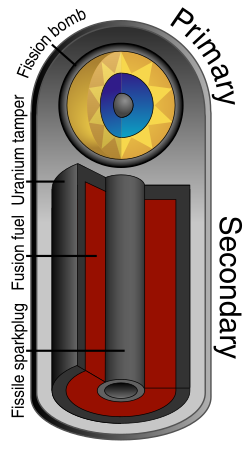
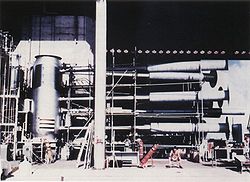
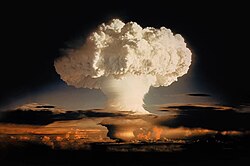
This theoretical success culminated in the 1952 "Ivy Mike" shot, the world's first fully-fledged thermonuclear explosion. The device, known as "SAUSAGE" due to its shape, yielded 10.4 megatons, vindicating Teller's long-term advocacy for the hydrogen bomb.

The Oppenheimer Controversy and Political Advocacy
Teller's career was marked by a high-profile rift with J. Robert Oppenheimer. During the 1954 security hearings, Teller testified against Oppenheimer, stating that while he did not believe Oppenheimer was a spy, he would feel a "strong urge" to see him deprived of his security clearance due to his opposition to the hydrogen bomb.
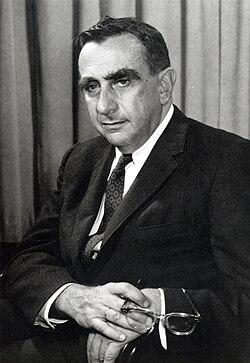
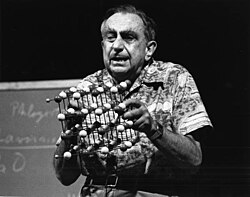
Following this, Teller became a tireless advocate for a strong U.S. nuclear program. He helped found the Lawrence Livermore National Laboratory in 1958, serving as its director from 1958 to 1960. He frequently lobbied against nuclear test bans and advocated for the continued development of nuclear technology.
Later Career and Diverse Interests
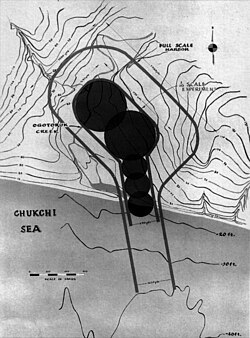
In his later years, Teller's interests expanded beyond weaponry. He explored non-military uses of nuclear explosions, such as Project Chariot, which proposed using thermonuclear devices to create an artificial harbor in Alaska.
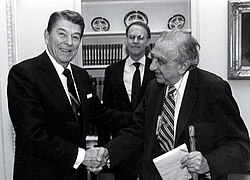
During the 1980s, Teller became a major lobbying force for President Ronald Reagan's Strategic Defense Initiative (SDI), often referred to as "Star Wars," which aimed to create a space-based shield to protect the U.S. from incoming missiles.
Teller also expressed concerns about global warming as early as 1959 and proposed unconventional solutions for asteroid impact avoidance. He remained active in science and politics until his death on September 9, 2003, at the age of 95.
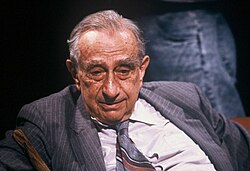
Key Facts
- Primary Achievement: Co-creator of the Teller–Ulam design for the hydrogen bomb.
- Key Institution: Co-founder and former Director of Lawrence Livermore National Laboratory.
- Major Award: Recipient of the Presidential Medal of Freedom (2003) and the National Medal of Science (1982).
- Scientific Range: Contributed to the Ashkin–Teller model, the Jahn–Teller effect, and the Metropolis–Hastings algorithm.
- Political Influence: Key advisor to President Ronald Reagan on the Strategic Defense Initiative.
| Category | Details |
|---|---|
| Born | January 15, 1908 (Budapest, Austria-Hungary) |
| Died | September 9, 2003 (Aged 95) |
| Citizenship | Hungary; United States (from 1941) |
| Education | University of Karlsruhe, LMU München, Leipzig University |
| Notable Students | Yang Chen-Ning, Marshall Rosenbluth, Jack Steinberger |
| Key Design | Teller–Ulam (Thermonuclear) |
Frequently Asked Questions
Why is Edward Teller called the "father of the hydrogen bomb"?
He is given this title because of his relentless pursuit of a fusion-based weapon and his pivotal role in developing the Teller–Ulam design, which made the creation of a practical thermonuclear bomb possible.
What was the Teller–Ulam design?
It is a configuration that uses a primary fission bomb to generate X-rays, which are then used to compress a secondary stage of fusion fuel, triggering a massive thermonuclear explosion.
What was Teller's role in the Oppenheimer hearings?
Teller testified during J. Robert Oppenheimer's 1954 security hearing, suggesting that Oppenheimer's opposition to the hydrogen bomb made him a security risk, which contributed to the revocation of Oppenheimer's clearance.
What was the Strategic Defense Initiative (SDI)?
The SDI was a proposed missile defense system under President Ronald Reagan, intended to protect the United States from nuclear missile attacks using space-based technology; Teller was a primary advocate for this program.
Did Teller contribute to any non-military science?
Yes. He made significant contributions to theoretical physics and chemistry, including the Jahn–Teller effect in molecular physics and the Metropolis–Hastings algorithm used in computational statistics.