Leiden: The Historic Key City of the Netherlands
Known as the Sleutelstad (Key City), Leiden is a vibrant municipality in the province of South Holland, Netherlands. With a rich tapestry of academic excellence, artistic heritage, and industrial evolution, Leiden stands as one of the most culturally significant cities in the region. From its strategic role in the Dutch Golden Age to its status as a modern hub of science and education, the city offers a unique blend of historical preservation and contemporary life.
Geographically, Leiden is characterized by its intricate network of rivers and canals. The municipality covers a total area of 23.27 km², with the majority being land (21.91 km²) and a small portion consisting of water (1.36 km²). As of January 2021, the municipality's population stood at 124,093, while the broader metropolitan area reaches approximately 344,299 residents.
Key Facts
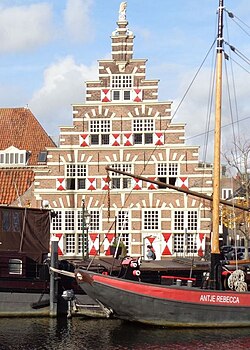
- Nickname: Sleutelstad (Key City).
- Province: South Holland, Netherlands.
- Historical Peak: Second largest city in Holland after Amsterdam during the Dutch Golden Era.
- Major Contribution: The Constitution of the Netherlands was written here in 1848.
- Academic Legacy: Home to world-renowned scholars and the historic Hortus Botanicus.
- Urban Layout: Possesses the second largest intact 17th-century town centre in the Netherlands.
A Journey Through History
The Golden Age and Industrial Rise
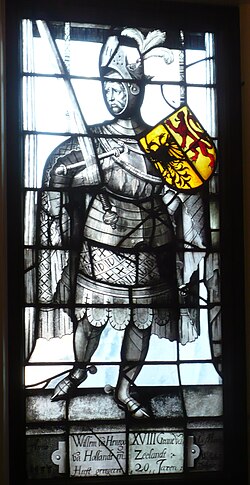
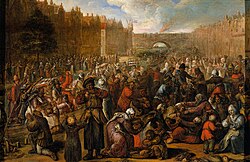
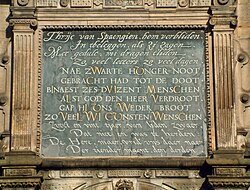
Leiden's prosperity peaked during the 17th century, driven largely by the textile industry. This growth was accelerated by refugees from Flanders who brought essential skills and impetus to the local economy. Despite suffering significant losses during the siege of 1574—where about a third of its 15,000 citizens perished—the city recovered rapidly. By 1622, the population grew to 45,000, potentially reaching 70,000 around 1670.
During this era, Leiden became a global center for medicine and chemistry, most notably through the contributions of Herman Boerhaave (1668–1738), whose work laid the foundations for modern medical education.
Economic Decline and Recovery
From the late 17th century, Leiden experienced a slump as the textile industry declined. The manufacture of baize (a coarse woolen fabric) ceased by the early 19th century. This economic downturn was reflected in the population, which dropped to 30,000 between 1796 and 1811.
Recovery began in the mid-19th century with the arrival of the railroad. The line to Haarlem opened in 1842, followed by the connection to The Hague in 1843. By the early 20th century, the city expanded beyond its 17th-century moats, diversifying into canning and metal industries.
Political Significance and Modern Era
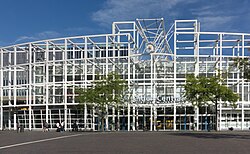
Leiden holds a place of honor in Dutch political history. In April 1848, Johan Rudolf Thorbecke drafted the Constitution of the Netherlands at his home on Garenmarkt 9. While the city suffered heavy Allied bombardments during World War II—particularly around the railway station and Marewijk—it has since restored much of its historic charm.
Architecture and Cultural Landmarks

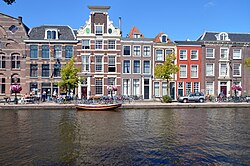
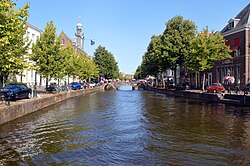
Because of its economic stagnation between the 17th and 19th centuries, Leiden's city center remained largely untouched by modern redevelopment. Today, it is celebrated as the second largest 17th-century town center in the country.
Notable Buildings
- De Waag: A historic weigh house designed by Pieter Post.
- Molen de Valk: A corn-grinding windmill from 1743 that now serves as a museum.
- Gravensteen: A former 15th-century jail located at Gerecht square.
- Stedelijk Gymnasium: The old Latin School dating back to 1599.
- Gemeenlandshuis van Rijnland: Built in 1596 and restored in 1878.
Museums and Science
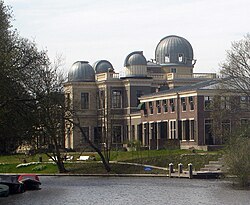
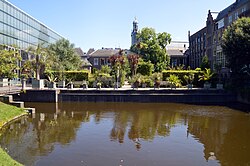
Leiden is a powerhouse of knowledge, housing several world-class institutions:
- Rijksmuseum van Oudheden: The National Museum of Antiquities.
- Naturalis Biodiversity Center: A leading center for natural history.
- Hortus Botanicus Leiden: One of the oldest botanical gardens in the Netherlands.
- Rijksmuseum Boerhaave: Dedicated to the history of science and medicine.
- Museum Volkenkunde: The National Museum of Ethnology.
Notable Figures of Leiden
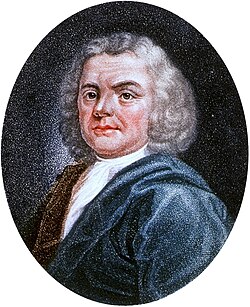
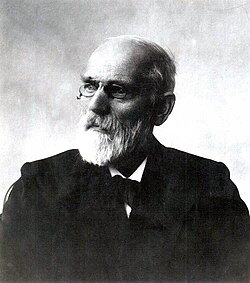
The city has been home to an extraordinary array of thinkers, artists, and athletes. In the realm of science, Leiden is associated with Nobel laureates such as Johannes Diderik van der Waals, Hendrik Lorentz, Heike Kamerlingh Onnes, and Pieter Zeeman. Even Albert Einstein served as a lecturer and researcher at Leiden University between 1916 and 1930.
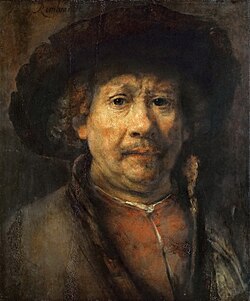
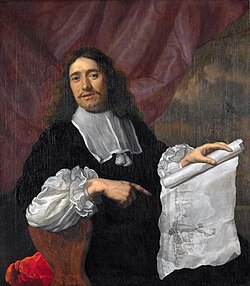
In the arts, the city's legacy includes the legendary Rembrandt van Rijn and the seascape painter Willem van de Velde the Younger. Modern fame is represented by figures such as DJ Armin van Buuren and actress Carice van Houten.
Summary of City Statistics
| Metric | Value |
|---|---|
| Municipality Population | 124,093 |
| Urban Population | 238,493 |
| Total Area | 23.27 km² |
| Land Area | 21.91 km² |
| Water Area | 1.36 km² |
| Population Density | 5,664/km² |
Frequently Asked Questions



Why is Leiden called the "Key City"?
Leiden is known as the Sleutelstad (Key City), a nickname that reflects its historical and strategic importance within the Netherlands.
What is the significance of the 1574 siege?
The siege of 1574 was a pivotal event where the city lost about a third of its population, but its eventual relief became a symbol of Dutch resilience.
Which famous document was written in Leiden?
The Constitution of the Netherlands was written in April 1848 by Johan Rudolf Thorbecke at his residence on Garenmarkt 9.
What makes Leiden's city center unique?
It is the second largest intact 17th-century town center in the Netherlands, preserved largely because the city experienced an economic decline that prevented widespread modern redevelopment.
Who are some of the famous scientists associated with Leiden?
Leiden is linked to numerous Nobel Prize winners, including Hendrik Lorentz, Heike Kamerlingh Onnes, and Johannes Diderik van der Waals, as well as Albert Einstein.