Genre Painting: The Art of Everyday Life
Genre painting, also known as petit genre, is an artistic style that captures the essence of daily existence. Unlike history paintings (the grand genre) or formal portraits, genre art focuses on ordinary people engaged in common activities. A defining characteristic of a genre scene is that the figures typically possess no specific individual or collective identity, though artists occasionally used family members as models without intending the final work to be a portrait.
These depictions range from stark realism to romanticized or imagined scenes. Because they reflect familiar and often sentimental subject matter, genre paintings have historically been highly popular among the bourgeoisie, or middle class.
Key Facts
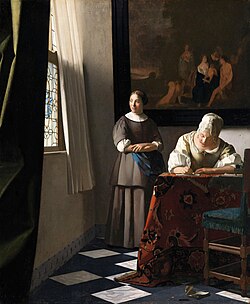
- Definition: Art depicting ordinary people in common, everyday situations without specific identities.
- Distinction: Differs from history painting and portraiture by focusing on the "low" or mundane rather than the "grand" or specific.
- Origins: Found in ancient Egyptian tomb decorations, Hellenistic panels, and Medieval illuminated manuscripts.
- Golden Age: The Low Countries (Netherlands and Belgium) dominated the field during the 17th century.
- Hidden Meanings: Many realistic scenes contain symbolic, moral, or erotic subtexts.
Early Traditions and the Rise of the Low Countries
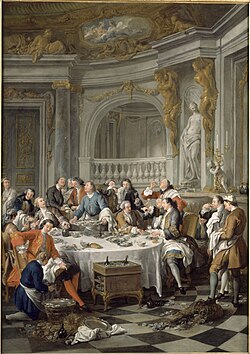
Genre subjects are not exclusive to modern eras. Ancient Egyptian art depicted banquets and agrarian life, while the Hellenistic painter Peiraikos focused on "low" subjects like barbers' shops and cobblers' stalls. In the Middle Ages, the Labours of the Months in books of hours, such as the Très Riches Heures du Duc de Berry, illustrated peasant life.
By the 16th century, the Low Countries became the epicenter of the genre. Flemish Renaissance painter Jan Sanders van Hemessen introduced large-scale scenes that often blended mundane activities with religious themes in the background. This "Mannerist inversion" shifted focus toward "low" elements. Later, Pieter Aertsen and Joachim Beuckelaer emphasized market scenes and cooks in the foreground.
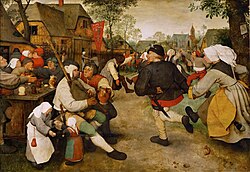
Pieter Brueghel the Elder further advanced the style by treating peasant activities with a high degree of naturalism.
The Dutch Golden Age and Flemish Baroque
In the 17th century, specialists like Johannes Vermeer, Pieter de Hooch, and Jan Steen produced small-scale works perfectly suited for middle-class homes. While these paintings appear realistic, they often hide symbolic meanings. For example, Gabriel Metsu used a rooster in The Poultry Seller (1662) as a suggestive sexual double entendre, utilizing the Dutch word vogelen (birds).
Moral lessons were also common. Jan Steen's The Happy Family (1668) depicts an inebriated father and a chaotic household, accompanied by a note stating that children learn their behavior from their parents.
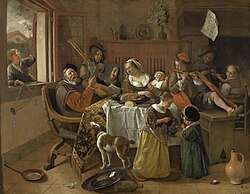
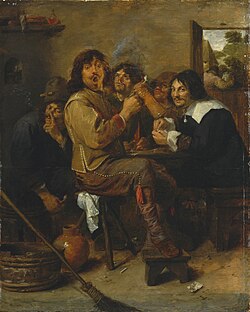
Other recurring themes included the "merry company"—groups partying or drinking in taverns—as well as village festivities (kermesse) and soldiers in guardrooms.
The Bamboccianti and International Influence
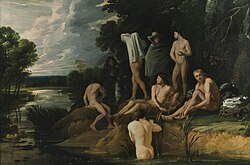
The influence of Dutch and Flemish art spread to Italy via Pieter van Laer, nicknamed "Il Bamboccio" (ugly doll). He and his followers, the Bamboccianti, painted scenes of the Roman countryside, inspiring both Northern and Italian artists such as Michelangelo Cerquozzi and Giuseppe Maria Crespi.
Evolution Through the 18th and 19th Centuries
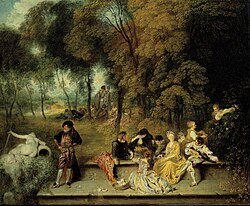
In 18th-century France, artists like Watteau and Fragonard romanticized everyday life, while Chardin focused on a more grounded realism. In England, William Hogarth used serial canvases, such as A Rake's Progress, to deliver social criticism and moral lessons through narrative detail.
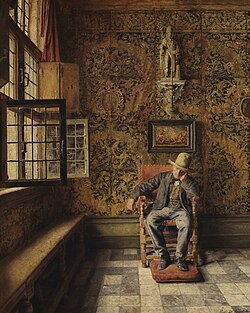
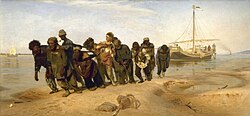
The 19th century saw a shift as religious and historical painting declined. Realists like Gustave Courbet challenged artistic hierarchies by painting everyday scenes on massive canvases previously reserved for "important" subjects. This blurred the line between genre painting and high art.
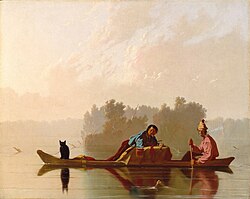
In the United States, John Lewis Krimmel pioneered the genre, followed by George Caleb Bingham and Norman Rockwell. In Canada, George Agnew Reid captured quiet rural scenes of Ontario.
Global Perspectives: Asian Traditions
Genre painting is not limited to Western art. Japanese ukiyo-e prints, created by masters like Hokusai and Hiroshige, extensively depicted people at work and leisure. Similarly, 18th-century Korean painters such as Kim Hongdo and Sin Yun-bok captured the daily lives of their contemporaries.
| Period/Region | Key Characteristics | Notable Artists |
|---|---|---|
| 17th C. Low Countries | Small scale, middle-class appeal, hidden moral/symbolic meanings | Vermeer, Steen, Brueghel the Elder |
| 18th C. Europe | Romanticized scenes (France), social satire (England) | Watteau, Hogarth, Chardin |
| 19th C. Realism | Monumental scale, focus on labor and social commentary | Courbet, Repin, Bingham |
| Asian Traditions | Ukiyo-e prints and Korean paintings of leisure and work | Hokusai, Kim Hongdo |
Frequently Asked Questions
What is the difference between genre painting and portraiture?
Genre painting depicts ordinary people in everyday situations where the figures have no specific identity. Portraiture is intended to capture the likeness and identity of a specific individual.
Why were genre paintings popular with the middle class?
Their familiar, relatable, and often sentimental subject matter appealed to the bourgeoisie, and their typically small scale made them ideal for display in private homes.
What are the "Bamboccianti"?
The Bamboccianti were a group of Flemish, Dutch, and Italian painters in Rome who, inspired by Pieter van Laer, specialized in painting scenes of the Roman countryside and common folk.
Did genre paintings always aim for pure realism?
No. While many looked realistic, they often contained hidden symbolic, moral, or even erotic meanings intended to convey a deeper message to the viewer.
How did 19th-century Realism change genre painting?
Realists like Gustave Courbet began painting everyday scenes on a monumental scale, breaking the tradition that genre painting was a "minor" category and elevating the depiction of common labor to the status of high art.