Laupheim: A Journey Through the History and Culture of Upper Swabia
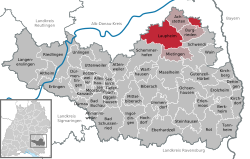
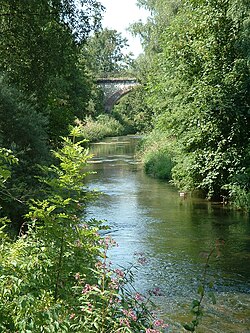
Nestled in the scenic region of Upper Swabia, Laupheim is a town that seamlessly blends deep historical roots with modern infrastructure. Located in the Biberach district of Baden-Württemberg, Germany, it sits strategically between the cities of Biberach and Ulm. Originally a settlement centered around the Rottum river, Laupheim has evolved from a small market town into the second-largest city in its district, known for its unique architectural heritage and its role in German military aviation.
Key Facts
- Location: Upper Swabia, Baden-Württemberg, Germany.
- Population: 22,839 (as of December 31, 2024).
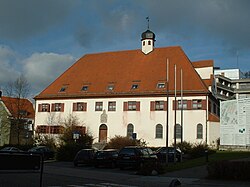
- Unique Feature: One of the few towns with two distinct castles (Großlaupheim and Kleinlaupheim) due to a historical split into two independent states.
- Military Significance: Home to Helicopter Wing 64 of the German Air Force.
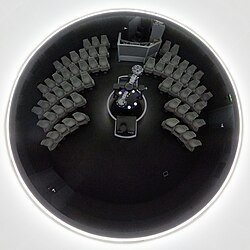
- Scientific Contribution: The town's planetarium is honored by the asteroid 7167 Laupheim.
Geography and Administration
Laupheim is situated on the Bundesstraße 30, with an elevation ranging from 509 meters in the valley to 539 meters in suburban areas. The town's administrative reach extends beyond the city center to include several formerly autonomous villages: Baustetten, Obersulmetingen, Untersulmetingen, and Bihlafingen. Among these, Bihlafingen reaches the highest elevation of the administrative area at 580 meters.
A Rich and Complex History
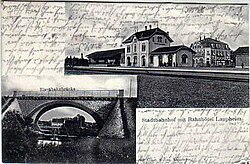
The region has been inhabited for millennia, with evidence of nomadic tribes from 15,000 years ago and Celtic settlements dating back to 2000 BCE. After a period of Roman rule in the province of Raetia (1st century CE to 260 CE), the Alamanni people settled the area. By the 12th century, an indigenous noble family, the von Laupheim, were established in the region.
The Era of the Two Castles
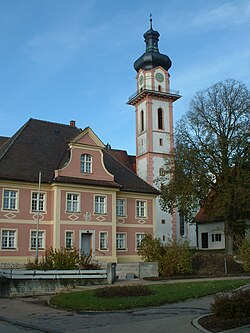
In 1582, the Herren von Welden made Laupheim their permanent residence and established the town's first school in 1584. However, inheritance laws led to a peculiar division in 1621: the town was split into two separate territories, Großlaupheim (Great Laupheim) and Kleinlaupheim (Little Laupheim). This political divide slowed economic growth but left the town with a lasting architectural legacy: two separate Baroque-style castles.
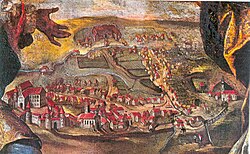
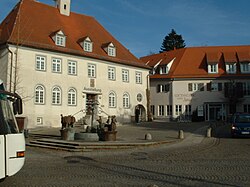
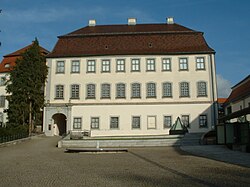
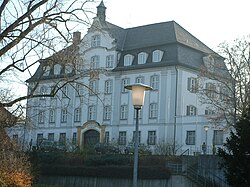
Großlaupheim Castle was restored in the Baroque style in 1752, while Kleinlaupheim Castle was renewed between 1766 and 1769 by architect Johann Georg Specht. This dual-castle layout remains a defining characteristic of the city today.
Darker Chapters and Recovery
The 20th century brought significant hardship. During the Nazi era, the town's Jewish community suffered through the program of aryanization—the forced transfer of Jewish-owned businesses to German ownership. Following the Kristallnacht, many fled, while others were deported to concentration camps between 1941 and 1942. By August 19, 1942, the Jewish community in Laupheim had ceased to exist.
Economy, Infrastructure, and Education
Laupheim is well-connected via the Danube-Iller Regional S-Bahn, with the Laupheim West and Laupheim city stations providing vital links to Ulm and Biberach. Economically, the town maintains traditional industries, such as the Kronenbrauerei Laupheim brewery, which has operated since 1753.
The town is also a hub for education, offering a comprehensive range of schooling from primary schools to the Carl-Laemmle-Gymnasium (leading to the Abitur) and the Kilian-von-Steiner-Schule for vocational training. It also hosts a state seminar for didactics and teacher training.
Military Aviation and Global Missions
Laupheim has a strong military presence. Originally home to the Medium Transport Helicopter Regiment 25, the base transitioned in 2013 to become Helicopter Wing 64 of the German Air Force. The wing operates CH-53 transport helicopters and H145M LUH SOF light utility helicopters.

These units have been deployed globally on NATO and United Nations peacekeeping missions, including operations in Iraq, the Balkans (IFOR, KFOR, SFOR, EUFOR), Afghanistan (ISAF), and the Democratic Republic of the Congo (EUFOR RD Congo).
Cultural Attractions and Landmarks
Visitors to Laupheim can explore a variety of historical and scientific sites:
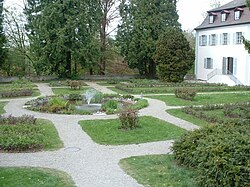
- Kleinlaupheim Castle: A three-storey Baroque residence featuring a curved mansard roof and a grand staircase.
- Planetarium and Public Observatory: A volunteer-run institution attracting 40,000 visitors annually, recognized by astronomer Carolyn Shoemaker.
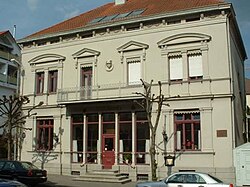
- Museum of the History of Christians and Jews: A site dedicated to the town's complex social history.
- Parish Church St Peter and Paul: A central spiritual and architectural landmark.
| Category | Detail |
|---|---|
| State | Baden-Württemberg |
| District | Biberach |
| Total Area | 61.79 km² |
| Population (2024) | 22,839 |
| Elevation | 509 m to 580 m |
| Lord Mayor | Ingo Bergmann (since 2022) |
Notable Figures
Laupheim is the birthplace or home of several influential individuals, including Carl Laemmle, the founder of Universal Studios, and Gretel Bergmann, a world-class high jumper of the 1930s who was excluded from the 1936 Olympics due to her Jewish heritage.
Frequently Asked Questions
Why does Laupheim have two castles?
In 1621, due to inheritance laws within the house of Welden, the town was divided into two separate territories: Großlaupheim and Kleinlaupheim. Each territory was ruled by its own dynasty, leading to the construction and maintenance of two separate residences.
What is the significance of the Laupheim Planetarium?
The planetarium is a major educational center run largely by volunteers. Its contributions to astronomy were so highly regarded that astronomer Carolyn Shoemaker named asteroid 7167 Laupheim in its honor.
Which military units are based in Laupheim?
The town is currently home to Helicopter Wing 64 of the German Air Force, which utilizes CH-53 and H145M LUH SOF helicopters for transport and utility missions.
Who was Carl Laemmle?
Carl Laemmle was a German-American film producer and an honorary citizen of Laupheim. He is most famous for founding Universal Studios.
How is Laupheim connected to other cities?
Laupheim is connected via the Bundesstraße 30 and the Danube-Iller Regional S-Bahn, providing direct rail access to Ulm and Biberach an der Riß.