Latin American Boom: The Literary Revolution of the 1960s
The Latin American Boom (Spanish: Boom latinoamericano) was a seismic literary movement during the 1960s and 1970s. During this era, a group of young Latin American novelists achieved unprecedented global circulation, bringing the voices of the Southern continent to Europe and beyond. This movement was not merely a publishing phenomenon but a bold challenge to established literary conventions, blending experimental styles with the volatile political climate of the time.
The rise of the Boom is inextricably linked to the geopolitical atmosphere of the mid-20th century. Critic Gerald Martin notes that the movement's trajectory mirrored the international perception of the 1959 Cuban Revolution. As the world looked toward Latin America with a mixture of curiosity and political fervor, the works of these authors provided a sophisticated cultural lens through which to view the region.
Key Facts
- Core Figures: Primarily associated with Gabriel García Márquez, Julio Cortázar, Mario Vargas Llosa, and Carlos Fuentes.
- Timeline: Peaked between the 1960s and 1970s, with roots stretching back to the 1940s.
- Influences: Drew from European and North American Modernism and the Latin American Vanguardia (avant-garde) movement.
- Global Reach: Facilitated by European publishing houses like Barcelona's Seix Barral and the influence of literary agent Carmen Balcells.
- Political Context: Heavily influenced by the Cuban Revolution (1959) and the Chilean coup d'état (1973).
Origins and Evolution
While the Boom is generally dated to the 1960s, scholars debate its exact starting point. Some point to Julio Cortázar's Hopscotch (1963) or Mario Vargas Llosa's The Time of the Hero (1962). Others suggest earlier precursors, such as Augusto Roa Bastos's Hijo de hombre (1959) or even Miguel Ángel Asturias's Men of Maize (1949).
The writers of the Boom often described themselves as an "orphan" generation. They felt disconnected from previous Latin American models—such as the Indigenistas (focused on indigenous peoples) or Criollistas (focused on regional customs)—and instead looked toward European masters like James Joyce, Marcel Proust, and Jean-Paul Sartre. This tension between international admiration and the need for an authentic Spanish American voice fueled their stylistic innovation.
Literary Influences and Stylistic Shifts
The movement evolved from the early modernist departures of José Martí and Rubén Darío. By the 1950s, Spanish American novelists were largely marginal figures in a literary world centered in Paris and New York. However, by 1975, they had become central figures of global literature.
The stylistic progression of the Boom can be broken down into three general phases:
- Early Period: Dominated by Realism and existential pessimism, featuring straightforward narratives and well-rounded characters.
- The 1960s: Language became more "pop" and streetwise. Chronologies became intricate, and characters grew more complex, requiring the reader to be an active participant in deciphering the text.
- Late Period: A shift toward metafiction (fiction that reflects on its own writing) and postmodern themes, reflecting a society where traditional meanings had become corrosive or insignificant.
Major Representatives of the Boom
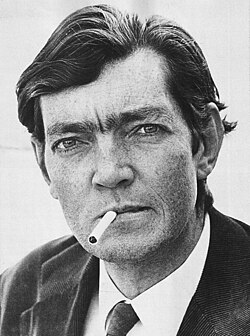
Julio Cortázar
Born in Belgium to Argentinian parents, Cortázar spent much of his professional life in France. His work often questioned the politics of his homeland, and his opposition to Juan Perón eventually led to his exile. While his early fiction was less overtly political, his 1973 novel Libro de Manuel took a direct political stance. He is celebrated for experimental works like Hopscotch and Historias de cronopios y de famas.
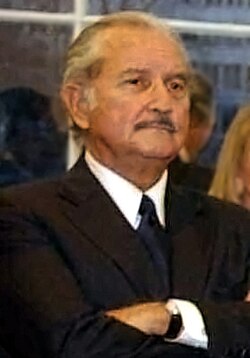
Carlos Fuentes
The son of a Mexican diplomat, Fuentes's global upbringing and experiences with discrimination in the United States drove him to examine Mexican culture. His 1962 novel The Death of Artemio Cruz is noted for its innovative use of narrative point-of-view. Beyond his novels, Fuentes was a critical force, founding the Revista Mexicana de Literatura to introduce European Modernism to Latin America.
Gabriel García Márquez
A Nobel Prize winner (1982), García Márquez is the most famous proponent of magical realism—a style where fantastic or unusual events are narrated with a deadpan, matter-of-fact expression. His masterpiece, One Hundred Years of Solitude (1967), exemplifies this by blending the spiritual and the mundane, such as a character ascending to heaven while hanging laundry.
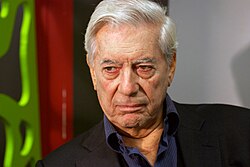
Mario Vargas Llosa
The 2010 Nobel Prize laureate is known for epic works such as Conversation in The Cathedral and The Green House. His work often explored the intersection of power and society, and he later ventured into historical fiction with The War of the End of the World. He also famously ran for the presidency of Peru in 1990.
The Role of Publishing and the "Big Mama"
The international success of the Boom was not accidental. It was propelled by avant-garde publishing houses in Barcelona, such as Seix Barral, which recognized the commercial and artistic potential of the Spanish American market. A pivotal figure in this success was the "super-agent" Carmen Balcells, whom Mario Vargas Llosa called "The Big Mama of the Latin American novel," for her role in promoting these authors globally.
| Author | Country | Notable Work | Key Contribution |
|---|---|---|---|
| Gabriel García Márquez | Colombia | One Hundred Years of Solitude | Magical Realism |
| Julio Cortázar | Argentina | Hopscotch | Experimental Structure |
| Carlos Fuentes | Mexico | The Death of Artemio Cruz | Narrative Point-of-View |
| Mario Vargas Llosa | Peru | The Time of the Hero | Social and Political Critique |
The End of an Era
The period of euphoria associated with the Boom began to wane around 1971. The turning point is often cited as the "Padilla affair," where the Cuban government forced poet Heberto Padilla to publicly reject his views. This event shattered the inspirational myth of the Cuban Revolution for many Spanish American intellectuals. While the specific "furor" of the Boom ended, the legacy persisted; the authors continued to reach audiences far larger than any Latin American writers had before them.
Frequently Asked Questions
What is magical realism?
Magical realism is a literary style, most famously used by Gabriel García Márquez, where supernatural or fantastic elements are presented as normal, everyday occurrences within a realistic setting.
Who were the primary authors of the Latin American Boom?
The movement is most closely associated with Gabriel García Márquez (Colombia), Julio Cortázar (Argentina), Mario Vargas Llosa (Peru), and Carlos Fuentes (Mexico).
How did the Cuban Revolution affect the Boom?
The 1959 revolution initially provided a sense of political hope and a new age of possibility that brought global attention to Latin America. Conversely, the later hardening of the Cuban party line in 1971 contributed to the decline of the movement's initial euphoria.
Why was Barcelona important to the movement?
Barcelona served as a critical publishing hub. Houses like Seix Barral published many Boom novels, helping them reach European audiences and boosting the Spanish economy, despite the censorship of the Franco regime.
What is metafiction in the context of the Boom?
Metafiction is a technique where the narrative reflects upon its own creation. In the later stages of the Boom, novelists moved toward this "fiction on fiction," exploring the corrosive nature of postmodern society.