Julio Cortázar: The Master of the Latin American Boom
Julio Florencio Cortázar was a towering figure in 20th-century literature, a novelist, short story writer, poet, and translator whose work bridged the gap between Argentina and France. As one of the primary architects of the Latin American Boom—a literary movement that brought the region's experimental and imaginative writing to global prominence—Cortázar redefined the boundaries of narrative structure and the relationship between the reader and the text.
His writing is characterized by a seamless blend of the ordinary and the fantastic, often placing protagonists in mundane settings only to shift the reality into something strange, mythical, or horrific. From the experimental architecture of his most famous novel to his haunting short fiction, Cortázar's legacy continues to influence writers and filmmakers worldwide.
Key Facts
- Full Name: Julio Florencio Cortázar.
- Nationality: Argentine and naturalized French.
- Major Movement: A founder of the Latin American Boom.
- Most Famous Work: Hopscotch (Rayuela), often cited as the greatest Latin American novel of the 20th century.
- Key Awards: Prix Médicis (1974) and the Rubén Darío Order of Cultural Independence (1983).
- Career: Worked as an elementary teacher and later as a translator for UNESCO.
Early Life and Education
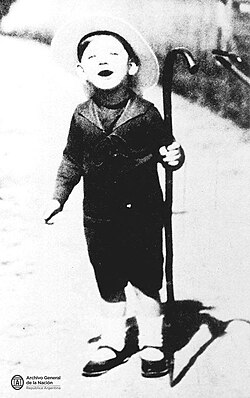
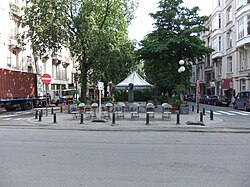
Born on August 26, 1914, in Ixelles, Belgium, Cortázar's early years were marked by instability. His father left the family when he was six, leading to a childhood spent primarily in Banfield, a suburb of Buenos Aires. A sickly child who spent much of his time reading in bed, he was deeply influenced by his mother, a multilingual reader who introduced him to the adventurous works of Jules Verne.
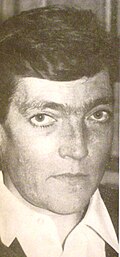
Cortázar qualified as an elementary school teacher at 18. While he later studied philosophy and languages at the University of Buenos Aires, financial constraints forced him to leave before completing his degree. He taught at high schools in Chivilcoy and Bolivar. In 1938, he published a volume of sonnets titled Presencia under the pseudonym Julio Denis, a work he later repudiated, believing it was published before he had truly found his voice.
The Paris Years and Political Awakening
In 1951, Cortázar immigrated to France, where he spent the remainder of his life. He worked intermittently as a translator for UNESCO starting in 1952 and maintained homes in Paris and Saignon. This period of his life was marked by both literary productivity and a growing political consciousness.
Cortázar became a vocal opponent of human rights abuses in Latin America. He supported the Cuban revolution under Fidel Castro, the socialist government of Salvador Allende in Chile, and the Sandinista revolution in Nicaragua. His political sensibilities were further sharpened by his relationship with Lithuanian writer Ugnė Karvelis and his multiple visits to Cuba beginning in 1963.
Literary Contributions and Style
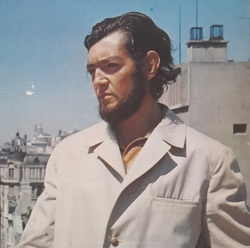
Cortázar's rise to fame began in the late 1940s. While his poetic drama Los Reyes (1949) went largely unnoticed, his short stories began to gain traction, particularly after Jorge Luis Borges published "Casa Tomada" ("House taken over") in a literary magazine.
The Short Stories
He established himself as a master of short fiction through collections such as Bestiario (1951), Final del juego (1956), and Las armas secretas (1959). His stories often feature fantastic elements, where the boundaries between reality and the surreal blur, challenging the reader's perception of time and space.
The Novels
Cortázar published four novels during his lifetime, the most significant being Hopscotch (Rayuela, 1963). This experimental work is renowned for its non-linear structure, allowing readers to navigate the chapters in various orders. Other novels include Los premios (1960), 62: A Model Kit (1968), and Libro de Manuel (1973).
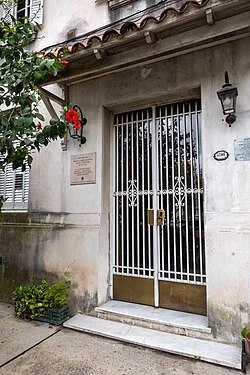
Influence on Cinema and Literature
Cortázar's imaginative narratives extended beyond the page into the world of cinema. His story "Las babas del diablo" served as the inspiration for Michelangelo Antonioni's 1966 film Blowup, in which Cortázar himself made a cameo appearance as a homeless man. Additionally, Jean-Luc Godard's Week End (1967) was influenced by his story "La autopista del sur".
Final Years and Legacy
In his later years, Cortázar was granted French nationality by President François Mitterrand. Despite a severe gastric hemorrhage in 1981, he continued to write. In 1983, he returned to Argentina for a final visit; while he was embraced by the public, he was notably ignored by the government of President Raúl Alfonsín.
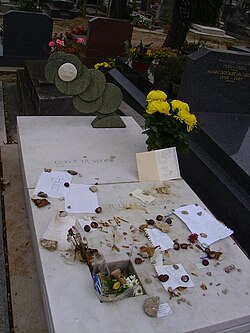
Julio Cortázar passed away on February 12, 1984, in Paris at the age of 69. He is buried in the Montparnasse Cemetery.
| Category | Details |
|---|---|
| Lifespan | 1914–1984 |
| Key Genres | Novel, Short Story, Poetry, Essay |
| Defining Novel | Hopscotch (1963) |
| Major Collections | Bestiario, Final del juego, Las armas secretas |
| Primary Residences | Buenos Aires, Argentina; Paris, France |
| Notable Influence | Michelangelo Antonioni, Jean-Luc Godard |
Frequently Asked Questions
What was the Latin American Boom?
The Latin American Boom was a literary movement in the 1960s and 70s that brought global attention to the region's writers. It was characterized by experimental narrative techniques and the blending of reality with fantastic or surreal elements.
Why is the novel Hopscotch considered so important?
Hopscotch is celebrated for its innovative, non-linear structure that breaks traditional storytelling rules, making the reader an active participant in the construction of the narrative.
Did Julio Cortázar write under any other names?
Yes, early in his career, he used the pseudonym Julio Denis to publish a volume of sonnets titled Presencia in 1938.
How did Cortázar influence cinema?
His stories inspired several major films, most notably Michelangelo Antonioni's Blowup and Jean-Luc Godard's Week End, reflecting his ability to visualize surreal and psychological tension.
What was Cortázar's professional life outside of writing?
Cortázar was a qualified elementary school teacher and worked for many years as a translator for UNESCO in France.