Ladybird Beetles: The Biology, Ecology, and Impact of Coccinellidae
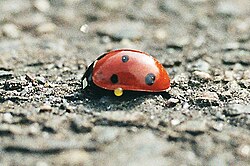
Commonly known as ladybugs or lady beetles, members of the Coccinellidae family are among the most recognizable insects in the world. These beetles have existed since the Eocene epoch and play a vital role in various ecosystems. While many people view them as charming garden visitors, they are actually highly efficient predators with complex life cycles and significant roles in both agriculture and biological control.
Key Facts
- Scientific Family: Coccinellidae
- Temporal Range: Eocene to the Present
- Primary Diet: Mostly carnivorous, preying on aphids, scale insects, and whiteflies.
- Size Range: 0.8 mm to 18 mm.
- Ecological Role: Beneficial predators used in classical biological control.
Physical Characteristics and Morphology
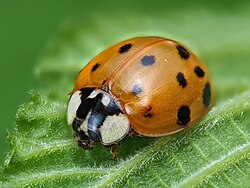
Coccinellids are characterized by their oval shapes and domed backs. They range in size from a tiny 0.8 mm to 18 mm, with adult females generally being slightly larger than males. Their bodies feature a broad, convex prothorax (the front part of the thorax) that can partially cover the back of the head. As beetles, they possess hardened, non-overlapping forewings known as elytra, which protect the more delicate hindwings used for flight.
Anatomically, these insects possess large compound eyes and clubbed antennae consisting of seven to eleven segments. Their legs are relatively short, featuring a tarsal formula of 4-4-4 (though the third segment is often reduced, making it appear as 3-3-3). They also have powerful mandibles, or jaws, equipped with pairs of teeth for feeding.
Flight and Movement
Most ladybird beetles are diurnal, meaning they are active during the day. Their flight capabilities are surprisingly robust; studies in Britain have shown that some species can fly up to 120 km (75 mi) at speeds of 30 km/h (19 mph), reaching altitudes of nearly 1,100 m (3,600 ft). They often migrate long distances to find suitable breeding sites, hibernation spots, or areas with abundant food, sometimes using recognizable landmarks to navigate.
Life Cycle and Reproduction
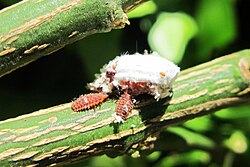
The life cycle of a coccinellid follows a complete metamorphosis: egg, larva, pupa, and adult. In temperate climates, breeding typically occurs from late spring to early summer. In tropical regions, reproduction is often tied to the wet season. Females lay bright yellow eggs in clusters, usually near food sources to ensure the emerging larvae have immediate access to prey.
Reproduction involves complex behaviors. Mating is promiscuous, and in some species, females show selectivity regarding the size and color of their partners. Interestingly, males engage in a form of sperm competition; they produce sperm packets containing approximately 14,000 sperm each and may insert three packets into a female, even though her capacity is limited to about 18,000 sperm.
Trophic Roles: Predators and Prey
Coccinellids occupy multiple positions in the food web, acting as predators, prey, and parasitic hosts. The majority of species are carnivorous. In temperate regions, roughly 68% of species are specialized aphid-eaters, while globally, about 36% of species primarily feed on scale insects. Other prey include whiteflies, psyllids, adelgids, mites, and even the larvae of certain moths and beetles.
Unlike many other insect groups, both the larval and adult stages of most coccinellid species consume the same types of food, ensuring a consistent predatory pressure on pest populations throughout their development.
Biological Control and Human Interaction
Because they consume many agricultural pests, ladybirds are considered highly beneficial insects. One of the most famous examples of classical biological control is the introduction of the Vedalia beetle (Novius cardinalis) to California in 1887. This Australian species was used to combat the cottony cushion scale on citrus trees, a project that was so successful it became a textbook example of using natural enemies to manage invasive pests.
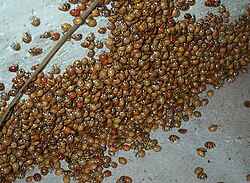
However, not all interactions are positive. Some species have been introduced outside their native ranges and can become invasive, leading to large aggregations in human structures during certain seasons.
Summary of Coccinellidae Traits
| Feature | Description |
|---|---|
| Body Shape | Oval with domed backs and flattened undersides |
| Wing Type | Hardened elytra covering membranous hindwings |
| Primary Diet | Sternorrhyncha (aphids, scale insects, whiteflies) |
| Metamorphosis | Egg → Larva → Pupa → Adult |
| Flight Pattern | Diurnal; capable of long-distance migration |
Frequently Asked Questions
Are all ladybird beetles beneficial to humans?
Most are considered beneficial because they prey on agricultural pests like aphids. However, some species can become invasive or congregate in large numbers in homes, which can be a nuisance.
How do ladybirds defend themselves?
While the source mentions they are aposematic (using warning signals), they are known to use various defensive mechanisms, including reflex bleeding, to deter predators.
What is the difference between a ladybug and a ladybird?
There is no scientific difference; "ladybug," "ladybird," and "lady beetle" are all common names used to describe members of the Coccinellidae family.
Do ladybird larvae eat the same thing as adults?
Yes, in most coccinellid species, both the larvae and the adults feed on the same prey, such as aphids and scale insects.
How far can a ladybird fly?
They are capable of significant travel. Some species can fly up to 120 km (75 miles) and reach altitudes of approximately 1,100 meters.