Ladybird Beetles: Nature's Tiny Predators and Biological Control Heroes
Commonly known as ladybugs or lady beetles, members of the Coccinellidae family are among the most recognizable insects in the world. These small, often brightly colored beetles have existed since the Eocene epoch, playing a vital role in ecosystems as both predators and prey. While many view them as charming garden visitors, they are actually highly efficient hunters that serve as a cornerstone of natural pest management.
From their distinctive domed backs to their complex life cycles, ladybird beetles are fascinating biological machines. Understanding their morphology, behavior, and ecological impact reveals why they are so essential to both wild habitats and agricultural success.
Key Facts
- Scientific Family: Coccinellidae
- Size Range: 0.8 mm to 18 mm
- Primary Diet: Predatory insects like aphids, scale insects, and whiteflies
- Ecological Role: Beneficial predators used in classical biological control
- Temporal Range: Present since the Eocene
Physical Characteristics and Morphology
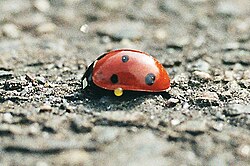
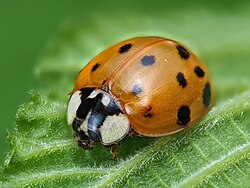
Coccinellids are characterized by their oval shapes and domed backs. Their undersides are relatively flat, and they possess large compound eyes and clubbed antennae consisting of seven to eleven segments. One of their most defining features is the elytra—hardened, non-overlapping forewings that protect the more delicate hindwings used for flight.
On a microscopic level, these beetles possess several unique anatomical traits. They have five pairs of spiracles (breathing holes) on the abdomen and powerful mandibles (jaws) equipped with teeth for grasping prey. Their legs are short, typically following a 4-4-4 tarsal formula, though the third segment can sometimes appear reduced, making it look like 3-3-3.
Life Cycle and Reproduction
The life cycle of a ladybird beetle follows the standard insect progression: egg, larva, pupa, and adult. In temperate climates, breeding typically occurs from late spring to early summer. However, in tropical regions, reproduction is often tied to the wet season.
Females lay bright yellow eggs in clusters, usually near abundant food sources to ensure the emerging larvae have immediate access to prey. Interestingly, the mating process involves significant competition; males produce sperm packets, and females may receive multiple packets, leading to sperm competition within the female's reproductive tract.
Trophic Roles: Predators and Prey
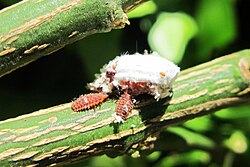
Most coccinellids are carnivorous. They are highly valued in agriculture because they prey on Sternorrhyncha insects, which include devastating pests such as aphids, scale insects, whiteflies, and psyllids. In temperate areas, approximately 68% of species are specialized aphid-eaters, while about 36% of total species focus on scale insects.
Unlike many other insect groups where larvae and adults have different diets, both the larval and adult stages of most ladybird beetles consume the same types of prey, maximizing their impact on pest populations.
Flight and Migration
Ladybird beetles are capable of impressive aerial feats. While they mostly fly during the day, they can migrate long distances to find better breeding sites or hibernation locations. Research in Britain has shown that these beetles can fly up to 120 km (75 mi) at speeds of 30 km/h (19 mph), reaching altitudes of nearly 1,100 meters.
Their flight is supported by specialized hindwings with springy, cylindrical veins that stiffen during flight and allow for easy folding when at rest. They often use recognizable landmarks to navigate during these migrations.
Biological Control: A Success Story
The use of ladybirds for biological control—the method of using natural enemies to suppress pest populations—is one of the most famous examples in scientific history. In 1887, the vedalia beetle (*Novius cardinalis*) was introduced from Australia to California to combat the cottony cushion scale attacking citrus trees.
This intervention was a massive success and has since been replicated in 29 countries. The effectiveness of species like Novius cardinalis is due to several factors:
- High specificity for their target prey
- Rapid development cycles
- The ability to produce multiple generations per year
- Efficient ability to locate host patches
Summary of Coccinellidae Traits
| Feature | Description |
|---|---|
| Body Shape | Oval with a domed back and flattened underside |
| Protective Covering | Hardened forewings known as elytra |
| Primary Diet | Aphids, scale insects, and whiteflies |
| Developmental Stages | Egg, Larva, Pupa, Adult |
| Flight Capability | Can reach altitudes of ~1,100m and fly 120km |
Frequently Asked Questions
Are all ladybird beetles beneficial to humans?
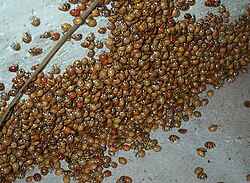
The majority are considered beneficial because they consume agricultural pests. However, some species can be invasive or may be viewed as pests in certain contexts, such as when they aggregate in large numbers in human buildings.
How do ladybirds defend themselves?
While the source mentions they have defensive mechanisms, they are often noted for their bright, conspicuous colors, which serve as a warning to predators.
What is the difference between a ladybug and a ladybird?
Both terms refer to beetles in the Coccinellidae family; "ladybug" is commonly used in North America, while "ladybird" is more frequent in other English-speaking regions.
Do ladybird larvae eat the same things as adults?
Yes, in most coccinellid species, both the larvae and the adults feed on the same prey, such as aphids and scale insects.
Why are they used in biological control?
They are used because they are highly efficient at finding and consuming specific pests, making them a natural and effective alternative to chemical pesticides.