Kyrgyzstan: A Land of Nomadic Heritage and Mountain Peaks
Nestled in the heart of Central Asia, the Kyrgyz Republic is a nation defined by its dramatic landscapes and deep-rooted nomadic traditions. From the towering peaks of the Tian Shan to the serene shores of Lake Issyk-Kul, Kyrgyzstan offers a unique blend of ancient Silk Road history and modern statehood. As a unitary presidential republic, it continues to navigate its path as a sovereign nation while preserving the cultural identity of the Kyrgyz people.
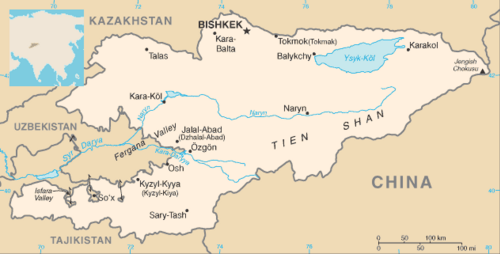
Key Facts
- Capital: Bishkek (the largest city).
- Official Languages: Kyrgyz (state) and Russian (official).
- Geography: Dominated by the Tian Shan Mountains and high-altitude plateaus.
- Population: Estimated at 7.4 million by 2026.
- Economy: Based on a mix of agriculture, tourism, and mining, with a nominal GDP of approximately $22.587 billion (2025 estimate).
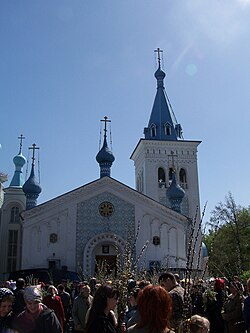
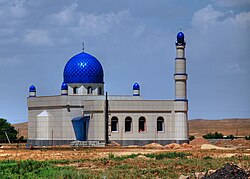
- Religion: Predominantly Islam (91%), with a Christian minority (8%).
Geography and Climate
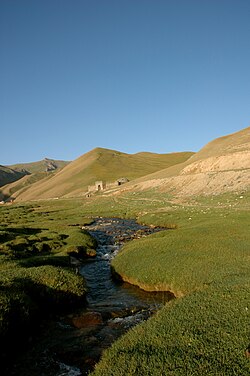
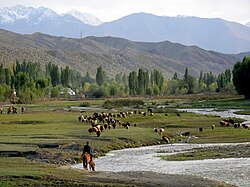
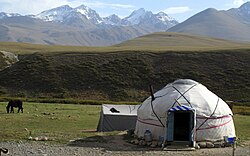
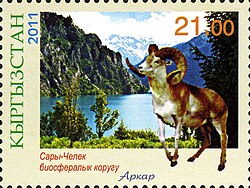
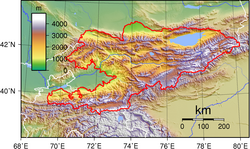
Kyrgyzstan is characterized by its rugged topography, with the majority of its landmass covered by mountains. The Tian Shan range provides a stunning backdrop to the country's valleys and highlands.
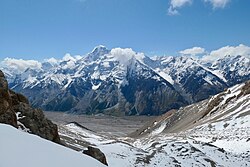
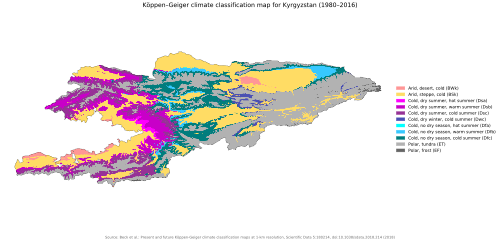
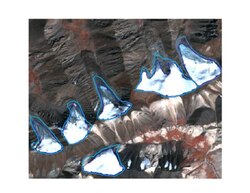
The climate varies significantly across the region, as detailed in the Köppen climate classification. One of the most critical environmental challenges facing the nation is the reduction of glacier area, particularly in the Borkoldoy range, which highlights the impact of global climate change on the region's water sources.
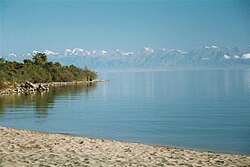
A central geographic feature is Lake Issyk-Kul, one of the largest alpine lakes in the world, which remains unfrozen throughout the year and serves as a major hub for tourism and local settlement.
History and Political Evolution
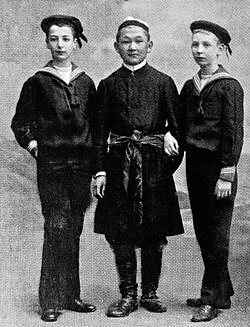
The history of Kyrgyzstan is a tapestry of nomadic empires and foreign influence. Early formations include the Kyrgyz Khaganate (840) and the Kara-Kyrgyz Khanate. By 1876, the region was annexed by the Russian Empire, eventually transitioning through various Soviet administrative stages, including the Kirghiz ASSR and the Kirghiz SSR.
Kyrgyzstan declared its sovereignty on December 30, 1990, and achieved full independence from the USSR on August 31, 1991. In the 21st century, the nation has experienced significant political shifts, leading to the current constitution adopted on April 11, 2021.
Government Structure
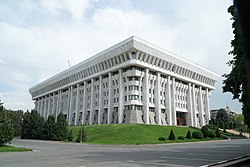
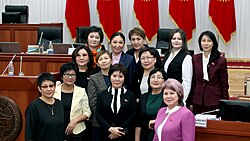
The country operates as a unitary presidential republic. The current leadership includes President Sadyr Japarov, Chairman of the Cabinet of Ministers Adylbek Kasymaliev, and Speaker of the Supreme Council Marlen Mamataliev. The Supreme Council serves as the unicameral parliament.
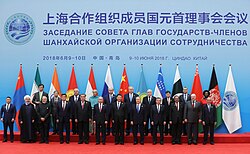
![President Japarov (right) with Vladimir Putin and other post-Soviet leaders at the 2023 Moscow Victory Day Parade[99]](/images/e7/dc/e7dc59da7f9e5cc640cc6f8b395ba74ffc35658ce0cca58e4eeeff13f439a4fb.jpg)
Demographics and Society
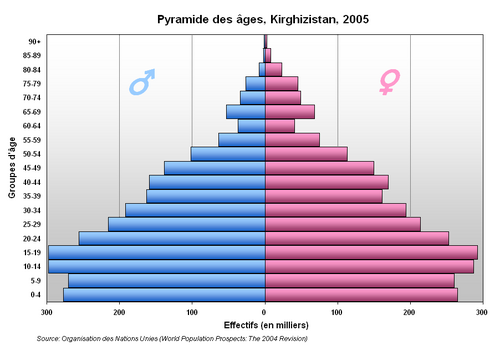
The population of Kyrgyzstan is ethnically diverse, though predominantly Kyrgyz. According to 2026 estimates, the ethnic breakdown is as follows:
- Kyrgyz: 77.8%
- Uzbeks: 14.3%
- Russians: 3.7%
- Dungans: 1.0%
- Tajiks: 0.9%
Urban Centers
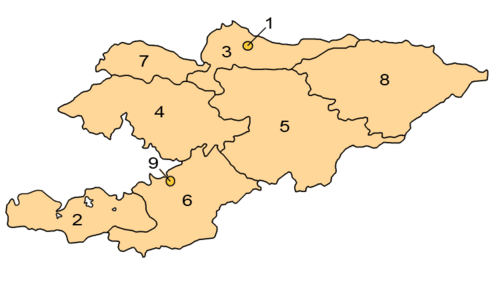
Bishkek serves as the political and economic heart of the country, followed by Osh, which is a vital center for trade and culture in the south.
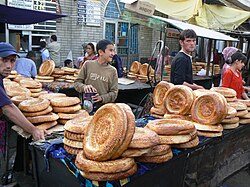
Culture and Traditions
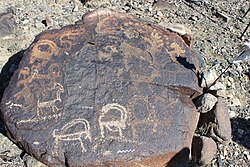
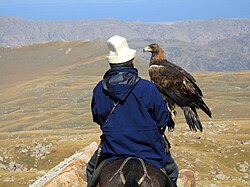
Kyrgyz culture is inextricably linked to its nomadic past. This is most evident in the traditional use of yurts and the practice of falconry, specifically hunting with eagles.
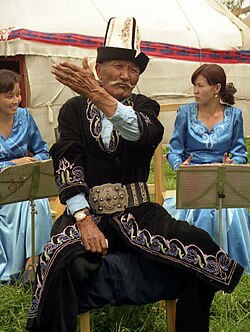
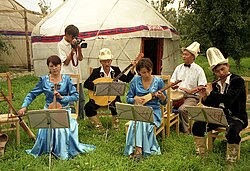
Music and oral storytelling play a vital role in national identity. The manaschi are traditional performers who recite the Epic of Manas, the cornerstone of Kyrgyz oral literature. Traditional instruments include the komuz, a three-stringed lute.
Traditional Sports
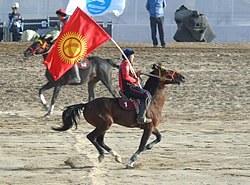
Horseback activities are central to Kyrgyz social life. Popular games include At Chabysh (long-distance racing), Oodarysh (horseback wrestling), and Tyin Emmei (picking up a coin at full gallop). Another prominent tradition is Ulak Tartysh, a competitive game involving a goat carcass.
Economy and Infrastructure
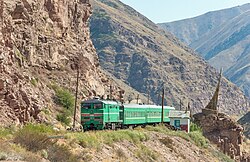
Kyrgyzstan's economy is evolving, with a focus on improving transport links to neighboring countries. The nation maintains rail connections with Kazakhstan and Uzbekistan, though a gauge break exists at the Chinese border (1524 mm vs 1435 mm).
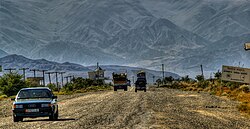
The road network spans 34,000 km, with approximately 22,600 km paved, facilitating the movement of goods and tourists across the mountainous terrain.
| Category | Detail |
|---|---|
| Total Area | 200,105 km² |
| Estimated Population (2026) | 7.4 million |
| Currency | Kyrgyzstani som (KGS) |
| GDP per capita (PPP 2025) | $8,870 |
| HDI (2023) | 0.720 (High) |
Frequently Asked Questions
![Population density (people per km2) of Kyrgyzstan, 2015[135]](/images/11/5c/115c6e9bad8c3caf941b475ac8ca701b56b61ae11c88e6141cdbb9017981abea.png)
What are the official languages of Kyrgyzstan?
The state language is Kyrgyz, while Russian serves as an official language. Uzbek is also commonly spoken within the country.
What is the Epic of Manas?
The Epic of Manas is a central piece of Kyrgyz oral tradition, performed by specialized storytellers known as manaschi, and is vital to the nation's cultural identity.
How does the geography of Kyrgyzstan affect its climate?
The dominance of the Tian Shan Mountains creates diverse climatic zones and significant altitude variations, though the country is currently facing challenges due to the reduction of its glacier areas.
What are some traditional Kyrgyz sports?
Traditional sports are heavily focused on equestrian skills, including At Chabysh (long-distance racing), Oodarysh (horseback wrestling), and Ulak Tartysh.
What is the current political system of Kyrgyzstan?
Kyrgyzstan is a unitary presidential republic with a unicameral parliament known as the Supreme Council.