Kladderadatsch: The Rise and Fall of Berlin's Satirical Giant
In the heart of 19th-century Berlin, a publication emerged that would mirror the turbulent political shifts of Germany for nearly a century. Kladderadatsch, a term literally translating to "chaos," was a weekly satirical magazine that blended wit, art, and political commentary. From its inception during the revolutionary fervor of 1848 to its eventual silence in 1944, the magazine served as a barometer for the changing ideologies of the German state.
Founded by Albert Hofmann and David Kalisch—the latter being a comedy author and the son of a Jewish merchant—the magazine launched its first issue on May 7, 1848. It quickly gained a reputation for its sharp tongue, famously describing its own frequency as "daily, except for weekdays." The publication's visual identity was cemented early on by a grinning boy who became its enduring trademark.
Key Facts
- Founded: May 7, 1848, in Berlin, Germany.
- Founders: Albert Hofmann and David Kalisch.
- Lifespan: 1848 to 1944.
- Peak Circulation: Reached 85,000 copies by 1911.
- Evolution: Shifted from liberal roots to conservative, nationalist, and eventually right-wing Nazi-aligned content.
Growth and Artistic Influence
The immediate success of Kladderadatsch was staggering. The first edition, written primarily by Kalisch, saw all 4,000 printed copies sell out within a single day. This rapid growth led to the expansion of the editorial team, bringing in writers Ernst Dohm and Rudolf Löwenstein. However, the magazine's visual soul was defined by Wilhelm Scholz, whose drawings began appearing in the second edition and continued for the next 40 years.
As the decades passed, the magazine's reach expanded significantly. By 1890, it was selling 50,000 copies per issue, a number that climbed to 85,000 by 1911, reflecting its status as a staple of German social and political discourse.
Political Evolution: From Liberalism to National Socialism
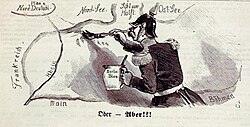
The ideological journey of Kladderadatsch provides a stark look at the political trajectory of Germany. Initially established as a liberal publication, it gradually drifted toward conservatism. During the era of Otto von Bismarck, the magazine aligned itself with the Chancellor's policies, supporting the unification and strengthening of the German Empire.
By the time of the Weimar Republic, the magazine had adopted a staunchly German-nationalist stance. A pivotal shift occurred in 1923 when industrialist Hugo Stinnes took over the publication. Under Stinnes, the content became increasingly right-wing, exhibiting sympathy for Adolf Hitler and National Socialism.
Following the Nazi seizure of power in 1933, Kladderadatsch abandoned its earlier liberal roots entirely. It adopted an aggressive, satirical approach targeting Jewish people, mirroring the rhetoric found in the Nazi publication Die Brennessel.
Publication Overview
The following table summarizes the core details of the publication's history.
| Attribute | Details |
|---|---|
| Founder(s) | Albert Hofmann and David Kalisch |
| First Issue | May 7, 1848 |
| Final Issue | 1944 |
| Base of Operations | Berlin, Germany |
| Language | German |
| Frequency | Weekly |
Notable Contributors
Over its long history, the magazine featured a wide array of contributors, including:
- Gustav Brandt, Max Friedlaender, and Oskar Garvens
- Werner Hahmann, Rudolf Hesse, and Arthur Johnson
- Willibald Krain, Erich Kux, and Wilhelm Polstorff
- Hans Reimann, Carl Reinhardt, Paul Warncke, Fritz Wolf, and Arthur Krüger
Frequently Asked Questions
What does the name "Kladderadatsch" mean?
The name is a German term that literally translates to "chaos."
Who were the founders of the magazine?
The magazine was founded by Albert Hofmann and David Kalisch, the latter of whom was a comedy author and the son of a Jewish merchant.
How did the magazine's political stance change over time?
It began as a liberal publication in 1848, became conservative during the Bismarck era, shifted to German-nationalism during the Weimar era, and eventually became right-wing and sympathetic to National Socialism after 1923.
When did Kladderadatsch cease publication?
The magazine published its final issue in 1944.
How successful was the magazine in terms of readership?
It was highly successful, selling 4,000 copies of its first issue in 24 hours, growing to 50,000 copies by 1890, and reaching 85,000 copies by 1911.