Humboldt University of Berlin: A Legacy of Academic Excellence
Established as a beacon of enlightenment and research, Humboldt-Universität zu Berlin (Humboldt University of Berlin) stands as one of Germany's most prestigious public research institutions. Founded on the principles of integrating research and teaching, the university has shaped the modern landscape of higher education globally. From its origins in the early 19th century to its current status as a leading global institution, it continues to foster intellectual growth in the heart of Berlin.
The university's identity is deeply tied to its motto, Universitas litterarum (The University of Letters), reflecting a commitment to a broad and comprehensive academic pursuit.
Key Facts
- Founded: October 15, 1810.
- Location: Berlin, Germany.
- Student Population: 37,222 students (including 18,712 undergraduates and 10,881 postgraduates).
- Academic Prestige: 57 Nobel Laureates affiliated as of 2020.
- Budget: EUR 536.0 million (2022).
- Global Standing: Ranked 1st in Germany for Arts & Humanities and Social Sciences (QS 2023).
Historical Evolution
The university was established by Frederick William III through the initiative of Wilhelm von Humboldt, Johann Gottlieb Fichte, and Friedrich Daniel Ernst Schleiermacher. Originally opened as the University of Berlin (Universität zu Berlin) in 1809, it officially began operations in 1810. Between 1828 and 1945, it was known as the Royal Friedrich Wilhelm University of Berlin.
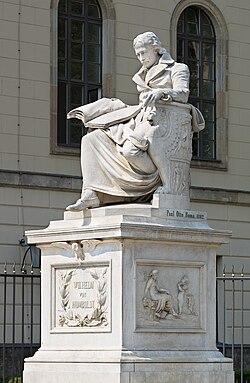
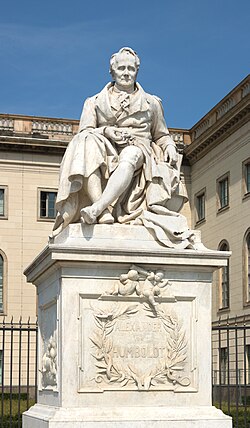
The institution's history mirrors the turbulent trajectory of 20th-century Germany. During the Cold War, the university was located in East Berlin. This led to a de facto split in the city's academic landscape when the Free University of Berlin was established in West Berlin. In 1949, the institution was renamed Humboldt University to honor the contributions of both Alexander and Wilhelm von Humboldt.
The Main Building: Prinz-Heinrich-Palais
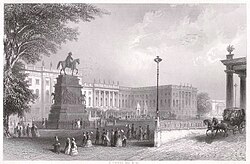
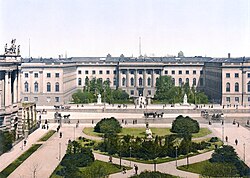
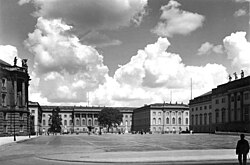
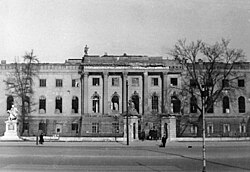
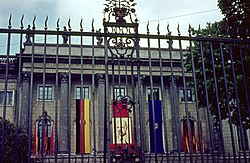
The university's central hub is the Prinz-Heinrich-Palais (Prince Henry's Palace), located on the historic Unter den Linden boulevard. Built between 1748 and 1753 in the Baroque style for Prince Henry of Prussia, the palace was converted into a university building in 1809. Despite suffering significant damage during World War II Allied bombings, it was meticulously rebuilt between 1949 and 1962.
Academic Structure and Organization
Humboldt University is organized into nine diverse faculties, ensuring a comprehensive approach to the arts, sciences, and professional studies. A notable component of its medical education is the Charité - Universitätsmedizin Berlin, one of the most renowned medical institutions in Europe.
| Category | Detail |
|---|---|
| President | Julia von Blumenthal |
| Academic Staff | 2,403 |
| Administrative Staff | 1,516 |
| Total Students | 37,222 |
| Doctoral Students | 2,951 |
| Annual Budget | EUR 536.0 million |
Faculties and Specialized Departments
- Arts and Humanities: Includes Philosophy, History, and European Ethnology.
- Humanities and Social Sciences: Covers Archaeology, Art History, Education, and Social Sciences.
- Language, Literature and Humanities: Specializes in German, English, Romance, and Slavic studies.
- Life Sciences: Includes Biology, Psychology, and Agricultural Sciences.
- Mathematics and Natural Sciences: Focuses on Chemistry, Physics, Geography, and Computer Science.
- Law, Theology, and Economics: Dedicated professional and theoretical faculties.
To support advanced research, the university operates several graduate schools, such as the Berlin Mathematical School and the Berlin School of Mind and Brain, providing structured PhD programs.
Central Institutes
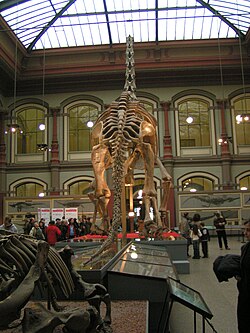
The university manages four central institutes, including the Centre for British Studies and the Späth-Arboretum. Notably, the Museum für Naturkunde (Natural History Museum), one of the largest in the world, was founded alongside the university in 1810, though it officially left the university in 2009.
Global Rankings and Academic Influence
Humboldt University consistently ranks among the top institutions globally. According to the 2024 Times Higher Education (THE) World Rankings, it holds the 4th position nationally in Germany. It is particularly dominant in the Arts, Humanities, and Social Sciences, often ranking 1st in Germany in these categories via QS Subject Rankings.
The university's influence is further evidenced by its alumni and faculty, which include some of the most influential thinkers in human history:
- Physics: Max Planck and Werner Heisenberg.
- Philosophy and Sociology: Karl Marx, Friedrich Engels, Georg Wilhelm Friedrich Hegel, and Max Weber.
- Science and Medicine: Robert Koch and Rudolf Virchow.
- Literature and History: Jakob and Wilhelm Grimm, and Theodor Mommsen.
Frequently Asked Questions
When was Humboldt University founded?
The university was established in 1809 and officially opened its doors to students on October 15, 1810.
Why was the university renamed in 1949?
The university was renamed in honor of the brothers Alexander and Wilhelm von Humboldt, recognizing their immense contributions to science, exploration, and the original vision of the institution.
What is the significance of the Charité?
The Charité - Universitätsmedizin Berlin serves as the university's medical faculty and is one of the most prestigious university hospitals in the world.
How does the university rank in Germany?
Humboldt University is a top-tier institution, ranking 1st in Germany for several subjects including Arts & Humanities, Social Sciences, and Geography in various subject-specific rankings.
What is the university's motto?
The motto is "Universitas litterarum," which translates from Latin to "The University of Letters."