UC Berkeleypublic research universityFiat luxSather TowerFree Speech Movement

UC Berkeley: A Legacy of Academic Excellence and Global Innovation

Exploring the Legacy and Excellence of UC Berkeley Founded on the principle of Fiat lux—Latin for "Let there be light"—the University of California, Berkeley, stands as a global beacon of...

Exploring the Legacy and Excellence of UC Berkeley

Founded on the principle of Fiat lux—Latin for "Let there be light"—the University of California, Berkeley, stands as a global beacon of research, innovation, and academic rigor. As a premier public land-grant research university, Berkeley has spent over 150 years shaping the landscape of higher education, science, and social activism. From its historic campus in the Berkeley Hills to its influence on the global tech industry, the institution continues to push the boundaries of human knowledge.

Key Facts

  • Established: March 23, 1868.
  • Status: Top-ranked public university in the United States (U.S. News & World Report 2025–2026).
  • Endowment: $9.37 billion (as of 2025).
  • Student Population: 45,882 students (Fall 2024), including 33,070 undergraduates and 12,812 postgraduates.
  • Mascot: Oski the Bear.
  • Athletic Affiliation: NCAA Division I FBS – ACC.

Academic Structure and Global Standing

UC Berkeley is organized into a diverse array of specialized colleges and schools, ensuring a comprehensive approach to education. These include the College of Letters and Science, the College of Engineering, the College of Chemistry, and the prestigious Haas School of Business. Other notable divisions include the School of Law, the Graduate School of Journalism, and the Rausser College of Natural Resources.
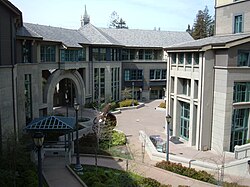
Haas School of Business
: Haas School of Business

The university's commitment to excellence is reflected in its rankings. Nationally, it is consistently recognized as a top institution by Forbes and U.S. News & World Report. Globally, it holds elite positions in the ARWU (5th), Times Higher Education (9th), and QS (17th tie) rankings. Many of its programs are ranked #1 in the world or the United States, particularly in Psychology, Sociology, English, and Chemistry.

Top-Performing Programs

Berkeley's academic strength spans multiple disciplines. Some of its highest-ranked national programs include:

  • Chemistry: 1 (tie)
  • Economics: 1 (tie)
  • Computer Science: 2 (tie)
  • Political Science: 2 (tie)
  • Biological Sciences: 3 (tie)
  • Physics: 3 (tie)

Innovation, Technology, and Entrepreneurship

The university is a powerhouse of scientific discovery and technical innovation. In the realm of computer science, Berkeley has been instrumental in the evolution of operating systems and database management. This includes the development of PostgreSQL (a relational database system), RISC-V (an open instruction set architecture), and vLLM (a large language model inference framework). The university also hosts the Space Sciences Laboratory, which powered the SETI@home volunteer computing project.
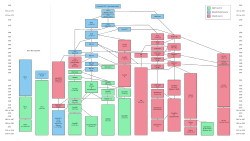
A simple flow chart showing the history and timeline of the development of Unix starting with one bubble at the top and 13 tributaries at the bottom of the flow
Simplified evolution of Unix systems and BSD forks
: Simplified evolution of Unix systems and BSD forks

This culture of innovation has translated into massive entrepreneurial success. Numerous world-changing companies were co-founded by Berkeley alumni, including:

  • Apple: Co-founded by Steve Wozniak (BS).
  • Intel: Co-founded by Gordon Moore (BS).
  • Tesla: Co-founded by Marc Tarpenning (BS).
  • Gap Inc.: Co-founded by Donald Fisher (BS).
  • Coursera: Co-founded by Andrew Ng (PhD).
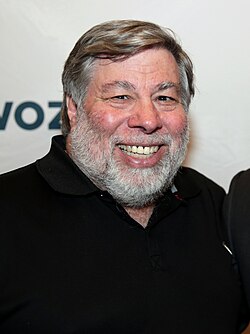
Steve Wozniak, BS 1986, cofounder of Apple Inc.
: Steve Wozniak, BS 1986, cofounder of Apple Inc.
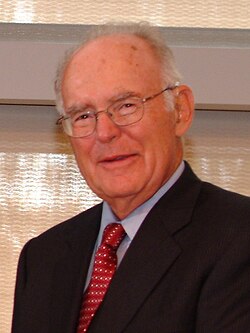
Gordon Moore, BS 1950, cofounder of semiconductor company Intel
: Gordon Moore, BS 1950, cofounder of semiconductor company Intel

Campus Landmarks and Student Life

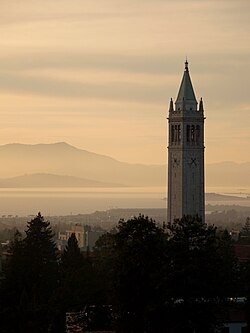
The Berkeley campus is a blend of historic architecture and natural beauty. At its heart is Sather Tower, also known as the Campanile, which serves as the central landmark of the university.
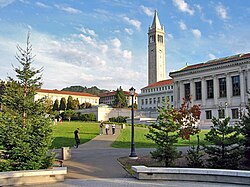
View from Memorial Glade of Sather Tower (the Campanile), the center of Berkeley
: View from Memorial Glade of Sather Tower (the Campanile), the center of Berkeley
Sather Tower (the Campanile) looking out over San Francisco Bay and Mount Tamalpais
: Sather Tower (the Campanile) looking out over San Francisco Bay and Mount Tamalpais

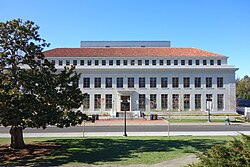
The campus is also home to the Doe Memorial Library and the Bancroft Library, which form part of its extensive library system.
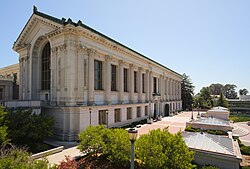
Doe Memorial Library
: Doe Memorial Library
Bancroft Library
Bancroft Library
: Bancroft Library

Historically, Sather Gate has been more than just an entrance; it was a focal point for the Free Speech Movement, symbolizing the university's legacy of student activism.
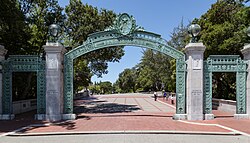
Sather Gate, connecting Sproul Plaza to the inner campus, was a center of the Free Speech Movement.
: Sather Gate, connecting Sproul Plaza to the inner campus, was a center of the Free Speech Movement.

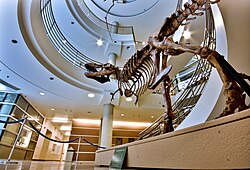
Students enjoy a variety of facilities, from the UC Botanical Garden in the Berkeley Hills to the University of California Museum of Paleontology, which features a life-size T-rex replica.
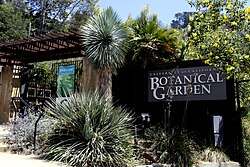
The UC Botanical Garden, located in the Berkeley Hills and by the Lawrence Berkeley National Laboratory
: The UC Botanical Garden, located in the Berkeley Hills and by the Lawrence Berkeley National Laboratory
The on-campus University of California Museum of Paleontology hosts a life-size replica of a T-rex.
: The on-campus University of California Museum of Paleontology hosts a life-size replica of a T-rex.

The campus also preserves its earliest roots, with South Hall (built in 1873) remaining as one of the two original university buildings.
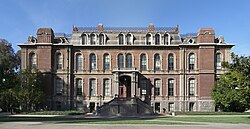
South Hall (1873), one of the two original buildings of the University of California, still stands on the Berkeley campus.
: South Hall (1873), one of the two original buildings of the University of California, still stands on the Berkeley campus.

Student Experience and Athletics

Student life is managed in part by the Associated Students of the University of California (ASUC), which has introduced initiatives like Wellness Room sleep pods to support student health.
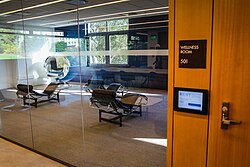
Wellness Room sleep pods: part of a program created by the ASUC, UC Berkeley's official student association.
: Wellness Room sleep pods: part of a program created by the ASUC, UC Berkeley's official student association.

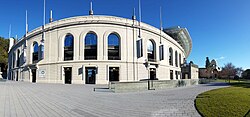
The university's athletic spirit is embodied by the Golden Bears. Fans often gather at "Tightwad Hill" to watch the Cal Band and football games at the California Memorial Stadium.
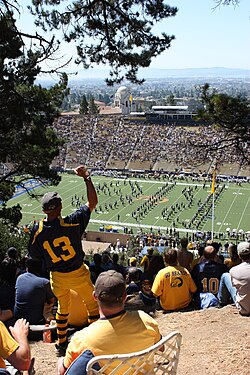
Fans atop Tightwad Hill watch the Cal Band, with views of the stadium and the San Francisco Bay.
: Fans atop Tightwad Hill watch the Cal Band, with views of the stadium and the San Francisco Bay.
The base of the California Memorial Stadium
: The base of the California Memorial Stadium

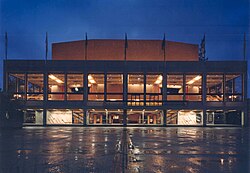
Other athletic and cultural hubs include the Haas Pavilion for basketball and Zellerbach Hall for the Cal Performances theater group.
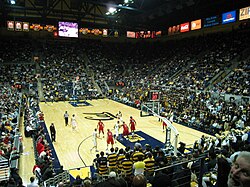
The interior of Haas Pavilion during a Cal Basketball game
: The interior of Haas Pavilion during a Cal Basketball game
Zellerbach Hall, home of the Cal Performances theater group
: Zellerbach Hall, home of the Cal Performances theater group

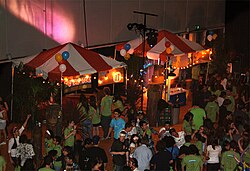
Beyond sports, the campus is vibrant with arts and community events, such as the UC Berkeley Symphony Orchestra and the Berkeley Dance Marathon.
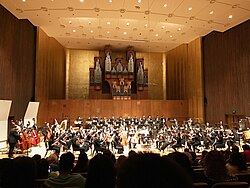
UC Berkeley Symphony Orchestra
: UC Berkeley Symphony Orchestra
Berkeley Dance Marathon
: Berkeley Dance Marathon

Notable Figures and Scientific Contributions

UC Berkeley has been the training ground for some of the world's most influential leaders and thinkers. In government and law, alumni include Earl Warren, the 14th Chief Justice of the United States, and Pedro Nel Ospina Vázquez, a former president of Colombia.
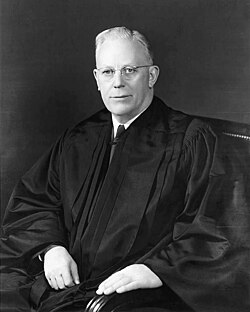
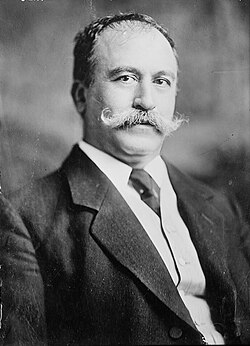
Earl Warren, BA 1912, LLB 1914, 14th chief justice of the United States, 30th governor of California
: Earl Warren, BA 1912, LLB 1914, 14th chief justice of the United States, 30th governor of California
Pedro Nel Ospina Vázquez, BA 1878, president of Colombia 1922–1926
: Pedro Nel Ospina Vázquez, BA 1878, president of Colombia 1922–1926

The university's scientific contributions are legendary. The University of California Radiation Laboratory was the site of groundbreaking work with the 60-inch cyclotron, involving Nobel laureates like Ernest Lawrence and figures such as J. Robert Oppenheimer.
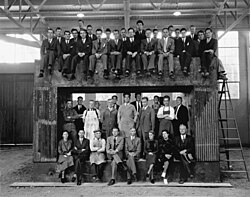
University of California Radiation Laboratory staff on the magnet yoke for the 60-inch cyclotron, 1938; Nobel prize-winners Ernest Lawrence, Edwin McMillan, and Luis Alvarez are shown, in addition to J. Robert Oppenheimer and Robert R. Wilson.
: University of California Radiation Laboratory staff on the magnet yoke for the 60-inch cyclotron, 1938; Nobel prize-winners Ernest Lawrence, Edwin McMillan, and Luis Alvarez are shown, in addition to J. Robert Oppenheimer and Robert R. Wilson.

Other distinguished figures include Nobel laureate Harold Urey, who discovered deuterium, and Academy Award-winning actor Gregory Peck.
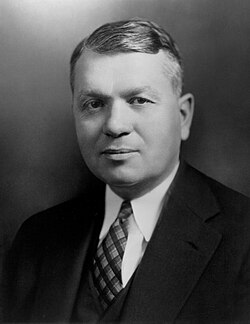
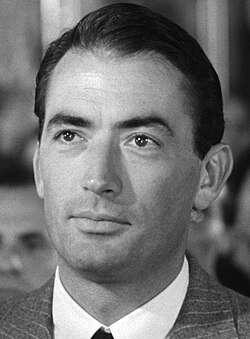
Harold Urey, PhD 1923, Nobel laureate and discoverer of deuterium
: Harold Urey, PhD 1923, Nobel laureate and discoverer of deuterium
Gregory Peck, BA 1939, Academy Award–winning actor
: Gregory Peck, BA 1939, Academy Award–winning actor

In the world of sports, the university has produced elite athletes such as multiple Olympic gold medalist Natalie Coughlin.
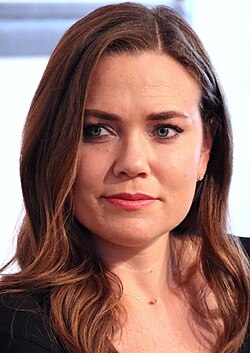
Natalie Coughlin, BA 2005, multiple gold medal-winning Olympic swimmer
: Natalie Coughlin, BA 2005, multiple gold medal-winning Olympic swimmer

Additional notable figures include Robert McNamara (BA 1937), who served in high-level government roles.
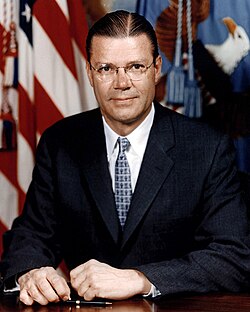
Robert McNamara, BA 1937
: Robert McNamara, BA 1937

Campus Infrastructure and Environment

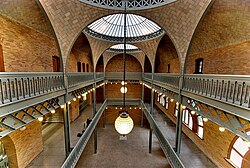
The physical campus is characterized by its unique architecture and natural features. Wheeler Hall is home to the university's largest lecture hall and has hosted Nobel Prize conferrals. The Hearst Mining Building stands as a testament to the university's history in engineering and natural resources.
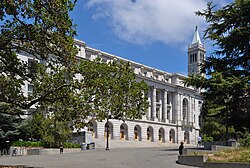
Wheeler Hall, home to Berkeley's largest lecture hall, was the location of a Nobel Prize conferral during WWII.
: Wheeler Hall, home to Berkeley's largest lecture hall, was the location of a Nobel Prize conferral during WWII.
The interior of the Hearst Mining Building, dedicated by Phoebe Hearst in honor of her late husband, George
: The interior of the Hearst Mining Building, dedicated by Phoebe Hearst in honor of her late husband, George

Natural elements, such as the south fork of Strawberry Creek, wind through the campus, adding to its scenic appeal.
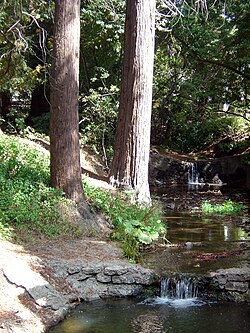
The south fork of Strawberry Creek, as seen between Dwinelle Hall and Lower Sproul Plaza
: The south fork of Strawberry Creek, as seen between Dwinelle Hall and Lower Sproul Plaza
Category Detail
Motto Fiat lux ("Let there be light")
Type Public land-grant research university
Chancellor Richard Lyons
Total Students 45,882 (Fall 2024)
Endowment $9.37 billion (2025)
Colors Berkeley Blue, California Gold

Frequently Asked Questions

What is the admission rate for first-time freshmen at UC Berkeley?

For the Fall 2025 term, the admit rate for first-time freshmen was 11%, with 14,360 students admitted out of 126,830 applicants.

Which academic programs are ranked #1 at UC Berkeley?

UC Berkeley holds #1 (tie) national rankings in several fields, including Chemistry, Economics, English, Psychology, and Sociology.

What are some of the most famous companies founded by Berkeley alumni?

Alumni have co-founded several global giants, including Apple, Intel, Tesla, Gap Inc., and VMware.

What is the significance of Sather Gate?

Sather Gate is a prominent campus landmark that served as a center for the Free Speech Movement, reflecting the university's history of social and political activism.

How many students are currently enrolled at the university?

As of Fall 2024, the university has a total of 45,882 students, consisting of 33,070 undergraduates and 12,812 postgraduates.

References

  1. The percentage of students who received an income-based federal Pell grant intended for low-income students.
  2. The percentage of students who are a part of the American middle class at the bare minimum.
  3. "A brief history of the University of California". Academic Personnel and Programs. Archived from the original on October 21, 2020. Retrieved August 24, 2020.
  4. "University of California Annual Endowment Report, Fiscal Year Ended June 30, 2025" (PDF). Retrieved February 6, 2026.
  5. "Home | Executive Vice Chancellor and Provost". evcp.berkeley.edu. Retrieved July 7, 2022.