Cornell University: A Legacy of Innovation and Academic Excellence
Founded on the bold vision that any person should be able to find instruction in any study, Cornell University stands as a premier private land-grant research institution. Established on April 27, 1865, by Ezra Cornell and Andrew Dickson White, the university has evolved from a pioneering 19th-century experiment into a global powerhouse of education and research.
With a massive endowment of $11.8 billion as of 2025 and a diverse student body of over 26,000, Cornell blends the prestige of the Ivy League with a practical, land-grant mission to serve the public good. Its influence extends from the scenic gorges of Ithaca to the urban hubs of New York City and the international landscape of Doha, Qatar.

Key Facts

- Founded: April 27, 1865, by Ezra Cornell and Andrew Dickson White.
- Type: Private land-grant research university.
- Affiliations: Member of the Ivy League and the Association of American Universities (AAU).
- Campuses: Primary campus in Ithaca, NY, with additional campuses in New York City and Doha, Qatar.
- Student Population: 26,793 total students (Fall 2024), comprising 16,128 undergraduates and 10,665 postgraduates.
- Financials: $11.8 billion endowment (2025) and a $5.4 billion budget (2023).
Campus Landscapes and Facilities
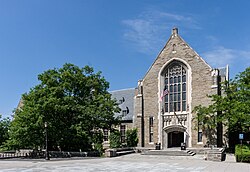
The Ithaca Campus
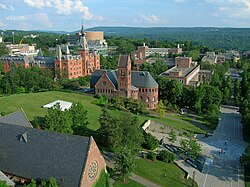
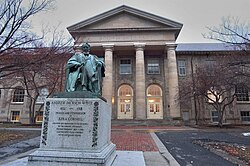
The heart of the university is its 745-acre Ithaca campus, divided into Central, North, and West sections. The campus is renowned for its integration with nature, featuring breathtaking gorges and the Cornell Botanic Gardens, which are used for both recreation and conservation research.
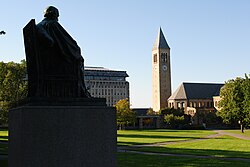
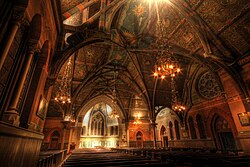
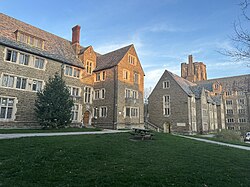
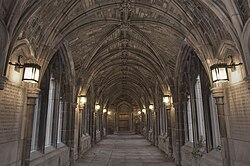
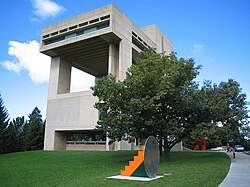
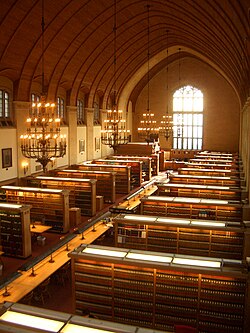
Architectural landmarks define the student experience, from the historic McGraw Tower and the A.D. White Reading Room in Uris Library to the modern Herbert F. Johnson Museum of Art, designed by I. M. Pei. Spiritual and commemorative spaces, such as Sage Chapel—the final resting place of Ezra Cornell—provide a sense of continuity and reflection.
New York City and Global Presence
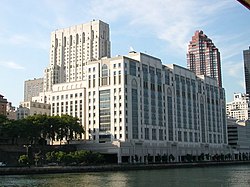
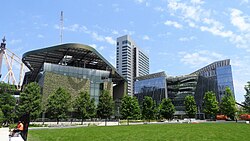
Cornell's reach extends far beyond Ithaca. Weill Cornell Medicine, the university's medical school, is located on the Upper East Side of Manhattan. In 2017, the university launched Cornell Tech on Roosevelt Island, a specialized graduate campus and research center focused on the intersection of technology and entrepreneurship.
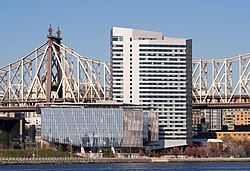
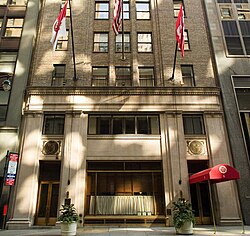
Additionally, Cornell maintains a presence in Midtown Manhattan through various programs based in the General Electric Building and the Cornell Club of New York, which serves as a hub for alumni. The university also operates the Weill Cornell Medical College in Qatar, expanding its medical education footprint globally.
Academic Structure and Research
Cornell is organized into a wide array of specialized colleges and schools, reflecting its "any person, any study" philosophy. This structure allows for deep specialization across disciplines ranging from agriculture to public policy.
| College or School | Year Founded |
|---|---|
| Arts and Sciences | 1865 |
| Architecture, Art, and Planning | 1871 |
| Engineering | 1870 |
| Agriculture and Life Sciences | 1874 |
| Law | 1887 |
| Veterinary Medicine | 1894 |
| Medicine | 1898 |
| Hotel Administration | 1922 |
| Industrial and Labor Relations | 1945 |
| Business | 1946 |
| Medical Sciences | 1952 |
| Tech | 2011 |
| Computing and Information Science | 2020 |
| Public Policy | 2021 |
Research at Cornell is world-class, supported by facilities like the Center for Advanced Computing—one of the original National Science Foundation Supercomputer Centers—and the Dendrochronology Lab, where researchers use tree-ring dating to analyze archaeological artifacts.
Student Life and Culture
Student life at Cornell is a blend of rigorous academics and vibrant traditions. One of the most enduring customs is Dragon Day, founded in 1901, where first-year architecture students parade a massive, student-built dragon through the campus.

The university boasts a diverse student population, with significant representation from Asian (21%), Hispanic (15%), and Black (7%) communities, alongside a substantial international student body. Students engage in a wide variety of activities, from Greek life and professional societies to traditional folk dances like Raas.

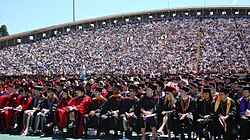
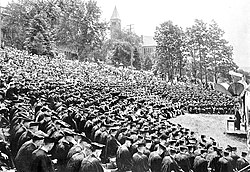
Athletically, Cornell competes in the Ivy League as part of NCAA Division I FCS. The "Big Red" spirit is evident at venues like Schoellkopf Field, the university's outdoor stadium used for football and commencement ceremonies.
Admissions and Global Standing
Admission to Cornell is highly competitive. For the 2024 entering class, the admit rate was 8.4%, with a yield rate of 63%. The university attracts top-tier talent, with 85.6% of admitted students ranking in the top 10% of their high school class.
This selectivity is reflected in Cornell's global rankings. The university consistently places among the top 20 institutions worldwide, ranking 12th in the ARWU (Academic Ranking of World Universities) and 16th in the QS World University Rankings.
Frequently Asked Questions
![Over a dozen Cornell University programs are based in the General Electric Building in Midtown Manhattan.[82]](/images/e4/a8/e4a8fec56e7b0abcb94529196e69e20b14e8704ebf52b31b327d8bb61fe2645d.jpg)






What is the meaning of Cornell's motto?
The motto, "I would found an institution where any person can find instruction in any study," reflects the founders' commitment to accessibility and a comprehensive, multidisciplinary approach to education.
Where are Cornell's campuses located?
The main campus is in Ithaca, New York. The university also has significant campuses in New York City (including Weill Cornell Medicine and Cornell Tech) and an international presence in Doha, Qatar.
Is Cornell part of the Ivy League?
Yes, Cornell is a member of the Ivy League, competing in NCAA Division I FCS athletics and maintaining the high academic standards associated with the conference.
What is a land-grant university?
A land-grant university is an institution established by the federal government to provide practical education in agriculture, science, and engineering, ensuring that higher education is accessible to a broader range of students beyond the traditional liberal arts.
How competitive is the undergraduate admission process?
Admission is very competitive; for the 2024 class, the acceptance rate was 8.4%, with the middle 50% of SAT Math scores ranging from 770 to 800.