Liberty Hyde Bailey: The Visionary Botanist and Architect of Rural Reform
Liberty Hyde Bailey was a towering figure in American science and social reform, a man whose influence stretched from the microscopic details of plant taxonomy to the sweeping socio-economic structures of rural America. As a renowned horticulturist, educator, and author, Bailey did more than just study plants; he helped reshape the landscape of American agricultural life during the Progressive Era.
From his early days as a student to his decades of intensive research into the world of palms, Bailey's career was defined by a relentless pursuit of knowledge and a deep commitment to the betterment of country life. His work laid the foundations for modern agricultural extension, rural sociology, and much of the horticultural literature used by professionals and amateurs alike.

Key Facts
- Fields of Expertise: Botany, Horticulture, and Rural Sociology.
- Major Institution: Founded the New York State College of Agriculture at Cornell University.
- Social Impact: Instrumental in establishing the Cooperative Extension System and 4-H youth development.
- Scientific Contribution: Conducted extensive taxonomic studies on palms and was an early advocate for Gregor Mendel's work.
- Prolific Author: Wrote approximately 65 books and published over 1,300 articles.
Early Life and Academic Foundations
Born on March 15, 1858, in South Haven, Michigan, Liberty Hyde Bailey was the son of farmers Liberty Hyde Bailey Sr. and Sarah Harrison Bailey. His journey into the world of plants began early, bolstered by the mentorship of Lucy Millington, who encouraged his burgeoning interest in botany—the scientific study of plants.
Bailey attended Michigan Agricultural College (now Michigan State University), graduating in 1882. His academic potential was recognized early when he was appointed as an assistant to the famous Harvard botanist Asa Gray. This experience provided him with rigorous training in herbarium work, which would serve as the bedrock for his future scientific endeavors.
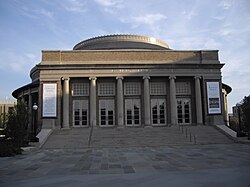
A Legacy at Cornell University
In 1888, Bailey moved to Ithaca, New York, to take the chair of Practical and Experimental Horticulture at Cornell University. His tenure at Cornell was transformative. In 1903, he founded the New York State College of Agriculture and served as its first dean until 1913.
Beyond the classroom, Bailey was a driving force in national policy. In 1908, President Theodore Roosevelt appointed him Chairman of the National Commission on Country Life. The commission's findings were revolutionary, calling for a nationwide agricultural extension network and the development of collegiate programs in rural sociology and agricultural economics. These efforts helped pave the way for the Cooperative Extension System and the 4-H youth programs that remain vital to American agriculture today.
Scientific Contributions and Palm Studies
While his social reforms were monumental, Bailey remained a dedicated scientist. He was among the first to recognize the significance of Gregor Mendel's work on heredity, citing Mendel's papers in his own early research on cross-breeding and hybridizing.
The Intensive Study of Palms
One of Bailey's most enduring scientific legacies is his work in taxonomy—the science of naming, describing, and classifying organisms. Following a trip to Jamaica in 1910, Bailey became fascinated by palms. Despite starting this intensive study in his fifties, he continued collecting and researching well into his nineties.
Bailey developed a meticulous method for collecting specimens, which included photographing entire trees and preserving flowers and fruits in alcohol. His work contributed significantly to increasing the number of identified palm species from approximately 700 to over 1,000 by 1946. His ultimate goal was the publication of Genera Palmarum, an authoritative guide to all palms, which was eventually completed and published by other scientists in 1987 and 2008.
Prolific Literary Output
Bailey was a master of horticultural literature. He authored or edited a vast array of works, ranging from highly technical scientific papers to accessible manuals for the home gardener. His writings, including The Cyclopedia of American Horticulture and The Nursery-Book, have sold over a million copies combined.
| Category | Details |
|---|---|
| Primary Fields | Botany, Horticulture, Rural Sociology |
| Key Institutions | Michigan State University, Cornell University |
| Major Reforms | Cooperative Extension, 4-H, Rural Electrification |
| Scientific Focus | Palm taxonomy, Plant breeding, Mendelism |
| Notable Publications | Cyclopedia of American Agriculture, Genera Palmarum (posthumous) |
Frequently Asked Questions
What was Bailey's role in the Country Life Commission?
As Chairman of the National Commission on Country Life, appointed by Theodore Roosevelt, Bailey led investigations into rural life. The commission recommended the creation of an agricultural extension network and the study of rural sociology to revitalize American farming communities.
How did Bailey contribute to the study of palms?
Bailey spent decades collecting, photographing, and classifying palm specimens globally. His intensive taxonomic work helped significantly increase the number of known palm species and provided the groundwork for the definitive guide, Genera Palmarum.
What is the significance of his work regarding Gregor Mendel?
Bailey was an early adopter of Mendel's theories on heredity. By citing Mendel's research in his 1892 paper on cross-breeding, he helped bring attention to the importance of genetic principles in plant breeding.
What was his impact on modern agricultural education?
By founding the New York State College of Agriculture at Cornell and advocating for the Cooperative Extension System, Bailey helped establish the framework for how agricultural science is taught and shared with the public today.
How many books did Liberty Hyde Bailey write?
Bailey was an incredibly prolific writer, authoring approximately sixty-five books and editing over a hundred others, with his total works selling more than a million copies.