Kantakouzenos and the Byzantine Civil War: The Resurgence of 1343–1345
Between 1343 and 1345, the Byzantine Empire was gripped by a brutal civil war that reshaped the geopolitical landscape of the Balkans. At the center of this conflict was John Kantakouzenos, whose fortunes shifted dramatically through a combination of strategic alliances with foreign powers and the internal collapse of the regency in Constantinople.
The period was defined by a complex web of loyalties involving the Serbian Empire, the Bulgarian Kingdom, and the Turkish beyliks of Asia Minor. As the regency struggled to maintain control, Kantakouzenos leveraged external military support to carve out an independent power base, eventually challenging the authority of the central government.
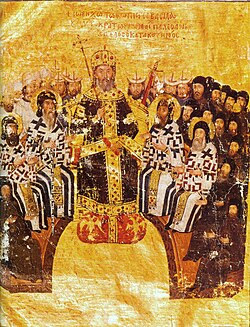
Key Facts
- Turkish Intervention: Umur Bey provided critical naval and land support to Kantakouzenos with fleets of up to 300 ships.
- Serbian Expansion: King Dušan exploited the civil war to seize vast territories in Macedonia and Epirus.
- Financial Crisis: The regency was so depleted that Empress Anna pawned the crown jewels to Venice for 30,000 ducats.
- Strategic Shifts: Kantakouzenos broke his alliance with Dušan after securing the town of Berroia and other forts.
- Military Climax: The defeat and death of the brigand-prince Momchil at Peritheorion in July 1345.
The Turkish Alliance and the Rift with Serbia
Kantakouzenos' position was revitalized in late 1342 or early 1343 through the intervention of Umur Bey. Umur sailed up the Evros river with a fleet of 300 ships and a force estimated between 15,000 (Turkish sources) and 29,000 (Kantakouzenos' accounts) men. This force relieved the city of Demotika from both the regency's siege and Bulgarian raids.
This newfound strength altered Kantakouzenos' relationship with the Serbian ruler, Dušan. No longer solely dependent on Serbian goodwill, Kantakouzenos persuaded the besieged town of Berroia to surrender to him in April 1343 rather than to Dušan. He subsequently secured forts such as Servia and Platamon. Feeling betrayed and seeing little further gain, Dušan abandoned Kantakouzenos and formed a formal alliance with the regency in the summer of 1343.
The Struggle for Thessalonica and Thrace
Kantakouzenos attempted to capture Thessalonica, relying on internal supporters. However, Alexios Apokaukos, the megas doux (grand duke/commander-in-chief of the navy), arrived with the Byzantine fleet to support the Zealots—a radical political faction within the city. This pinned Kantakouzenos in Macedonia until Umur Bey returned with 6,000 men, forcing Apokaukos to retreat.
While Thessalonica remained resistant, the Turkish alliance allowed Kantakouzenos to pivot toward Thrace. By late 1343, he appointed his son Manuel as governor of Berroia and western Macedonia while he marched to relieve Demotika. Over the following two years, many Thracian towns defected to his side, though the region suffered heavily from the plundering of his Turkish troops.
The tide turned further in late 1344 when high-profile figures defected to Kantakouzenos, including the general John Vatatzes, Patriarch Lazaros of Jerusalem, and Manuel Apokaukos, the son of his rival and governor of Adrianople.
The Regency's Decline and Foreign Desperation
While the regency allied with Dušan, the arrangement primarily benefited the Serbs, who occupied nearly all of Macedonia and Epirus. By the end of 1345, only Thessalonica, Serres, and Berroia remained outside Serbian control.
Internally, the regency faced a financial catastrophe. To combat an empty treasury, Empress Anna pawned the crown jewels to Venice for 30,000 ducats in August 1343. Food shortages in Constantinople, caused by Turkish raids in Thrace, further destabilized the capital. In a desperate bid for Western aid, Anna appealed to the Pope, offering the submission of the imperial family and the Patriarch to papal authority.
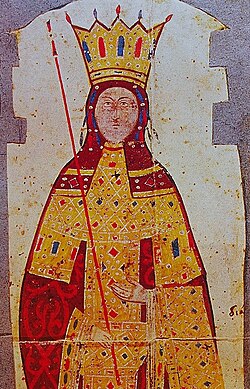
The Fall of Momchil and the Path to Constantinople
The regency attempted to stabilize its position by allying with Bulgaria in 1344, surrendering Philippopolis (modern Plovdiv) and nine other towns. Simultaneously, a former brigand named Momchil, who had been granted control of the Merope region in the Rhodope mountains, defected from Kantakouzenos to the regency.
Despite a temporary loss of Turkish support in early 1344—when Umur returned to Smyrna to repel a Latin attack—Kantakouzenos survived joint assaults by Dušan and Apokaukos. When Umur returned in the spring of 1345 with 20,000 men, they crushed Momchil's army of 5,000 at the Battle of Peritheorion on July 7, 1345, where Momchil was killed.
The conflict reached a tipping point when Dušan besieged Serres. However, the inevitable clash between the Serbian and Kantakouzenos forces was interrupted by the murder of Alexios Apokaukos in Constantinople, forcing Kantakouzenos to shift his focus back to the capital.
| Figure | Primary Role | Key Alignment | Major Action/Outcome |
|---|---|---|---|
| John Kantakouzenos | Pretender/General | Umur Bey (Turkish) | Seized Berroia and Thracian forts. |
| Umur Bey | Turkish Ruler | Kantakouzenos | Provided naval support and 20,000+ troops. |
| Stefan Dušan | Serbian King | Regency (after 1343) | Occupied Macedonia and Epirus. |
| Alexios Apokaukos | Megas Doux | Regency | Managed finances; murdered in Constantinople. |
| Empress Anna | Regent | Regency / Papacy | Pawned crown jewels to Venice. |
| Momchil | Brigand-Prince | Regency (defected) | Defeated and killed at Peritheorion. |
Frequently Asked Questions
Why did the alliance between Kantakouzenos and Dušan fail?
The alliance collapsed in April 1343 when Kantakouzenos persuaded the town of Berroia to surrender to him instead of Dušan. This demonstrated that Kantakouzenos had an independent power base and was no longer reliant on Serbian support, leading Dušan to align with the regency.
How did the regency fund the war effort?
The treasury was nearly empty due to prolonged warfare. To raise funds, Empress Anna was forced to pawn the imperial crown jewels to Venice in August 1343 for a sum of 30,000 ducats.
What role did the Turkish forces play in the conflict?
The Turkish forces under Umur Bey were essential to Kantakouzenos' resurgence. They provided critical naval superiority and land armies that relieved besieged cities like Demotika and defeated rivals like Momchil.
Who were the Zealots in Thessalonica?
The Zealots were a political faction within Thessalonica that opposed Kantakouzenos and was supported by the regency and Alexios Apokaukos to keep the city out of Kantakouzenos' hands.
What happened to Momchil?
Momchil, a former brigand who established himself as a quasi-independent prince in the Rhodope mountains, was defeated and killed in battle on July 7, 1345, by the combined forces of Kantakouzenos and Umur Bey at Peritheorion.