Kamerun: The History of the German Colony in Central Africa
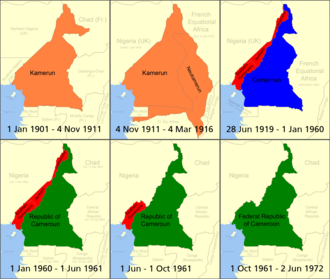
From 1884 to 1916, the German Empire maintained a significant colonial presence in Central Africa known as Kamerun. While primarily centered in the region of the modern-day Republic of Cameroon, this territory was far more expansive, encompassing parts of present-day Nigeria, Gabon, Chad, the Central African Republic, and the Republic of the Congo.
The establishment of Kamerun was not an immediate goal of the German state but rather the result of mounting commercial pressure and the geopolitical competition known as the Scramble for Africa. What began as a series of trading posts evolved into a formal protectorate characterized by economic ambition and, eventually, systemic brutality.
Key Facts
- Duration: 1884 to 1916.
- Capital: Jaunde.
- Official Language: German.
- Peak Area: Approximately 790,000 km² by 1912.
- Peak Population: Roughly 4,645,000 by 1912.
- Successor States: Divided between British and French mandates after World War I.
The Path to Colonization (1868–1883)
Before formal colonization, German influence in the region was driven by private enterprise. In 1868, the Hamburg-based trading company C. Woermann established the first German trading post in the Duala area. This was followed by the creation of Jantzen & Thormählen in 1874. These firms established scheduled shipping services between Hamburg and Duala and acquired vast tracts of land from local chiefs to start banana plantations.
During this period, the territory was under the informal control of the British Empire. However, as German commercial interests grew, businessmen like Adolph Woermann petitioned the imperial foreign office for official protection. This pressure, combined with a desire for national prestige, led Imperial Chancellor Otto von Bismarck to approve the creation of a colony, despite his previous reluctance to engage in African colonial ventures.
Establishing the Protectorate (1884–1890)
The formal establishment of the "Protectorate of Cameroon" occurred on August 17, 1884. Gustav Nachtigal negotiated treaties with local rulers in the Duala region and other river-based tribes to secure German control. To minimize direct government costs, Bismarck initially granted "Chartered" status to the trading and concession companies, allowing them to handle the administration.
This corporate governance proved ineffective. Conflicts between German companies and local traders intensified as operations moved further inland, eventually forcing the German government to step in and assume direct administrative control.
The Era of Expansion and Brutality (1890–1906)
Under direct imperial rule, the colony's primary goal remained the support of the plantation industry. This era was defined by the governorship of Jesko von Puttkammer (1895–1906), whose tenure became synonymous with colonial violence.
Puttkammer expanded German control through a combination of military campaigns and strategic manipulation, often arming rival local powers to conquer dissenting groups. When the German military intervened directly, the results were often catastrophic. Notable atrocities included the massacre of the adult population at Nachtigal Falls and the systematic mutilation of prisoners.
To solve labor shortages on plantations, the administration implemented "man tithes," essentially forcing conquered peoples into slave labor. The regime was characterized by extreme discipline, including flogging and decapitations, earning the territory the grim nickname of the "Flogging Colonies." While the indigenous slave trade was officially banned in 1902, slave raids in Northern Kamerun were largely tolerated throughout the colonial period.
Development and Final Years (1907–1916)
Following Puttkammer's departure, the colony shifted its focus from aggressive expansion to infrastructure development. The imperial treasury funded two major rail lines starting from Duala: a northern line extending 160 kilometers toward the Manenguba mountains and a 300-kilometer mainline to Makak on the river Nyong.

The administration also established an extensive postal and telegraph system and a government-run river navigation network. In 1911, the colony was further enlarged with the addition of Neukamerun (New Cameroon) following the Treaty of Fez, which resolved the Agadir Crisis.
The Fall of German Kamerun
The outbreak of World War I in 1914 led to an invasion by French, Belgian, and British forces. By 1916, the colony was fully occupied. Under the Treaty of Versailles, the territory was divided into two League of Nations Class B mandates administered by the United Kingdom and France. These territories eventually reunified in 1961 to form the modern Republic of Cameroon.
Interestingly, German economic influence persisted after the official loss of the colony; many former plantation owners repurchased their lands during the 1920s and 1930s, with German involvement only fully ending during World War II.
| Category | Details |
|---|---|
| Timeline | Established 1884; Disestablished 1916 |
| Key Figures | Otto von Bismarck, Gustav Nachtigal, Jesko von Puttkammer |
| Economic Focus | Plantations (e.g., bananas), Shipping, Trade |
| Infrastructure | Railways to Manenguba and Makak, Telegraphs, River Navigation |
| Territorial Reach | Cameroon, Nigeria, Gabon, Congo, CAR, Chad |
Frequently Asked Questions
Why did Germany decide to colonize Kamerun?
The decision was driven by pressure from German trading companies seeking protection for their investments and a political desire for national prestige during the "Scramble for Africa."
Who was Jesko von Puttkammer?
He was a prominent German governor (1895–1906) known for his brutal military campaigns, the use of forced labor on plantations, and the implementation of extreme disciplinary measures.
What happened to the colony after World War I?
The territory was divided into mandates administered by France and the United Kingdom under the Treaty of Versailles, eventually leading to the formation of the modern state of Cameroon.
What was Neukamerun?
Neukamerun (New Cameroon) was an additional territory ceded to Germany by France in 1911 as part of the settlement of the Agadir Crisis via the Treaty of Fez.
How did the German administration handle labor shortages?
The administration used "man tithes" and forced labor from conquered populations to provide workers for the agricultural plantations, often under violent and lethal conditions.