Kamenice and Štiřín Castles: Architectural Gems of the Region
The landscape is dotted with historic estates that tell the story of evolving architectural tastes, from the ornate curves of the Baroque era to the dramatic lines of the neo-Gothic revival. Among these, Kamenice Castle and Štiřín Castle stand as prominent examples of how historic fortresses and residences have been transformed over centuries.
Kamenice Castle and the Church of Saint Francis of Assisi
Kamenice Castle is a striking example of the English neo-Gothic style—an architectural movement that revived medieval Gothic forms with a 19th-century sensibility. The structure was rebuilt between 1875 and 1880 under the direction of architect Jiří Stibral. While the castle remains privately owned and is currently inaccessible to the public, its exterior remains a testament to Stibral's design.
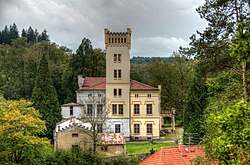
Adjacent to the castle lies the Church of Saint Francis of Assisi. This religious site has a long history, beginning as an early Gothic church. It underwent a significant rebuilding in 1797 and was further modified into its present form in 1898.
Štiřín Castle: From Fortress to Luxury
Located in the village of Štiřín, Štiřín Castle represents a different architectural evolution. Originally established as a fortress, the site was transformed into a Baroque castle—characterized by grandeur and ornate detail—at the end of the 18th century. During this period, a castle park was also established to complement the residence.
At the turn of the century, from 1900 to 1905, the architect Jiří Stibral reconstructed the castle, adding his touch to the existing Baroque structure. Today, the estate has been repurposed for modern use; the castle now operates as a hotel and restaurant, while a portion of the historic park has been converted into a golf course.
Key Facts
- Jiří Stibral was the architect responsible for the reconstruction of both Kamenice and Štiřín castles.
- Kamenice Castle was rebuilt in the English neo-Gothic style between 1875 and 1880.
- The Church of Saint Francis of Assisi transitioned from early Gothic to its current form via updates in 1797 and 1898.
- Štiřín Castle evolved from a fortress to a Baroque castle in the late 18th century.
- Štiřín Castle currently serves as a hotel and restaurant with an associated golf course.
| Feature | Kamenice Castle | Štiřín Castle |
|---|---|---|
| Primary Style | English neo-Gothic | Baroque |
| Architect (Reconstruction) | Jiří Stibral (1875–1880) | Jiří Stibral (1900–1905) |
| Current Status | Private / Inaccessible | Hotel, Restaurant, and Golf Course |
| Associated Landmark | Church of Saint Francis of Assisi | Castle Park |
Frequently Asked Questions
Can visitors enter Kamenice Castle?
No, Kamenice Castle is privately owned and is currently inaccessible to the public.
Who was the architect for both castles?
Jiří Stibral was the architect who rebuilt Kamenice Castle (1875–1880) and reconstructed Štiřín Castle (1900–1905).
What is the current use of Štiřín Castle?
Štiřín Castle now functions as a hotel and restaurant, and part of its surrounding park is used as a golf course.
What is the history of the Church of Saint Francis of Assisi?
The church was originally built in the early Gothic style, rebuilt in 1797, and finally modified into its current form in 1898.
When was Štiřín Castle converted from a fortress?
The original fortress was rebuilt into a Baroque castle at the end of the 18th century.