John O'Hara: The Prolific Chronicler of American Class and Desire
John O'Hara (1905–1970) was a powerhouse of 20th-century American letters, a writer whose commercial success and sheer productivity were nearly unmatched in his era. Known for his sharp eye for social hierarchy and his unflinching depiction of human frailty, O'Hara helped define the short story style of The New Yorker and became a best-selling novelist before the age of 30.
While his legacy has been the subject of literary debate, O'Hara was championed by giants such as Ernest Hemingway and F. Scott Fitzgerald. His work serves as a visceral, often addictive secret history of American life, focusing on the intersecting themes of class, sex, and alcohol.
Key Facts
- Prolific Output: Published over 400 short stories and numerous novels, plays, and screenplays.
- Major Awards: Won the 1956 National Book Award for Ten North Frederick.
- Literary Influence: Credited with inventing the signature short story style of The New Yorker.
- Commercial Peak: Frequently appeared on the Publishers Weekly top ten best-selling fiction list after World War II.
- Setting: Often used Gibbsville, Pennsylvania—a fictionalized version of his hometown, Pottsville.
Early Career and Rise to Fame
O'Hara's professional journey began in journalism, where he worked as a reporter for various newspapers. Upon moving to New York City, he diversified his portfolio, working as a film critic, radio commentator, and press agent while crafting short stories for magazines.
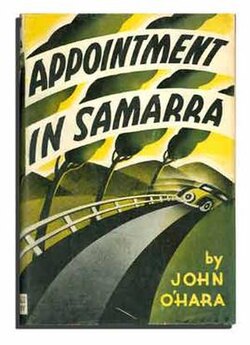
In 1934, he published his first novel, Appointment in Samarra, which earned high praise from Ernest Hemingway for its precision and execution.
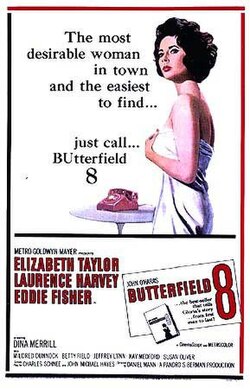
He followed this success with BUtterfield 8, a roman à clef (a novel about real life overlaid with a façade of fiction) based on the tabloid-sensational death of flapper Starr Faithfull in 1931.
Literary Style and Themes
O'Hara's work is characterized by a frank, realistic approach to sexuality and social status. Many of his stories are set in Gibbsville, Pennsylvania, named after his friend and editor Wolcott Gibbs. Other narratives frequently shift between the high-pressure environments of New York and Hollywood.
His characters are often depicted as "emotional zombies," trapped by alcoholism and the agony of internal conflict. While some critics, including William Faulkner, suggested O'Hara wrote of "the glands" rather than the heart, later readers have viewed him as a pioneer of realistic sexual depiction in an era of strict social repression.
The New Yorker Conflict
Despite contributing nearly 200 stories to The New Yorker, O'Hara's relationship with the magazine ended bitterly in 1949. After colleague Brendan Gill published a scathing review of O'Hara's novel A Rage to Live, calling it a "catastrophe," O'Hara severed ties with the publication for over a decade. He only returned in the 1960s after a new editor extended an olive branch.
Commercial Success and Adaptations
Following World War II, O'Hara became a household name. His novels, including Ten North Frederick and From the Terrace, dominated best-seller lists. His ability to capture the zeitgeist of mid-century America led to numerous adaptations in film and theater.
| Work | Year | Adaptation Type | Notable Detail |
|---|---|---|---|
| Pal Joey | 1940 | Broadway Musical / Film | Songs by Rodgers and Hart |
| BUtterfield 8 | 1935 | Film (1960) | Elizabeth Taylor won an Oscar |
| Ten North Frederick | 1955 | Film (1958) | Starred Gary Cooper |
| From the Terrace | 1958 | Film (1960) | Starred Paul Newman |
| A Rage to Live | 1949 | Film (1965) | Starred Suzanne Pleshette |
Reputation and Legacy
O'Hara was as famous for his personality as he was for his prose. He was known for an abrasive ego, political conservatism, and a lifelong obsession with social status and Ivy League validation. This temperament often alienated him from the literary establishment, and his refusal to allow his work in college anthologies contributed to a decline in his academic visibility after his death.
Despite this, modern audiences have rediscovered him. The AMC series Mad Men sparked renewed interest in O'Hara's work due to their shared exploration of mid-century American society, class, and desire.
Frequently Asked Questions
Why is John O'Hara less taught in colleges today?
O'Hara's absence from many academic curricula is largely due to his own decision; he refused to allow his work to be reprinted in the anthologies typically used for college-level literature courses.
What is a "roman à clef" in the context of O'Hara's work?
A roman à clef is a novel where real people and events are disguised as fictional characters. O'Hara used this technique in BUtterfield 8 to tell the story of Starr Faithfull.
Which of O'Hara's novels won a National Book Award?
John O'Hara won the National Book Award for Fiction in 1956 for his novel Ten North Frederick.
How did O'Hara's relationship with The New Yorker end?
The relationship soured in 1949 after Brendan Gill wrote a devastatingly negative review of O'Hara's novel A Rage to Live, leading O'Hara to quit the magazine for over ten years.
What is the significance of Gibbsville, Pennsylvania?
Gibbsville is a barely fictionalized version of O'Hara's hometown, Pottsville. It serves as the primary setting for many of his short stories and later novels.