Joyce Carol Oates: A Legacy of Literary Prolificacy and Precision
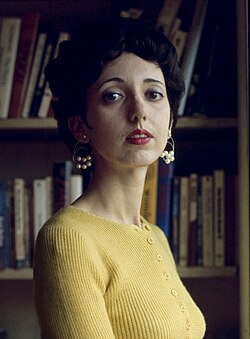
Joyce Carol Oates is a towering figure in contemporary American literature, renowned for her staggering productivity and her ability to dissect the complexities of the human psyche. Since publishing her first book in 1963, Oates has cultivated a career that spans multiple genres, including novels, short stories, poetry, plays, and literary criticism. Her work often navigates the intersection of private trauma and public history, blending meticulous research with psychological depth.
With a bibliography that includes 58 novels and numerous volumes of nonfiction and poetry, Oates has established herself as one of the most versatile writers of her generation. Her academic contributions are equally significant, having shaped the minds of aspiring writers at some of the most prestigious institutions in the United States.
Key Facts
- Prolific Output: Has authored 58 novels along with extensive collections of short stories, poetry, and plays.
- Major Accolades: Winner of the National Book Award (1970), the National Humanities Medal (2010), and the Jerusalem Prize (2019).
- Pulitzer Recognition: Four-time Pulitzer Prize finalist for Black Water, What I Lived For, Blonde, and Lovely, Dark, Deep: Stories.
- Academic Tenure: Taught at Princeton University for 36 years (1978–2014) and has held positions at UC Berkeley and Rutgers University.
- Literary Style: Known for "faction," a blend of factual historical events and fictional narrative.
Academic Journey and Teaching Career
Oates' intellectual foundation was built at Syracuse University, where she earned her BA, followed by an MA from the University of Wisconsin, Madison, and further studies at Rice University. This rigorous academic background paved the way for a distinguished career in higher education.
For over three decades, Oates was a cornerstone of the Princeton University faculty, serving from 1978 to 2014. She holds the title of Roger S. Berlind '52 Professor Emerita in the Humanities with the Program in Creative Writing. Her commitment to pedagogy continued with a visiting professorship at the University of California, Berkeley, from 2016 to 2020, and she currently teaches at Rutgers University, New Brunswick.
The Art of "Faction" and Notable Works
A defining characteristic of Oates' work is her use of faction—a literary technique where the author uses real-life historical analogues to anchor fictional narratives. By weaving true crime and historical events into her stories, she explores the darker impulses of society and the fragility of the individual.
Her exploration of historical figures and events is evident in several of her most acclaimed works. For instance, her novel Blonde provides a fictionalized account of the life and death of Norma Jeane Baker, known to the world as Marilyn Monroe. Similarly, Zombie draws inspiration from the crimes of Jeffrey Dahmer, while the short story "Where Are You Going, Where Have You Been?" echoes the Charles Schmid serial killings.
Below is a summary of Oates' use of historical analogues in her writing:
| Title | Format | Historical Analogue |
|---|---|---|
| "Where Are You Going, Where Have You Been?" | Short Story | Charles Schmid serial killings |
| "The Triumph of the Spider Monkey" | Novella | Charles Manson |
| Black Water | Novel | Chappaquiddick incident |
| Zombie | Novel | Jeffrey Dahmer |
| Blonde | Novel | Marilyn Monroe |
| "Dear Husband" | Short Story | Andrea Yates |
| The Sacrifice | Novel | Tawana Brawley rape hoax |
| "The Suicide" | Short Story | David Foster Wallace |
Awards and Professional Contributions
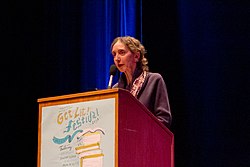
Oates' contribution to the arts has been recognized with a vast array of honors. Beyond her National Book Award for Them (1969), she has received two O. Henry Awards and the prestigious Jerusalem Prize for lifetime achievement. Her versatility is further highlighted by multiple Bram Stoker Awards, reflecting her mastery of gothic and horror elements.
Beyond her own writing, Oates has supported the literary community through various leadership roles. She served on the board of trustees of the John Simon Guggenheim Memorial Foundation from 1997 to 2016 and is an honorary member of the Simpson Literary Project, which grants the Simpson/Joyce Carol Oates Literary Prize to mid-career writers.
Frequently Asked Questions
What is "faction" in the context of Joyce Carol Oates' writing?
Faction is a blend of fact and fiction. Oates uses this technique to create narratives based on real-life historical events or figures, such as the life of Marilyn Monroe or the crimes of Jeffrey Dahmer, to explore deeper psychological and social themes.
Which of her works were finalists for the Pulitzer Prize?
Oates was a finalist for the Pulitzer Prize for her novels Black Water, What I Lived For, and Blonde, as well as her short story collection Lovely, Dark, Deep: Stories.
Where has Joyce Carol Oates taught throughout her career?
She taught at Princeton University from 1978 to 2014, served as a visiting professor at the University of California, Berkeley, from 2016 to 2020, and currently teaches at Rutgers University, New Brunswick.
What are some of her most prestigious lifetime achievement awards?
Some of her most notable honors include the National Humanities Medal, the Jerusalem Prize, the Stone Award for Lifetime Literary Achievement, and the Norman Mailer Prize.