Caroline Gordon: The Life and Literary Legacy of a Southern Novelist
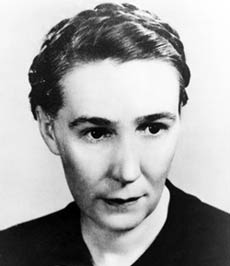
Caroline Ferguson Gordon (1895–1981) was a distinguished American novelist and literary critic whose work captured the complexities of the American South. A writer of significant intellectual depth, she achieved critical acclaim early in her career, earning a Guggenheim Fellowship in 1932 and an O. Henry Award in 1934 while still in her thirties.
Her early creative output was deeply shaped by her connection to the Southern Agrarians, a group of writers and thinkers who advocated for a return to traditional agrarian values and a rejection of industrialization in the South. This influence manifested as a powerful southern nostalgia that defined much of her early fiction.
Early Life and Education
Born on October 6, 1895, Gordon grew up at "Woodstock," her family's plantation home in Todd County, Kentucky. Her early education took place at the Clarksville Classical School for Boys, run by her father in Montgomery County, Tennessee. After graduating from Bethany College in 1916, she entered the professional world of journalism, working as a society news writer for the Chattanooga Reporter in Tennessee.
Literary Circles and Personal Life
In 1924, Gordon returned to Kentucky, where she met the poet Allen Tate. The couple moved to New York City, residing first in Greenwich Village and later sharing a home with poet Hart Crane in Patterson, New York. Gordon and Tate married on May 15, 1925, and welcomed their daughter, Nancy, later that year. Following a two-year period living in Europe starting in 1928, the family settled in Clarksville, Tennessee, at a home called BenFolly.
The Gordon-Tate household became a hub for some of the most influential literary figures of the 20th century. Their guests included T. S. Eliot, Ernest Hemingway, F. Scott Fitzgerald, William Faulkner, Flannery O'Connor, Robert Penn Warren, and Robert Lowell. Notably, Ford Madox Ford served as Gordon's mentor, providing the guidance and encouragement she needed to complete her debut novel, Penhally, published in 1931.
Career Milestones and Evolution
Gordon's early success was marked by the publication of Penhally and the short story "Old Red," which earned her a unique second-place O. Henry Award in 1934. Between 1934 and 1972, she expanded her bibliography to include nine additional novels, five of which were written during the late 1930s and the World War II era.
Her personal life was marked by volatility; she and Tate divorced in 1945, remarried in 1946, and finally divorced again in 1959 on grounds of desertion. Despite the end of their marriage, the two remained close friends and correspondents until Tate's death in 1979.
Mentorship and Spiritual Journey
Beyond her own writing, Gordon was a pivotal mentor to other writers. She provided guidance to novelists Walker Percy and Flannery O'Connor, and served as a literary mentor to Brainard Cheney, helping him transition from a career as a crime reporter to a writer of literature.
Faith played a central role in Gordon's later life. On November 24, 1947, she converted to Catholicism. Her spiritual journey influenced others, including the Cheneys, who also converted to Catholicism through her guidance.
In her final years, Gordon relocated to San Cristóbal de las Casas in Chiapas, Mexico. She passed away on April 11, 1981, at the age of 85, six weeks after suffering a stroke and undergoing surgery.
Key Facts
- Major Awards: Received a Guggenheim Fellowship (1932) and an O. Henry Award (1934).
- Literary Influence: Closely associated with the Southern Agrarians and mentored by Ford Madox Ford.
- Notable Works: Authored 10 novels, including Penhally (1931) and The Glory of Hera (1972).
- Mentorship: Acted as a mentor to Flannery O'Connor, Walker Percy, and Brainard Cheney.
- Faith: Converted to Catholicism in 1947.
Summary of Literary Works
| Category | Notable Titles | Key Dates/Details |
|---|---|---|
| Novels | Penhally, The Women on the Porch, The Glory of Hera | 1931–1972 |
| Short Story Collections | The Forest of the South, Old Red and Other Stories | 1945–1981 |
| Non-Fiction/Criticism | How to Read a Novel, A Good Soldier | 1957 |
| Anthologies | The House of Fiction (with Allen Tate) | 1950 |
Frequently Asked Questions
Who were the Southern Agrarians?
The Southern Agrarians were a group of writers and intellectuals who advocated for a traditional, agrarian-based society in the American South, opposing the rise of industrialization. Caroline Gordon's early fiction was heavily influenced by this movement's nostalgia and values.
Which of Caroline Gordon's works is most famous for winning an award?
Her short story "Old Red," published in Scribner's Magazine, earned her a unique second-place O. Henry Award in 1934.
How did Ford Madox Ford influence her career?
Ford Madox Ford served as a mentor to Gordon, offering literary counsel and prodding her to complete her first novel, Penhally, which was published in 1931.
What was Gordon's relationship with Allen Tate?
Gordon and Tate were fellow writers who married in 1925. Though they divorced twice (once in 1945 and finally in 1959), they remained lifelong friends and correspondents until Tate's death in 1979.
Which other famous authors did she mentor?
Gordon was a friend and mentor to novelists Flannery O'Connor and Walker Percy, as well as author Brainard Cheney.