John Francis Hylan: The Rise of 'Red Mike' and the Battle for NYC
John Francis Hylan, affectionately and sometimes derisively known as "Red Mike," served as the 97th Mayor of New York City from 1918 to 1925. His journey from a struggling farm in the Catskills to the pinnacle of municipal power is a classic American story of perseverance, self-education, and political maneuvering. A champion of the working class, Hylan's tenure was defined by his fierce opposition to corporate interests and his unwavering commitment to affordable public transit.
Hylan's political identity was forged in the rough-and-tumble world of Brooklyn labor and law. By positioning himself as a defender of the common citizen against the "invisible government" of big business, he managed to secure a powerful coalition of voters, including a significant portion of the African American community, during a transformative era for the five boroughs.
Key Facts
- Term of Office: January 1, 1918 – December 30, 1925.
- Political Party: Democratic.
- Primary Policy Focus: Maintaining the five-cent subway fare.
- Major Infrastructure Contribution: Initiated the Independent Subway System (IND).
- Education: Graduate of New York Law School (1897).
- Early Career: Worked as a laborer and engineer for the Brooklyn Union Elevated Railroad.
Early Life and Hardships in the Catskills
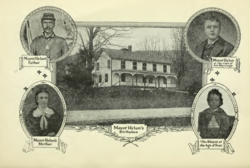
Born on April 20, 1868, in Hunter, New York, Hylan grew up in a rural environment where survival required grueling physical labor. His father, an Irish immigrant from County Cavan, had served as a corporal in the 120th New York Infantry during the Civil War. Hylan's mother, of Welsh descent, instilled in him a lifelong code of honesty and integrity.
The family struggled to maintain their 60-acre farm, which was burdened by a $1,500 mortgage. With limited access to education—often borrowing a single textbook shared among several families—Hylan spent his youth working the land with hand tools and digging earth for the Catskill railroad during the spring to help his parents pay the mortgage interest.
The Climb: From Railroads to the Law
At age 19, Hylan moved to New York City with only $3.50 in his pocket. He secured a job as a rail layer for the Brooklyn Union Elevated Railroad, eventually working his way up through roles as a fireman and engine hostler. His persistence paid off when he passed the required tests to become an engineer, a position that provided the financial stability he needed to marry his childhood sweetheart, Marian O'Hara, and pay off his family's farm mortgage.
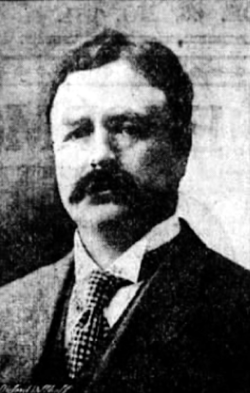
Despite his success on the railroad, Hylan sought a professional career in law. Because of his limited early schooling, he first attended Long Island Business College to prepare for his Regents exam. He eventually enrolled in New York Law School, where he studied under professors including future U.S. President Woodrow Wilson. After graduating in 1897 and passing the bar exam in Syracuse, Hylan established a civil litigation practice in Bushwick, Brooklyn.
Building a Political Foundation
Hylan's legal career was marked by a focus on small civil cases and family law. He gained local prominence by winning a ruling that forced the Brooklyn Heights Railroad Company to provide free transfers at junctions. During this time, he cultivated essential political connections, including a friendship with future Brooklyn Democratic boss John H. McCooey and support from State Senator Patrick H. McCarren.
Mayoralty and the Fight Against "The Interests"
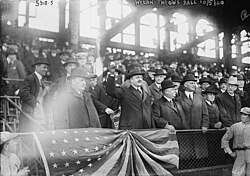
In 1917, with the backing of Tammany Hall and publishing mogul William Randolph Hearst, Hylan was elected Mayor of New York City, defeating reformer John Purroy Mitchel. He was re-elected in 1921 with a wide plurality, reflecting strong support from Brooklyn Democrats.
Hylan's administration was characterized by a populist crusade against "the interests"—a term he used to describe the concentration of industrial and financial power. He argued that international bankers and corporations like Standard Oil exerted an undue influence over politics and the press to impoverish the working poor.
The Subway Struggle
The central pillar of Hylan's platform was the preservation of the five-cent subway fare. He viewed the fare as a sacred trust for the working class. To reduce reliance on private companies, he initiated the construction of the Independent Subway System (IND), a city-owned and operated network. However, his management of the transit system was not without critics; a committee appointed by Governor Al Smith later severely criticized his administration's handling of the system.
Later Years and Legacy
Hylan's political dominance ended in 1925 when he lost the Democratic nomination to James J. "Jimmy" Walker. To ensure his eligibility for a city pension of $4,205 per year, Hylan resigned from office on December 30, 1925, one day before his term officially expired.
Following his mayoralty, Walker appointed Hylan as a judge for the Queens Children's Court. He spent his final years continuing his attacks on corporate power and industrial concentration. John Francis Hylan died of a heart attack on January 12, 1936, at the age of 67.
| Period | Role/Achievement | Key Detail |
|---|---|---|
| 1887–1897 | Railroad Career | Rose from laborer to engineer |
| 1897–1917 | Legal & Judicial | Practiced law; served as Kings County Court judge |
| 1918–1925 | Mayor of NYC | 97th Mayor; fought for 5-cent subway fare |
| Post-1925 | Judiciary | Judge of the Queens Children's Court |
Frequently Asked Questions
Why was John Francis Hylan called "Red Mike"?
The nickname "Red Mike" was a popular moniker used during his time in public life, reflecting both his personality and his populist political leanings.
What was Hylan's primary goal as Mayor of New York City?
His chief focus was to prevent the subway fares from rising above five cents, viewing affordable transportation as essential for the working class.
What is the Independent Subway System (IND)?
The IND was a city-owned subway system initiated by Hylan to provide an alternative to the privately operated transit lines and to keep fares low.
How did Hylan view "the interests"?
Hylan believed that a small group of powerful international bankers and corporate interests (such as Rockefeller-Standard Oil) controlled the government and media to serve their own ends at the expense of the public.
Why did Hylan resign one day before his term ended?
He resigned on December 30, 1925, specifically to ensure he met the requirements to receive a city pension of $4,205 annually.