Articles/New York City: A Comprehensive Overview of the World's Most Iconic Metropolis
New York City historyManhattan economyNYC boroughsNew York demographicsNew York City tourism
New York City: A Comprehensive Overview of the World's Most Iconic Metropolis
The Unstoppable Energy of New York City: A Comprehensive Guide Often referred to by nicknames such as The Big Apple, Gotham, or The City That Never Sleeps, New York City stands as a globa...
The Unstoppable Energy of New York City: A Comprehensive Guide
Often referred to by nicknames such as The Big Apple, Gotham, or The City That Never Sleeps, New York City stands as a global titan of culture, finance, and history. From its origins as a Dutch settlement to its current status as a massive metropolitan powerhouse, the city continues to shape the world through its relentless pace and diverse population.
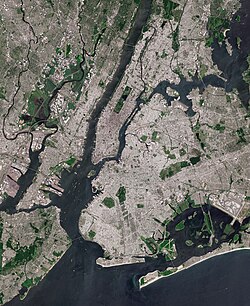
Aerial view of the New York City metropolitan area with Manhattan at its center: Aerial view of the New York City metropolitan area with Manhattan at its center
Key Facts
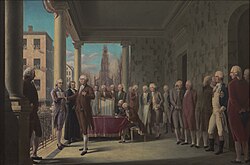
A portrait of the first inauguration of George Washington in 1789
Population: Approximately 8.8 million (2020 Census).
Economic Power: A metropolitan GDP of $2.443 trillion (2024).
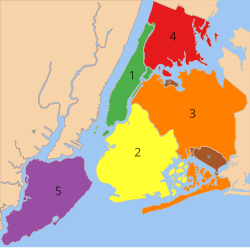
Boroughs: The city is composed of five constituent counties: The Bronx, Brooklyn, Manhattan, Queens, and Staten Island.
Global Hubs: Home to the world's largest central business district (Midtown Manhattan) and the world's largest stock exchange (New York Stock Exchange).
Founding: Settled by the Dutch West India Company on May 20, 1624.
A Journey Through History
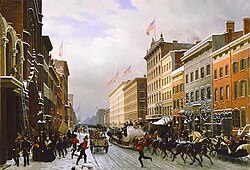
Broadway, which follows the Native American Wecquaesgeek Trail through Manhattan, 1840[106]
The story of New York began in 1624 when it was established by the Dutch West India Company. It wasn't until September 8, 1664, that the city took on its current name, honoring James Stuart, the Duke of York. The city's landscape has been shaped by centuries of conflict and growth, from the American Revolutionary War to the rapid urbanization of the 20th century.
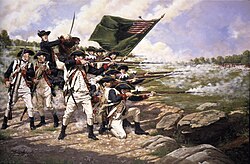
The Battle of Long Island, one of the largest battles of the American Revolutionary War, which took place in Brooklyn on August 27, 1776: The Battle of Long Island, one of the largest battles of the American Revolutionary War, which took place in Brooklyn on August 27, 1776
From Colonial Roots to Modern Metropolis
Following the American Revolution, New York underwent significant transformations. The 19th century saw explosive population growth, with the city expanding through various eras, including the American Civil War. By the turn of the 20th century, the skyline began to reach toward the clouds, marked by iconic feats of engineering and architecture.
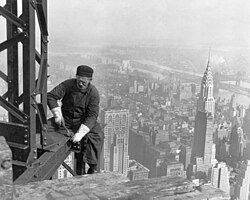
A construction worker atop the Empire State Building during its construction in 1930. The Chrysler Building is visible to the right.: A construction worker atop the Empire State Building during its construction in 1930. The Chrysler Building is visible to the right.
The Five Boroughs and Geography
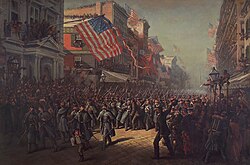
Departure of the 7th New York Militia Regiment for the defense of Washington, D.C., April 19, 1861
New York City is a sprawling entity covering 472.43 square miles, including both land and water. It is organized into five distinct boroughs, each offering a unique character and contribution to the city's identity.
The Diverse Boroughs
Manhattan: The economic and cultural heart, containing the world's principal financial center on Wall Street.
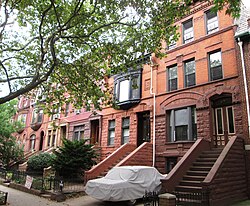
Brooklyn: Known for its historic row houses and vibrant neighborhoods.
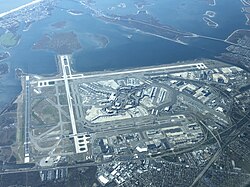
Queens: A massive borough that hosts major international gateways like John F. Kennedy Airport.
The Bronx: A vital part of the city's northern landscape.
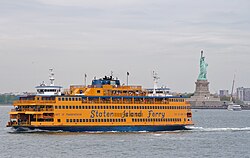
Staten Island: Connected to Manhattan via the iconic Staten Island Ferry.
3. Queens (Queens County): 3. Queens (Queens County)
The Staten Island Ferry shuttles commuters between Manhattan and Staten Island.: The Staten Island Ferry shuttles commuters between Manhattan and Staten Island.
Economic and Cultural Powerhouses
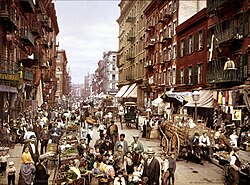
Manhattan's Little Italy c. 1900
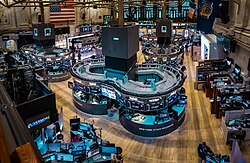
New York City is a global leader in several key sectors. Wall Street in Lower Manhattan serves as the world's principal financial center, anchored by the New York Stock Exchange, which holds the title of the world's largest stock exchange by total market capitalization.
Lower Manhattan, including Wall Street, the world's principal financial center,[32] and One World Trade Center, the tallest skyscraper in the United States: Lower Manhattan, including Wall Street, the world's principal financial center, and One World Trade Center, the tallest skyscraper in the United States
The New York Stock Exchange is the world's largest stock exchange per total market capitalization of its listed companies.[339][340]: The New York Stock Exchange is the world's largest stock exchange per total market capitalization of its listed companies.
Innovation and Entertainment
Beyond finance, the city is a hub for technology and media. The Flatiron District is recognized as the cradle of Silicon Alley, a term used to describe the region's high-tech sector. Meanwhile, Midtown Manhattan serves as a premier destination for media, entertainment, and tourism.
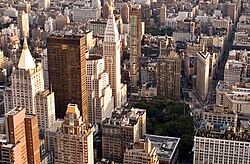
Midtown Manhattan is the world's largest central business district.[33]: Midtown Manhattan is the world's largest central business district.
The Flatiron District is the cradle of Silicon Alley, initially metonymous for the New York metropolitan region's high tech sector.: The Flatiron District is the cradle of Silicon Alley, initially metonymous for the New York metropolitan region's high tech sector.
Times Square is one of the world's leading tourist attractions with 50 million tourists annually.[231]: Times Square is one of the world's leading tourist attractions with 50 million tourists annually.
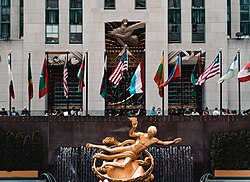
Rockefeller Center, one of Manhattan's leading media and entertainment hubs: Rockefeller Center, one of Manhattan's leading media and entertainment hubs
Arts, Fashion, and Culture
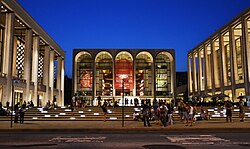
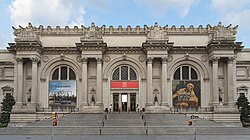
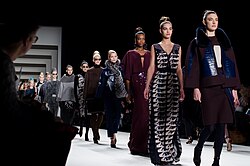
The city's cultural offerings are unparalleled. From the massive collections at the Metropolitan Museum of Art to the world-renowned performances at Lincoln Center, there is an endless array of artistic expression. The fashion industry also thrives here, highlighted by events like New York Fashion Week.
The Lincoln Center: David H. Koch Theater (left), home of the NY City Ballet; Metropolitan Opera House (center), home of the Metropolitan Opera; and David Geffen Hall (right), home of the NY Philharmonic: The Lincoln Center: David H. Koch Theater (left), home of the NY City Ballet; Metropolitan Opera House (center), home of the Metropolitan Opera; and David Geffen Hall (right), home of the NY Philharmonic
Metropolitan Museum of Art, the largest art museum in the Americas: Metropolitan Museum of Art, the largest art museum in the Americas
Haute couture fashion models walk the runway during NYFW.: Haute couture fashion models walk the runway during NYFW.
Infrastructure and Transportation
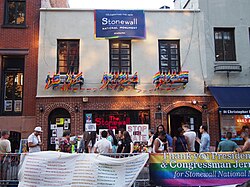
Stonewall Inn in Greenwich Village, the site of the June 1969 Stonewall riots and the cradle of the modern LGBTQ+ rights movement[130][131][132]
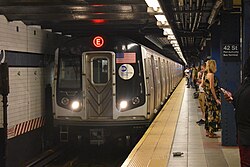
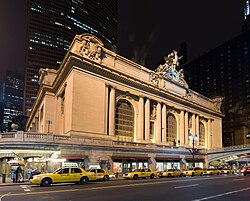
Moving through a city of millions requires a massive, complex network. New York City is home to some of the world's busiest transit hubs, including the New York City Subway and Grand Central Terminal.
The New York City Subway, one of the world's largest metro systems.: The New York City Subway, one of the world's largest metro systems.
New York City is home to the two busiest train stations in the United States, Grand Central Terminal (pictured) and New York Penn Station.: New York City is home to the two busiest train stations in the United States, Grand Central Terminal (pictured) and New York Penn Station.
Port Authority Bus Terminal, the world's busiest bus station, at Eighth Avenue and 42nd Street[553][554]: Port Authority Bus Terminal, the world's busiest bus station, at Eighth Avenue and 42nd Street
City Statistics at a Glance
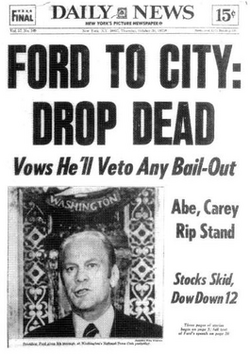
October 1975 New York Daily News front page on President Ford's refusal to help the city avert bankruptcy
New York City Overview
Category
Details
Total Area
472.43 sq mi
Land Area
300.46 sq mi
Water Area
171.97 sq mi
2020 Population
8,804,190
Population Density
29,303/sq mi
Metro GDP (2024)
$2.443 trillion
Frequently Asked Questions
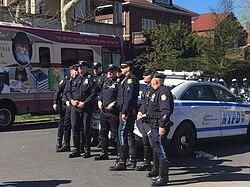
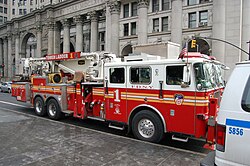
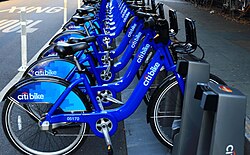
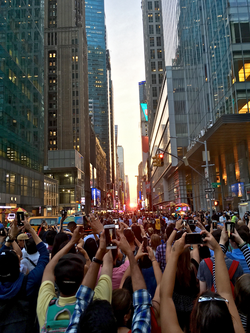
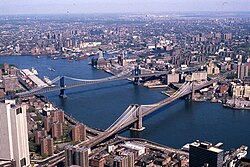
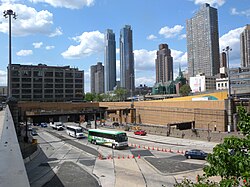
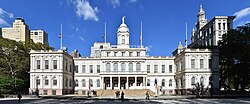
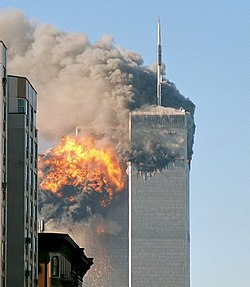
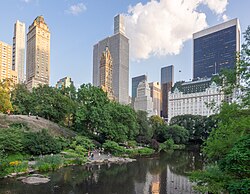
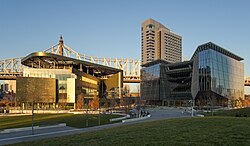
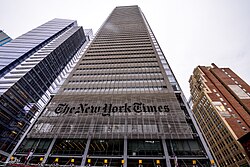
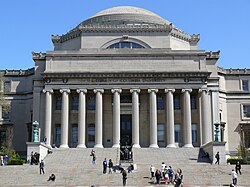
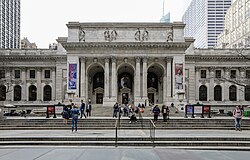
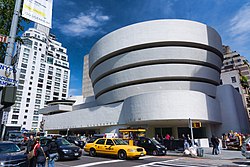
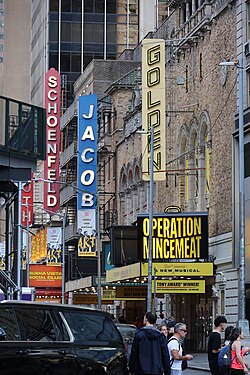
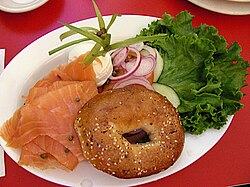
The World Trade Center, in Lower Manhattan, during the September 11 attacks in 2001The Statue of Liberty on Liberty Island in New York Harbor, a global symbol of the United States and its ideals of liberty, freedom, and opportunity[117]The Pond and Midtown Manhattan as seen from Gapstow Bridge in Central ParkThe Sunset Park Material Recovery Facility is the largest commingled recycling facility in the United States.[232][233]The NYC Pride March is the largest pride parade in the world.[304]Cornell Tech on Roosevelt IslandFifth Avenue in Midtown Manhattan is the most expensive shopping street in the world.[361]The headquarters of the New York Times Company, publisher of The New York TimesThe Low Memorial Library at Columbia UniversityThe Stephen A. Schwarzman Headquarters Building of the New York Public LibrarySolomon R. Guggenheim Museum seen from Fifth AvenueNew York is typically characterized by its fast pace of life,[19][20][21] which has spawned the term New York minute.[428]The Golden; Jacobs; Schoenfeld; and Booth theaters in the Theater DistrictRow houses in Crown Heights North Historic District, BrooklynNew York–style bagel with loxThe annual Macy's Thanksgiving Day Parade, the world's largest parade[479]New York-Presbyterian Hospital, affiliated with Columbia University and Cornell University, is the largest hospital and largest private employer in New York City and one of the world's busiest hospitals.[513]New York Police Department (NYPD) police officers in BrooklynThe Fire Department of New York (FDNY), the largest municipal fire department in the United StatesJohn F. Kennedy Airport in QueensCiti Bike bike share service, which started in May 2013Tourists observing Manhattanhenge on 42nd Street on July 12, 2016The Manhattan Bridge and Brooklyn Bridge on the East RiverLincoln TunnelNew York City HallZohran Mamdani, the current and 112th Mayor of New York City
What are the nicknames for New York City?
New York City is most commonly known as The Big Apple, Gotham, and The City That Never Sleeps.
How many boroughs make up New York City?
The city is divided into five boroughs: The Bronx, Brooklyn, Manhattan, Queens, and Staten Island.
What is the largest art museum in the Americas?
The Metropolitan Museum of Art is the largest art museum in the Americas.
Which street is the most expensive shopping destination in the world?
Fifth Avenue in Midtown Manhattan is recognized as the most expensive shopping street in the world.
What is the significance of the Stonewall Inn?
The Stonewall Inn in Greenwich Village was the site of the June 1969 Stonewall riots, which are considered the cradle of the modern LGBTQ+ rights movement.
![Lower Manhattan, including Wall Street, the world's principal financial center,[32] and One World Trade Center, the tallest skyscraper in the United States](/images/22/0a/220a0a99397a6ed612e00eaeadad620432876b19a9945b7a94e8a0e365356e60.jpg)
![Midtown Manhattan is the world's largest central business district.[33]](/images/2e/86/2e86d27e7be2879ed41671375fe80aa2167203e8bcead85276379fa16c683b70.jpg)
![Times Square is one of the world's leading tourist attractions with 50 million tourists annually.[231]](/images/c2/0e/c20e23471b569416ebf05c6648efaf7da186d8ecf4ca2d995d518910046f44c9.jpg)
![Port Authority Bus Terminal, the world's busiest bus station, at Eighth Avenue and 42nd Street[553][554]](/images/7f/1a/7f1a350b5c6f1c3c40c11783d50b25cdcd4b6aecf82bc7ecd3c68a5a9087cee8.jpg)
![The Statue of Liberty on Liberty Island in New York Harbor, a global symbol of the United States and its ideals of liberty, freedom, and opportunity[117]](/images/58/01/58010be52b826ea63dc8fec024dc024810247200dbbcc36dbd0f5d741e7a3e51.jpg)
![The Sunset Park Material Recovery Facility is the largest commingled recycling facility in the United States.[232][233]](/images/af/19/af19ae0d4b7ce1bb854e1a44119c6f0a56687e2daefd03b9ad57746c4b5f8dd5.jpg)
![The NYC Pride March is the largest pride parade in the world.[304]](/images/57/1a/571a881069b915280debf32e7e2664bfeb67896cbbafcb858550092acd549fb1.jpg)
![Fifth Avenue in Midtown Manhattan is the most expensive shopping street in the world.[361]](/images/50/79/50793de952da5c447b7cb673a18addbb6f0b2059cd8b0fcd42a7847841c628d5.jpg)
![New York is typically characterized by its fast pace of life,[19][20][21] which has spawned the term New York minute.[428]](/images/d0/57/d0579176717846d9ecf9c4a2c506a25487496fb2b49c6a175f7ed0a8b4cd189c.jpg)
![The annual Macy's Thanksgiving Day Parade, the world's largest parade[479]](/images/b0/c6/b0c640add118825196de442aa0ab85724a13d3ea40b05d269f9555960d6ad8ed.jpg)
![New York-Presbyterian Hospital, affiliated with Columbia University and Cornell University, is the largest hospital and largest private employer in New York City and one of the world's busiest hospitals.[513]](/images/07/ee/07ee500c4f97301283150f7cb3ddc772195ff1fbbcc9ab22a0fd53e24c223b73.jpg)