New York StateEmpire StateNew York CityAlbanyNew York demographics

New York: The Empire State's History, Geography, and Economy

New York: The Empire State Known globally as the Empire State, New York is a powerhouse of culture, finance, and natural beauty. From the towering skyscrapers of Manhattan to the rugged p...

New York: The Empire State

Known globally as the Empire State, New York is a powerhouse of culture, finance, and natural beauty. From the towering skyscrapers of Manhattan to the rugged peaks of the Adirondacks, the state embodies a spirit of ambition captured in its Latin motto, Excelsior ("Ever upward"). As the 11th state admitted to the Union on July 26, 1788, New York has evolved from a strategic colonial outpost into one of the most influential regions in the world.

Key Facts
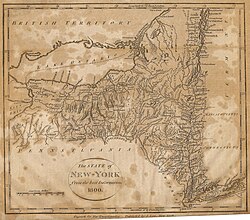
An 1800 map of New York from Low's Encyclopaedia
  • Capital: Albany
  • Largest City: New York City
  • Population: Approximately 20 million (2025 est.)
  • Highest Point: Mount Marcy (5,344 ft)
  • State Symbols: Eastern bluebird (bird), Rose (flower), and Apple (fruit)
  • Major Economy Drivers: Finance (Wall Street), High Technology, and Tourism

History and Evolution
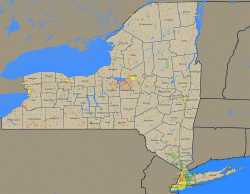
New York counties, municipalities, and towns

Long before European arrival, the region was inhabited by Iroquoian and Algonquian tribes, who established complex societies across the landscape.
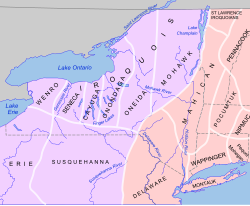
Map of New York showing Algonquian tribes in the eastern and southern portions and Iroquoian tribes to the western and northern portions.
Prior to European settlement, New York was dominated by Iroquoian (purple) and Algonquian (red) tribes.

The 17th century saw the establishment of New Amsterdam by the Dutch, a settlement that would eventually grow into the global hub of Lower Manhattan.
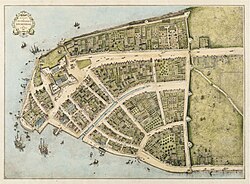
A 1660 map illustration of New Amsterdam, present-day Lower Manhattan

New York played a pivotal role in the American Revolution, most notably during the surrender of British General John Burgoyne at Saratoga in 1777, a turning point in the war for independence.
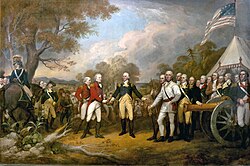
A painting of British general John Burgoyne and his men surrendering at Saratoga, 1777
Illustration of British general John Burgoyne surrendering at Saratoga on October 17, 1777

The 19th century brought transformative infrastructure, specifically the Erie Canal. Completed in 1825, this waterway connected the Atlantic Ocean to the Great Lakes, fueling economic growth and westward expansion.
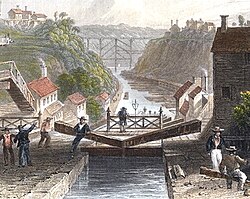
A painting of the Erie Canal, depicted in 1839.
An illustration of the Erie Canal at Lockport in 1839

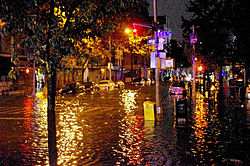
In the modern era, New York has faced and overcome significant challenges, including the September 11 attacks and the devastation of Hurricane Sandy in 2012.
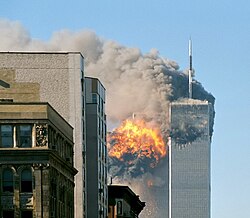
The twin towers are seen spewing black smoke and flames, particularly from the left of the two
United Airlines Flight 175 hitting the South Tower during the September 11 attacks

Lower Manhattan's Avenue C is seen flooded.
Flooding on Avenue C in Lower Manhattan caused by Hurricane Sandy in October 2012

Geography and Climate

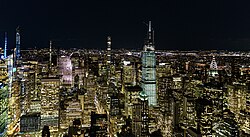
New York City at night

New York is a geographically diverse state, bordered by five U.S. states—Connecticut, Massachusetts, New Jersey, Pennsylvania, and Vermont—as well as two Canadian provinces, Ontario and Quebec.
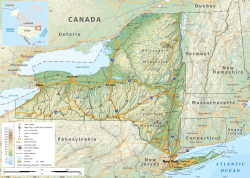
A topographic map of the state of New York, with urban and geographic features marked
New York is bordered by five U.S. states (Connecticut, Massachusetts, New Jersey, Pennsylvania, and Vermont), two Great Lakes (Lake Erie and Lake Ontario), and two Canadian provinces (Ontario and Quebec).

The state's landscape is defined by its water bodies, including Lake Erie and Lake Ontario. The terrain ranges from the coastal plains of Long Island to the mountainous regions of the Adirondacks and Catskills.
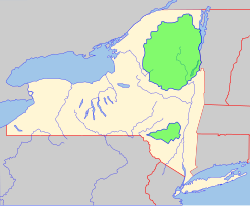
Two major New York state parks (in green), Adirondack Park (north) and Catskill Park (south)

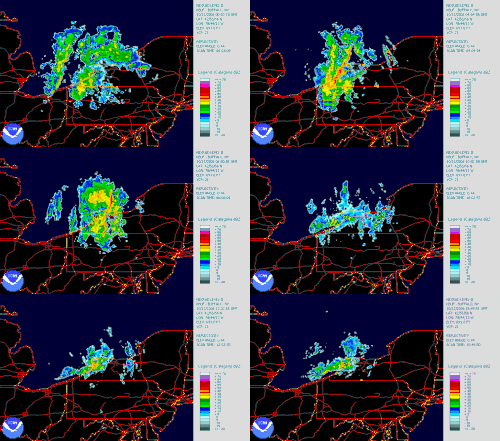
The climate varies significantly across the state. While the coast enjoys a maritime influence, Western New York is famous for lake-effect snow—heavy snowfall caused by cold air moving over the relatively warm waters of the Great Lakes.
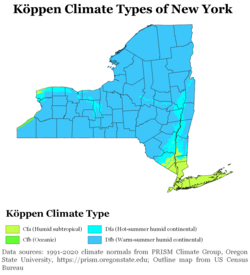
The Köppen climate classification of New York

Lake-effect snow is a major contributor to heavy snowfall totals in Western New York, including the Tug Hill region.

Demographics and Culture

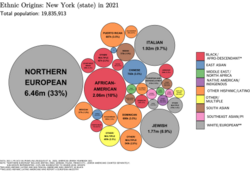
Ethnic origins in New York

With a population of over 20 million, New York is the 4th most populous state in the U.S. A significant concentration of residents—roughly 56 percent—live in New York City or on Long Island.
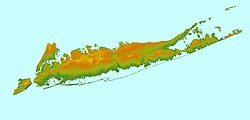
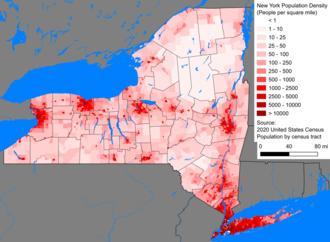
Enveloped by the Atlantic Ocean and Long Island Sound, New York City and Long Island have a combined population of 11 million residents, representing over 56 percent of the state's population.

Among New York state's population of 19.5 million, 11 million, or 56 percent, are in New York City or Long Island

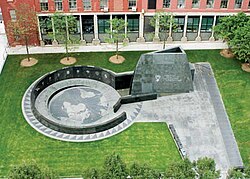
The state is a melting pot of ethnicities and languages. While English is the primary language (69%), Spanish (15%) and Chinese (3%) are widely spoken. This diversity is reflected in the state's rich cultural landmarks, from the Statue of Liberty to the African Burial Ground National Monument.

The Statue of Liberty in New York Harbor, a global symbol of the United States and its ideals[129]

The African Burial Ground National Monument in Lower Manhattan

New York is also a historic center for civil rights. The Stonewall Inn in Greenwich Village served as the catalyst for the modern LGBT rights movement following the 1969 riots.

Stonewall Inn in Greenwich Village, site of the June 1969 Stonewall riots, the cradle of the modern LGBT rights movement[135][136][196]

Economy and Infrastructure

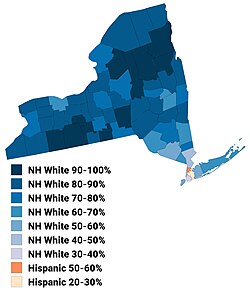
Largest alone or in any combination ethnic origin by county in New York (state), per the 2020 census[158]

New York's economy is one of the most diverse in the world. It is anchored by Wall Street, home to the New York Stock Exchange, the world's largest stock exchange by market capitalization.

The New York Stock Exchange, the world's largest stock exchange by total market capitalization of its listed companies[228]

Beyond finance, the state is a leader in high technology and biomedical research, featuring hubs like the IBM Watson Research Center and the Cold Spring Harbor Laboratory.
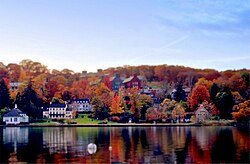

Cold Spring Harbor Laboratory on the North Shore of Long Island, an internationally renowned biomedical research facility and home to eight scientists awarded the Nobel Prize in Physiology or Medicine

The main laboratory building of the IBM Watson Research Center in Yorktown Heights

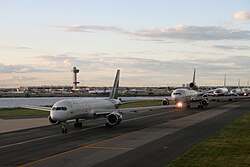
Transportation is a cornerstone of the state's functionality. The New York City Subway is one of the busiest systems globally, while John F. Kennedy International Airport serves as a primary international gateway to the United States.
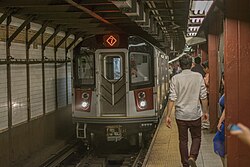
A subway train and many people are seen in New York City's subway system.
The New York City Subway, one of the world's busiest subway systems, serving over five million passengers each weekday

Five jumbo airplanes wait in a line on a runway next to a small body of water at John F. Kennedy Airport.
John F. Kennedy International Airport in Queens, the busiest international air passenger gateway to the United States

Government and Education

Map of counties in New York (State) by racial and ethnic plurality, per the 2020 U.S. census

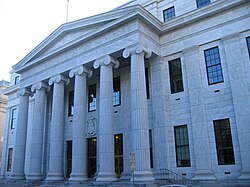
The state government is led by the Governor, currently Kathy Hochul, with the legislative branch consisting of the State Senate and State Assembly. The highest judicial authority is the New York Court of Appeals.
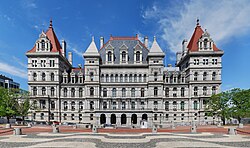
The New York State Capitol in Albany

The New York Court of Appeals is the highest court of the New York judiciary

Education is another pillar of the state, boasting world-class institutions such as Columbia University, an Ivy League member in Upper Manhattan.
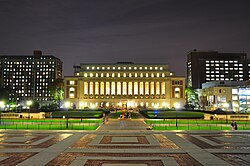
Butler Library at Columbia University, an Ivy League university in Upper Manhattan

Sports and Recreation

The Capital Gay Pride Parade and Festival in Albany, the largest celebration of LGBTQ+ culture in Upstate New York

New York is a premier destination for professional sports, hosting legendary teams across the NFL, NBA, NHL, and MLB, including the New York Yankees and the Buffalo Bills.
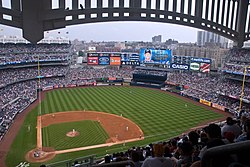
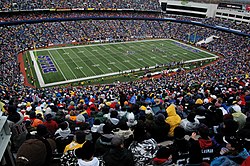
Yankee Stadium in The Bronx

Highmark Stadium in Orchard Park

The state also celebrates the history of the game at the National Baseball Hall of Fame in Cooperstown.
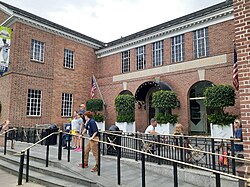
The National Baseball Hall of Fame in Cooperstown, NY

Category Detail
Total Area 54,555 sq mi
Population (2025 est.) 20,002,427
Median Household Income $82,100 (2023)
Highest Elevation Mount Marcy (5,344 ft)
Primary Languages English, Spanish, Chinese

Frequently Asked Questions

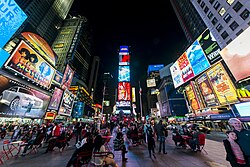
Times Square in Midtown Manhattan, hub of the Broadway's theater district, a media center, and one of the world's busiest pedestrian intersections
"I Love New York"
"I Love New York"
The Theodore Roosevelt, the largest container ship to enter the Port of New York and New Jersey as of September 2017
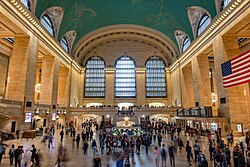
Grand Central Terminal in Manhattan
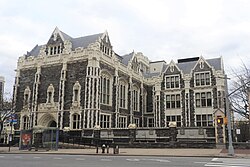
Harris Hall at City College of New York, a public college of the City University of New York in the Hamilton Heights section of Manhattan
Kirsten Gillibrand and Chuck Schumer are seen giving a speech promoting universal healthcare.
Kirsten Gillibrand and Chuck Schumer, the state's two U.S. Senators as of 2024
Kathy Hochul (D), the 57th Governor of New York

What is the meaning of New York's motto, Excelsior?

The Latin word "Excelsior" translates to "Ever upward," reflecting the state's spirit of continuous growth and ambition.

Which city is the capital of New York state?

While New York City is the largest city, the state capital is Albany.

What is lake-effect snow?

Lake-effect snow is a phenomenon where cold air moves across the relatively warm waters of the Great Lakes, picking up moisture and resulting in heavy snowfall in regions like Western New York.

How much of the state's population lives in the NYC/Long Island area?

Approximately 11 million people, or over 56 percent of the state's total population, reside in New York City or on Long Island.

What are the major high-tech hubs in New York?

The state features several tech hubs, including Silicon Alley (extending toward Long Island) and Tech Valley.

References

  1. Elevation adjusted to North American Vertical Datum of 1988
  2. To distinguish it from its largest city, New York City
  3. The New England states bordering New York are Connecticut, Massachusetts, and Vermont. It also shares a maritime border with Rhode Island. The Canadian province of Quebec is to the north, and Ontario to the northwest. Lake Ontario is to the north and Lake Erie to the west. The Atlantic Ocean touches Long Island in the extreme southeast part of the state.
  4. Persons of Hispanic or Latino origin are not distinguished between total and partial ancestry.
  5. Sum of all 1,813,885 respondents "of foreign stock" (either foreign-born or with at least one foreign-born parent) who listed "White" as their ethnicity and "English" as their mother tongue, all 3,230,005 who listed "White" as their ethnicity and were native-born to native-born parents, and all 134,191 respondents who listed "Negro" as their ethnicity.