Riverside Church: A Landmark of Neo-Gothic Architecture and Progressive Faith
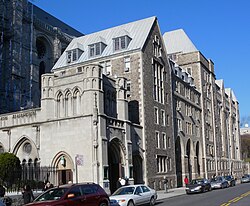
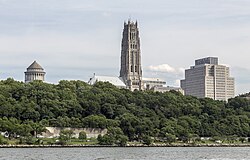
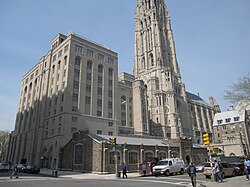
Standing as a sentinel over the Hudson River in Manhattan, Riverside Church is more than just a place of worship; it is a monumental intersection of art, history, and social activism. Known for its towering presence and inclusive spirit, the church has served as a beacon for interdenominational faith and progressive ideology since its inception.
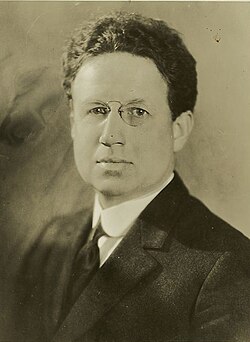
The congregation's roots trace back to 1823, evolving through various identities including the Mulberry Street, Fifth Avenue, and Park Avenue Baptist Churches. Under the leadership of Harry Emerson Fosdick, who accepted the call to create a liberal church in 1925, the institution transitioned into the interdenominational landmark known today.
Key Facts
- Location: 478-490 Riverside Drive and 81 Claremont Avenue, Manhattan, New York.
- Architectural Style: Late Gothic Revival (Neo-Gothic).
- Capacity: The main sanctuary can accommodate 2,100 people.
- Designations: Listed on the National Register of Historic Places and designated as a New York City Landmark.
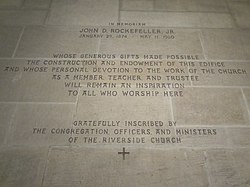
- Funding: Much of the construction was funded by John D. Rockefeller Jr.
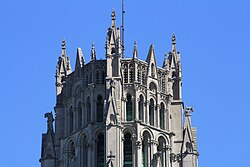
- Key Features: A massive bell tower housing a carillon and the Martin Luther King Jr. Wing.
Architectural Grandeur and Design
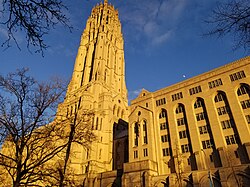
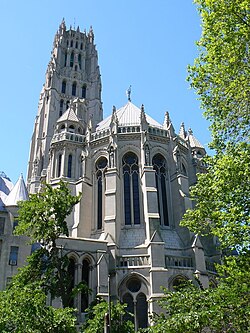
The main building, completed on October 5, 1930, was designed by architects Allen & Collens and Henry C. Pelton. The structure is a premier example of Late Gothic Revival architecture, characterized by its verticality and intricate stone carvings.
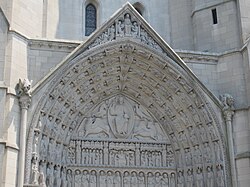
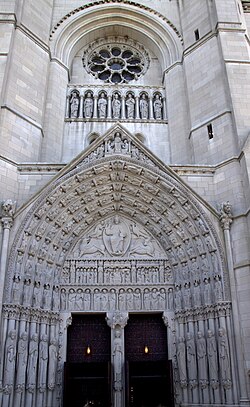
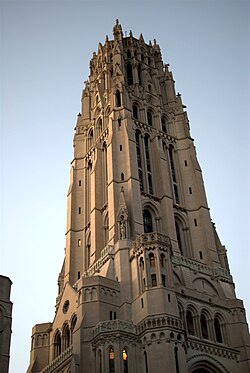
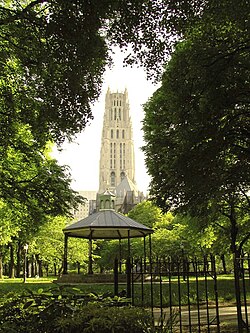
The exterior is dominated by the massive tower, which rises above the tree-line of Riverside Park. The front doorway at the base of the tower features archivolts (ornamental moldings around the arch), a tympanum, and jambs, topped by a circular rose window and niches containing sculptures of seven kings.
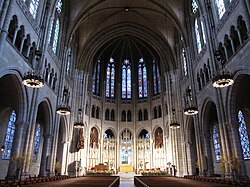
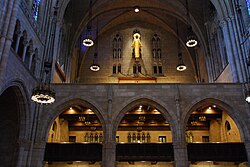
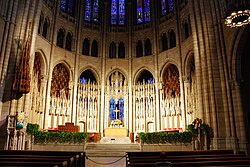
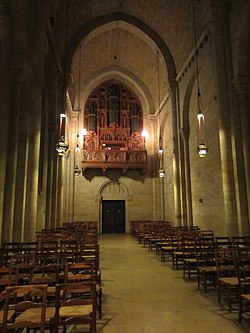
Inside, the church is equally breathtaking. The nave leads the eye toward the chancel and apse, while the galleries above provide a sweeping view of the interior. The church is also renowned for its musical capabilities, featuring a sophisticated organ system including the Trompeta Majestatis stop.
The Tower and Carillon
The tower is one of the most recognizable features of the Manhattan skyline. It houses a carillon—a musical instrument consisting of at least 23 cast bronze bells played from a keyboard. The installation of the 22-ton bell marked a significant milestone in the church's completion in 1930.
Additional Facilities
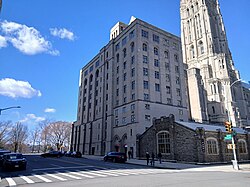
Beyond the main sanctuary, the campus includes the Martin Luther King Jr. Wing (completed in 1957) and the Stone Gym (converted in 1962). These spaces support the church's extensive community and educational programming.
A Legacy of Social Activism
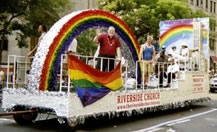
Riverside Church has long been defined by its commitment to social justice and progressive ideology. From providing sanctuary to those in need to engaging in prison ministry and LGBTQ+ advocacy, the church views its faith as a call to action.
The church has hosted numerous notable speakers and has been a site for activism regarding torture policies, poverty, and civil rights. This commitment is reflected in its diverse ministries, including the New Sanctuary Coalition and various charity and shelter programs.
Summary of Church Specifications
| Feature | Detail |
|---|---|
| Founded | 1823 |
| Main Building Completed | 1930 |
| Architects | Allen & Collens, Henry C. Pelton |
| Denominations | Interdenominational (ABCUSA, UCC, Association of Welcoming and Affirming Baptists) |
| Capacity | 2,100 |
| NRHP Status | Added December 12, 2012 |
Frequently Asked Questions
Who funded the construction of Riverside Church?
John D. Rockefeller Jr. provided a significant portion of the funding for the church's construction, including the land and the $4 million edifice.
What is the architectural style of the building?
The church is built in the Late Gothic Revival (or Neo-Gothic) style, featuring characteristic pointed arches, ribbed vaults, and extensive stone carvings.
What is a carillon, and does Riverside Church have one?
A carillon is a musical instrument composed of cast bronze bells played via a keyboard. Riverside Church possesses a famous carillon housed within its massive bell tower.
Is Riverside Church affiliated with a single denomination?
No, it is an interdenominational church with affiliations including the American Baptist Churches USA (ABCUSA), the United Church of Christ (UCC), and the Association of Welcoming and Affirming Baptists.
Who was the first female pastor at Riverside Church?
The church installed its first woman as pastor in 1976, continuing its tradition of progressive leadership.