Jean Mistler: The Life of a French Diplomat, Politician, and Writer
Jean Mistler was a multifaceted figure in 20th-century French public life. A man of diverse talents, he navigated the complex intersections of diplomacy, high-level politics, and literature. From his early academic achievements to his eventual election to the prestigious Académie française—the preeminent French council for language and literature—Mistler's trajectory reflects the turbulent history of France during and after the World Wars.
Born on September 1, 1897, in Sorèze, Tarn, Mistler's early life was shaped by a family history rooted in Alsace. He pursued his education in Sorèze before attending the Lycée Henri IV to prepare for the entrance exam of the Ecole Nationale Supérieure. During this time, he studied philosophy under the guidance of the philosopher Alain.
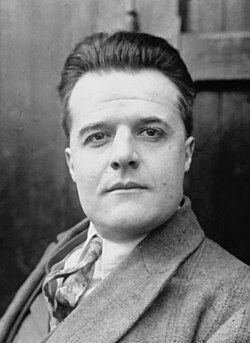
Early Career and Diplomatic Beginnings
Mistler's life was interrupted by the First World War, during which he was drafted into the artillery in 1915. The horrors of the conflict left a lasting impression on him, transforming him into a staunch pacifist. Following the war, he returned to his studies, entering the École normale in 1919 and achieving first place in the national Aggrégation (a highly competitive civil service examination for teachers) in German the following year.
Rather than pursuing a traditional teaching career within France, Mistler sought a path in international relations through the Ministry for Foreign Affairs. This led him to Hungary, where he served as a cultural attaché and taught at the University of Budapest. By 1925, he had joined the Quai d'Orsay (the French Ministry of Foreign Affairs), specifically within the Service des Oeuvres, where he succeeded Paul Morand.
Political Ascent and Cultural Contributions
Mistler entered the political arena in 1928, winning election as a deputé (member of parliament) for Aude under the Radical-Socialist banner. His political rise was rapid; he was appointed under-secretary in charge of the Arts and held various ministerial roles starting in 1932. In 1934, under the government of Albert Sarraut, he served as the Minister overseeing telecommunications and the postal service.
Beyond administration, Mistler was a passionate music lover. He utilized his influence to found the Orchestre national de la Radiodiffusion française, which serves as the ancestor to the modern-day Orchestre National de France. By 1936, his political influence extended to the chairmanship of the Foreign Affairs Commission.
Literary Pursuits
While managing his political duties, Mistler cultivated a parallel career as an author. He published Châteaux en Bavière in 1925 and Ethelka in 1929, establishing himself as a writer of merit alongside his public service.
The Controversy of Vichy France
The most contentious period of Mistler's life occurred during the fall of the French Third Republic. On July 10, 1940, acting as the chair of the voting commission, Mistler introduced the bill to Parliament that granted Marshal Philippe Pétain the authority to draft a new constitution. This action effectively ended the Third Republic and established the regime of Vichy France.
Because of this pivotal role, post-war critics labeled him the "sinker of the Republic." His association with the regime continued into 1941, when he was appointed a member of the National Council of Vichy France.
Post-War Career and Academic Honor
Following the war, Mistler transitioned back into the worlds of publishing and literature. He worked for Éditions du Rocher and later served as the general secretary and president of the Maison du Livre Français, an organization affiliated with the Ministry for Foreign Affairs. From 1964 to 1969, he held the position of director of the general literature department at Librairie Hachette.
Throughout these years, he remained a visible intellectual, contributing regular literary and musical criticism to the publication L'Aurore. His lifelong contributions to French letters were formally recognized on June 2, 1966, when he was elected to the Académie française, taking the seat previously held by Robert d'Harcourt.
Jean Mistler passed away on November 11, 1988, in Paris. He was laid to rest in the d'Auriol family vault in his birthplace of Sorèze.
Key Facts
- Born: September 1, 1897, in Sorèze, France.
- Academic Achievement: Ranked first in the national Aggrégation exam in German (1920).
- Diplomatic Role: Served as a cultural attaché in Hungary and worked at the Quai d'Orsay.
- Political Role: Deputé of Aude and Minister of postal service and telecommunications (1934).
- Cultural Legacy: Founded the ancestor of the Orchestre National de France.
- Controversy: Introduced the bill that ended the French Third Republic in 1940.
- Highest Honor: Elected to the Académie française in 1966.
- Died: November 11, 1988, in Paris.
| Period/Year | Role/Achievement | Organization/Entity |
|---|---|---|
| 1919-1920 | Student / Aggrégation Winner | École normale |
| 1925 | Diplomat | Quai d'Orsay |
| 1928 | Deputé of Aude | Radical-Socialist Party |
| 1934 | Minister | Postal Service & Telecommunications |
| 1940 | Chair of Voting Commission | French Parliament |
| 1964-1969 | Director of General Literature | Librairie Hachette |
| 1966 | Member | Académie française |
Frequently Asked Questions
Why was Jean Mistler called the "sinker of the Republic"?
He earned this nickname because, as chair of the voting commission on July 10, 1940, he introduced the bill that gave Marshal Philippe Pétain the power to create a new constitution, which effectively ended the French Third Republic and led to the establishment of Vichy France.
What was Jean Mistler's contribution to music?
Mistler founded the Orchestre national de la Radiodiffusion française, which is the predecessor to today's Orchestre National de France.
Which prestigious institution did Mistler join in 1966?
He was elected to the Académie française, replacing Robert d'Harcourt.
What were Mistler's early academic strengths?
Mistler studied philosophy under Alain and excelled in linguistics, placing first in the national Aggrégation exam in German in 1920.
What roles did Mistler hold in the publishing industry?
He worked for Éditions du Rocher, served as president of the Maison du Livre Français, and was the director of the general literature department at Librairie Hachette from 1964 to 1969.