François Hollande: The Political Journey of a French President
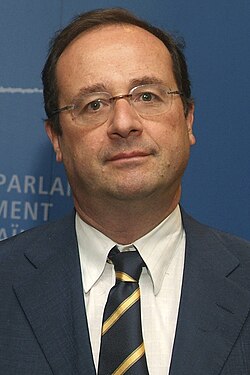
François Hollande is a prominent figure in French politics, having served as the President of France from 2012 to 2017. A lifelong member of the Socialist Party, his career spans several decades, moving from local governance in Corrèze to the highest office in the land, and eventually returning to the National Assembly. His presidency was marked by significant social reforms and complex international diplomacy during a period of global instability.
Before ascending to the presidency, Hollande built a robust political foundation. He served as the First Secretary of the Socialist Party for over a decade and held various roles, including Mayor of Tulle and President of the General Council of Corrèze. His academic background is equally distinguished, with degrees from Panthéon-Assas University, HEC Paris, Sciences Po Paris, and the École nationale d'administration (ENA), the elite school for French civil servants.
Key Facts
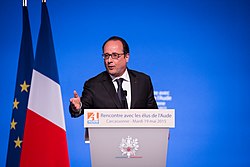
- Presidential Term: Served as President of France from May 15, 2012, to May 14, 2017.
- Political Affiliation: Member of the Socialist Party.
- Major Social Achievement: Oversaw the legalization of marriage and adoption for same-sex couples.
- Legislative Return: Re-elected to the National Assembly for Corrèze's 1st constituency in July 2024.
- Education: Alumnus of ENA, Sciences Po Paris, HEC Paris, and Panthéon-Assas University.
The Path to the Élysée Palace
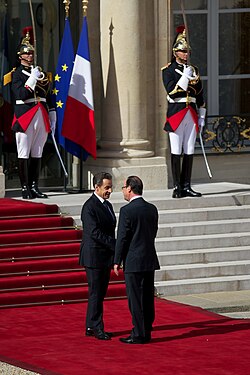
Hollande's rise to the presidency culminated in the 2012 election. Campaigning on a platform of change and challenging the incumbent Nicolas Sarkozy, Hollande positioned himself as the champion of the French left. His campaign focused on economic fairness and social progress, leading to his victory and inauguration on May 15, 2012.

Upon taking office, Hollande appointed a series of Prime Ministers to manage the government, including Jean-Marc Ayrault, Manuel Valls, and Bernard Cazeneuve. His early presidency was characterized by a desire to shift the country's direction, though he faced the daunting task of managing France's budget and economic growth.
Presidential Legacy and Domestic Policy
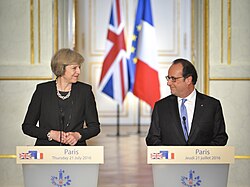
Hollande's tenure was defined by a mix of landmark social victories and contentious economic reforms. One of his most enduring legacies was the passage of legislation allowing marriage and adoption for same-sex couples, a move that significantly modernized French family law.
However, his economic agenda proved more divisive. He introduced labor reforms and pension reforms aimed at increasing competitiveness and sustainability. These measures, particularly the labor laws, sparked widespread protests across France, as critics argued they undermined workers' rights.

Approval Ratings and Challenges
Despite his early successes, Hollande's approval ratings declined over time. By the mid-point of his term, he faced significant unpopularity, with some polls suggesting he had become one of the least popular presidents in French history. This decline was attributed to a combination of economic stagnation and the perceived contradictions of his reformist agenda.
Foreign Affairs and Global Diplomacy
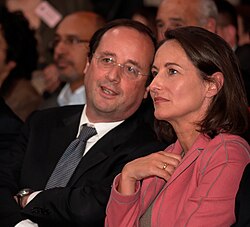
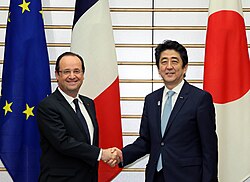
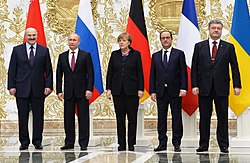
On the international stage, President Hollande was an active leader. He was heavily involved in security operations, most notably the military intervention in Mali. He also played a key role in European diplomacy, participating in the Minsk II summit to address the conflict in Ukraine.
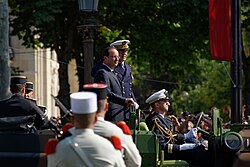
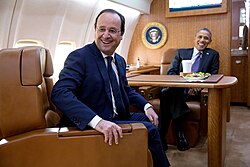
His presidency saw frequent collaboration with global leaders, including U.S. President Barack Obama and various European heads of state. He also navigated the complexities of the United Kingdom's decision to leave the European Union, urging the EU to remain firm during the Brexit negotiations.
Post-Presidency and Return to Politics
After deciding not to run for re-election in 2017, Hollande stepped down and was succeeded by Emmanuel Macron. In the years following his presidency, he remained a public intellectual, publishing several books on power and global affairs, including Les leçons du pouvoir (The Lessons of Power).
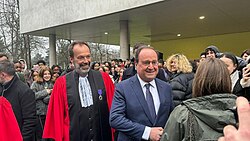
In a notable return to active politics, François Hollande was elected to the National Assembly for Corrèze's 1st constituency on July 8, 2024, resuming his role as a legislator.
Summary of Political Career
| Office | Tenure | Key Role/Context |
|---|---|---|
| President of France | 2012–2017 | Head of State |
| President of the General Council of Corrèze | 2008–2012 | Regional Governance |
| First Secretary of the Socialist Party | 1997–2008 | Party Leadership |
| Mayor of Tulle | 2001–2008 | Local Governance |
| Member of the National Assembly | 1988–1993, 1997–2012, 2024–Present | Legislative Representative |
Frequently Asked Questions
Who succeeded François Hollande as President of France?
François Hollande was succeeded by Emmanuel Macron on May 14, 2017.
What was one of the most significant social reforms of Hollande's presidency?
One of his most significant achievements was the legalization of marriage and adoption for same-sex couples in France.
Did François Hollande return to politics after his presidency?
Yes, he returned to the National Assembly, assuming office for Corrèze's 1st constituency on July 8, 2024.
Which political party does François Hollande belong to?
François Hollande is a member of the Socialist Party.
What is Hollande's educational background?
He is a graduate of several prestigious institutions, including the École nationale d'administration (ENA), Sciences Po Paris, HEC Paris, and Panthéon-Assas University.