Jazz Ambassadors: Music as a Cold War Diplomatic Weapon
During the height of the Cold War, the United States government discovered that some of its most effective diplomats didn't carry briefcases, but instead carried trumpets, saxophones, and pianos. Known as Jazz Ambassadors, these world-renowned musicians were sponsored by the US State Department to tour Eastern Europe, the Middle East, Africa, and Asia. This initiative was a strategic effort in cultural diplomacy designed to promote American values and reshape the nation's global image.
The program began in earnest in 1956, recruiting icons such as Louis Armstrong, Dizzy Gillespie, Dave Brubeck, Benny Goodman, and Duke Ellington. While the music was the draw, the mission was political: the US sought to counter Soviet propaganda that highlighted American racial inequality and systemic tension. By sending African American artists to the world stage, the US hoped to project an image of a democratic, inclusive society.
Key Facts
- Purpose: To counteract Soviet propaganda regarding US racial inequality and promote American ideals.
- Timeline: The program was formalized in 1956 under the Cultural Presentations Program.
- Key Figures: Featured legends including Louis Armstrong, Duke Ellington, Dizzy Gillespie, Dave Brubeck, and Benny Goodman.
- Global Reach: Tours spanned the Middle East, Asia, Africa, and Eastern Europe.
- Musical Impact: The tours inspired several classic jazz albums and compositions based on local traditions encountered abroad.
The Political Backdrop: A Battle of Ideas
In the early 1950s, the US faced a crisis of reputation. The intersection of the civil rights movement, global decolonization, and the Cold War made internal race relations a liability. President Eisenhower viewed the Cold War as a battle of ideas and recognized that the US image as the "leader of the Free World" was undermined by segregation.
To address this, Congress formalized the President's Special International Program for Participation in International Affairs (the Cultural Presentations Program) in 1956. The goal was clear: use the universal language of jazz to build goodwill and challenge the narrative of racial strife in America.
Pioneering Tours and Diplomatic Triumphs
Dizzy Gillespie and the First Wave
In March 1956, Dizzy Gillespie led the first State Department-sponsored tour. Backed by an 18-piece interracial band with Quincy Jones as music director, Gillespie spent ten weeks performing in countries including Iran, Pakistan, Lebanon, Turkey, Yugoslavia, Greece, and Argentina. The tour was a massive success; one American ambassador famously noted that the goodwill generated by Gillespie's band was more valuable than a new military tank.
Benny Goodman in Asia
In December 1957, Benny Goodman took the program to East and Southeast Asia. His seven-week tour strengthened ties with regional leaders, most notably King Bhumibol Adulyadej of Thailand, a jazz enthusiast who performed alongside Goodman's band. During this tour, Goodman actively pushed the narrative that racism had been defeated in the US, attributing criticisms of American race relations to Communist propaganda.
Dave Brubeck's Eurasian Journey
Dave Brubeck's 1958 tour took his quartet through East Germany, Poland, Turkey, Afghanistan, Pakistan, India, and Sri Lanka. The tour was so highly valued by Secretary of State John Dulles that Brubeck's domestic engagements were cancelled to extend his stay. The group also performed in Iran and Iraq, departing the latter just weeks before a coup d'état overthrew the monarchy.
The Influence of Duke Ellington and Louis Armstrong
Duke Ellington served as one of the most influential ambassadors, presenting Black music as a sophisticated modern art. His 1963 tour of the Middle East—covering Syria, Jordan, Afghanistan, India, Ceylon, Pakistan, Iran, Iraq, Lebanon, and Turkey—showcased an image of American freedom and inclusivity. Ellington's most publicized tour occurred in 1971 in the Soviet Union, where he met with unprecedented public enthusiasm despite official government hesitation.
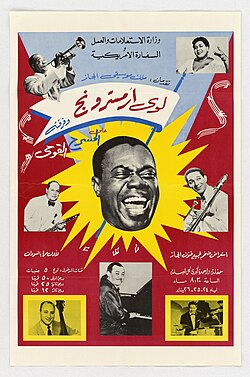
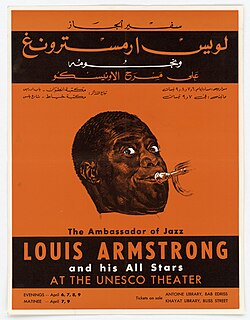
Louis Armstrong also played a pivotal role, touring with the State Department starting in November 1955. However, Armstrong's relationship with the program was marked by his own convictions. In 1957, he abruptly cancelled a planned tour of the USSR in protest of the Little Rock school desegregation crisis, famously declaring that the government could "go to hell" while his people were being mistreated in the South.
The Soviet Reaction: From Suppression to Obsession
The reception of jazz in the Soviet bloc was volatile. Initially, the USSR defended jazz as an anti-fascist art form in 1946. However, by the 1950s, the state shifted toward repression, banning jazz from the radio and dismissing it as "decadent" or inferior to classical traditions. Soviet officials attempted to distance the music from its African American roots to strip it of its cultural power.
Despite official bans, jazz remained an underground obsession. Red Army officers secretly smuggled records, and youth publications called for jazz nightclubs. By the time Duke Ellington toured the USSR in 1971, the public demand was overwhelming. Tickets were scalped, and officers even disguised themselves to attend, with fans telling Ellington they had been waiting for him "for centuries."
Musical Legacy and Artistic Exchange
The Jazz Ambassador program was not a one-way street; it profoundly influenced the music itself. Musicians incorporated the rhythms and melodies of the countries they visited into their work:
- Duke Ellington: Composed the Far East Suite, Latin American Suite, and Afro-Eurasian Eclipse.
- Dizzy Gillespie: Wrote "Rio Pakistan" and released albums such as Dizzy in Greece and World Statesman.
- Dave Brubeck: Created Jazz Impressions of Eurasia and wrote the standard "Blue Rondo à la Turk" after hearing Turkish street musicians.
Not all musicians viewed the experience positively. Dave Brubeck and his wife Iola later wrote a musical titled The Real Ambassadors, which offered a critical perspective on the program's contradictions.
| Musician | Key Tour Year(s) | Primary Regions Visited | Notable Outcome |
|---|---|---|---|
| Dizzy Gillespie | 1956 | Europe, Asia, South America | Established the template for cultural diplomacy tours. |
| Benny Goodman | 1957 | East and Southeast Asia | Strengthened ties with Thai royalty. |
| Dave Brubeck | 1958 | Eurasia, Middle East | Inspired "Blue Rondo à la Turk." |
| Duke Ellington | 1963, 1971 | Middle East, Soviet Union | Massive public success in the USSR. |
| Louis Armstrong | 1955+ | Global | Cancelled 1957 USSR tour over US racial injustice. |
Frequently Asked Questions
Why did the US government use jazz musicians as ambassadors?
The US State Department used jazz to improve America's international image during the Cold War, specifically to counter Soviet propaganda regarding racial inequality and segregation in the United States.
Did the Jazz Ambassadors support the US government's policies?
Not always. While many participated, some were critical. Louis Armstrong famously cancelled a tour of the USSR to protest the treatment of Black Americans during the Little Rock crisis, and Dave Brubeck later wrote a musical critiquing the experience.
How did the Soviet Union view jazz music?
The Soviet view was contradictory. While the government often suppressed jazz as "decadent" or inferior, the Soviet public and youth embraced it as a symbol of freedom and modernity.
What was the lasting musical impact of these tours?
The tours led to a cross-pollination of styles. Musicians like Duke Ellington and Dave Brubeck integrated foreign rhythms and melodies into their compositions, resulting in landmark albums and songs inspired by their global travels.